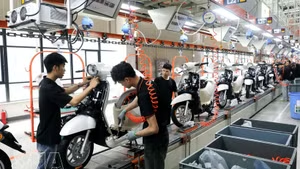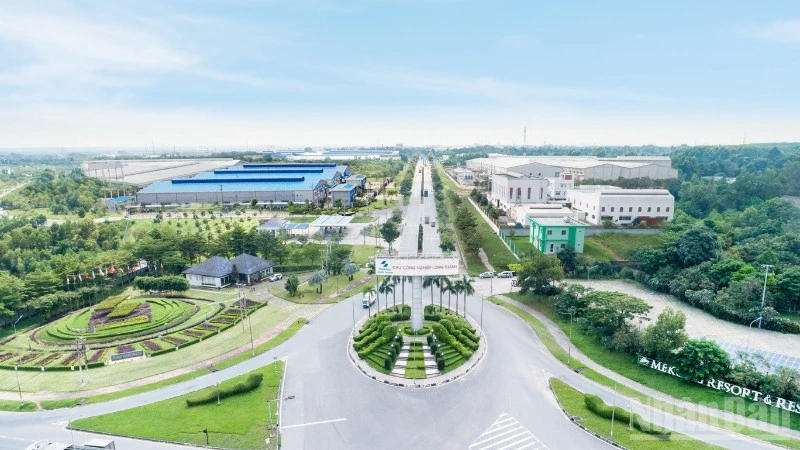
Clean energy development is becoming an inevitable global trend, including in Viet Nam. Industrial zones are not only key drivers of economic growth but also crucial spaces for promoting energy efficiency, reducing emissions, and attracting high-quality investment flows.
According to the Viet Nam Energy Association, the country currently has 428 industrial zones and more than 1,000 industrial clusters, attracting around 80,000 enterprises and secondary investors. One of the key solutions for promoting clean energy in industrial zones is investment in rooftop solar power systems.
Nguyen Anh Tuan, Vice Chairman of the Viet Nam Energy Association, noted that rooftop solar power enables enterprises in industrial zones to reduce electricity costs, stabilise production during peak hours, and manage future electricity price risks. At the same time, it helps improve the image of “green industrial zones”, thereby attracting foreign direct investment and manufacturers with high environmental standards.
The 2024–2025 period has witnessed a rapid increase in rooftop solar power projects across industrial zones nationwide.

Statistics show that the total installed capacity of rooftop solar power in Viet Nam’s industrial zones has exceeded 3,200 MWp, with approximately 25% of systems integrated with Battery Energy Storage Systems (BESS). The southern region accounts for the largest share, at over 55%, concentrated mainly in Dong Nai, Ho Chi Minh City, and Tay Ninh Province.
However, the proportion of factory rooftops equipped with solar power systems in industrial zones currently stands at only 5–7%, lower than expected. One of the main reasons is the lack of a clear legal framework for self-consumption rooftop solar power and integrated BESS during the 2024–2025 period.
Dong Nai Province is regarded as one of Viet Nam’s major industrial hubs. Under the industrial zone development plan for the 2021–2030 period, with a vision to 2050, approved by the Prime Minister, the province is set to have 81 industrial zones, one high-tech zone, and one economic zone.
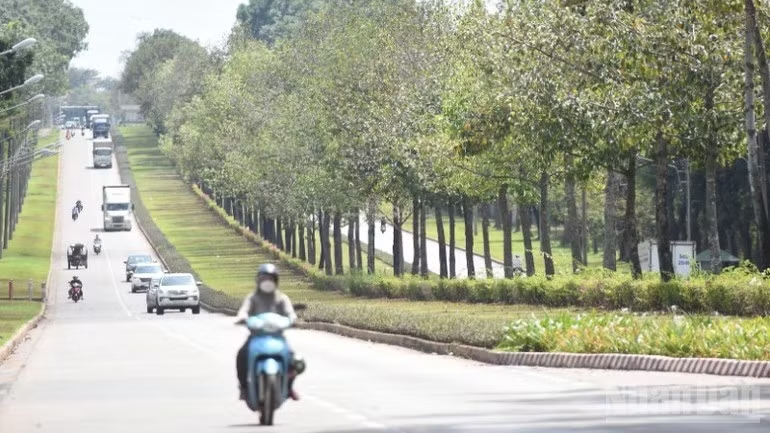
According to Nguyen Trong Tien, Deputy Head of the Dong Nai Industrial Zones and Economic Zones Authority, the pilot eco-industrial park model is being implemented in four localities, including Dong Nai, with Amata Industrial Park as the pilot site. Alongside favourable conditions, the transition process faces challenges related to waste reuse, and management, wastewater reuse and legal barriers in converting conventional industrial zones into eco-industrial parks.
Dong Nai Province has identified a development strategy that combines economic growth with environmental protection, efficient resource use, greenhouse gas emission reduction, social equity, and the goal of achieving net-zero emissions by 2050.

Speaking at the workshop, Nguyen Manh Son, a representative of the Department of Sectoral Finance and Economics under the Ministry of Finance, stated that as Viet Nam strongly implements its commitments to green growth and energy transition, particularly its goal of achieving net-zero emissions by 2050, clean energy development linked to industrial zone systems has been identified as a key pillar.
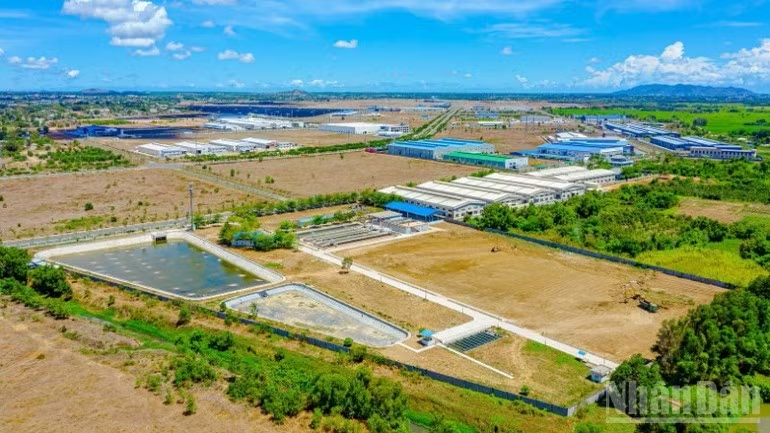
The workshop on strategies for clean energy development and investment frameworks for provincial-level industrial zones served as a forum for state management agencies, international organisations, experts, and relevant stakeholders to exchange views, share experiences, identify opportunities and challenges, and propose solutions to improve policy frameworks and investment models for clean energy development in industrial zones at the provincial level.
The contributions made at the workshop will provide an important basis for relevant agencies to continue reviewing and refining financial policies, creating a transparent, stable, and attractive investment environment for clean energy development in the time ahead.