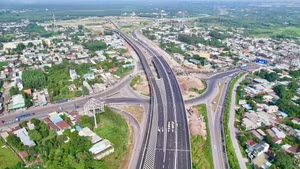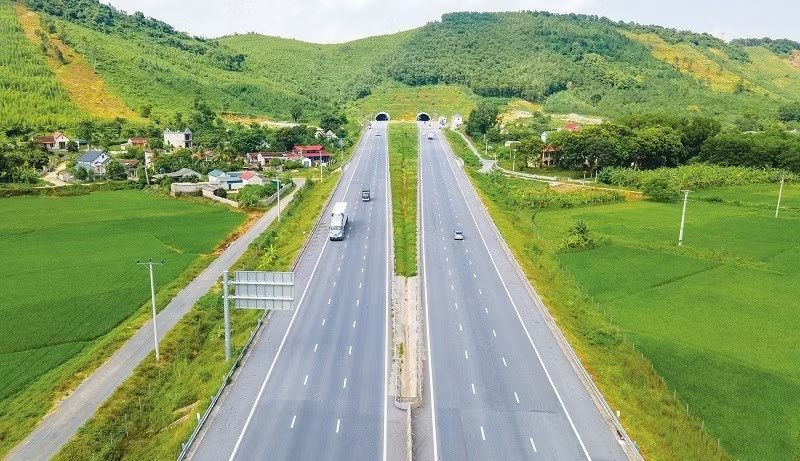
The Department for Roads of Viet Nam (DRVN) on July 23 promulgated revisions to the national road network plan for the 2021–2030 period, with a vision to 2050.
According to DRVN Deputy Head Nguyen Thanh Hoai, the revised plan encompasses a network of 46 expressways extending more than 10,100km by 2050, while the national highway system will comprise 136 routes with a combined length of around 26,340km. The revision adds five new expressways, adjusts the scope, investment schedule, and scale of several existing expressways, revises the alignment of 12 national highways, and reclassifies 36 national highways as local roads.
"The road network plan is a national sectoral plan that provides strategic direction for the development of the country's road system. It serves as a basis for managing and mobilising investment resources, strengthening regional connectivity, and linking economic centres, urban areas, border gates, seaports, airports, and other key transport hubs,” Hoai noted.
He added that the revised plan will also afford localities greater flexibility in developing transport infrastructure and promoting regional connectivity.
Specifically, the north-south corridor comprises the eastern North–South Expressway, stretching approximately 2,158km from Huu Nghi Border Gate in Lang Son to Dat Mui in Ca Mau, with between four and 12 lanes, and the western North–South Expressway, extending nearly 1,250km from An Tuong Ward in Tuyen Quang to Chau Thanh Commune in An Giang, with four to six lanes.
Northern Viet Nam is slated to receive 15 expressways with a total length of about 2,842km with four to six lanes, while the central and Central Highlands regions are projected to host 14 routes covering approximately 1,750km with four to six lanes. Southern Viet Nam will have 10 expressways extending around 1,400km with four to 10 lanes.
The Ha Noi Urban Ring Road network is configured to comprise three routes with a total length of approximately 427km (excluding sections overlapping with other expressways), each designed with six lanes. The Ho Chi Minh City Urban Ring Road network will comprise two routes with a combined length of nearly 300km, each designed with eight lanes.
The revised plan also incorporates several new expressways, including the Northern Mountainous Ring Road, which will extend approximately 327km from Ta Lung Border Gate in Cao Bang, passing through Lang Son, Thai Nguyen, Tuyen Quang, and Lao Cai to Son La. The route is planned with four lanes and is scheduled for investment after 2030.
The Northern Midland Ring Road will be divided into three sections with a total length of approximately 378km, linking Tan Thanh Border Gate in Lang Son with Son La. Of these, the Lang Son–Thai Nguyen section will be financed before and after 2030, while the remaining sections are scheduled for investment after 2030.
The Ha Tinh–Cau Treo Expressway, approximately 85km long, is planned with four to six lanes and will be financed before and after 2030. The Hue–A Luoi Expressway, approximately 45km long, is intended to connect the western area of Hue with the eastern North–South Expressway. It is planned with four lanes and is scheduled for investment after 2030.