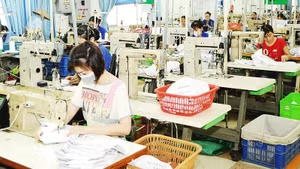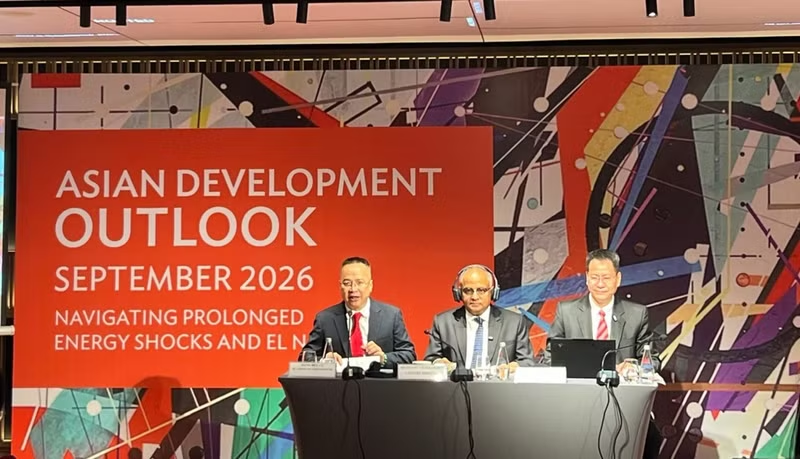
According to the ADB, Viet Nam’s economy maintained strong growth across all sectors in the first half of the year, with gross domestic product expanding by 8.2%, up from 7.5% in the same period of 2025. Growth was driven by continued expansion in manufacturing and processing, strong domestic consumption, and sustained foreign direct investment inflows.
ADB Country Director for Viet Nam Shantanu Chakraborty said: “Viet Nam’s positive economic performance in the first half of this year demonstrates the economy’s strong resilience and potential to maintain robust growth momentum. To sustain this trend and achieve higher-quality progress, Viet Nam needs to continue managing macroeconomic policy prudently to contain inflation, safeguard financial stability, and accelerate structural reforms, while ensuring that investment-led economic expansion translates into productivity gains.”
ADB raised its 2026 growth forecast from 7.2% in the July 2026 edition of ADO, and lifted its 2027 projection from 7%, reflecting stronger domestic demand, accelerated investment, and solid growth in manufacturing and processing. Inflation is expected at 4.3% in 2026 and 4.0% in 2027, amid continued demand-side pressures and rising energy and import costs.
Although Viet Nam’s short-term growth outlook remains positive, risks are tilted to the downside. Weakening global demand and heightened external uncertainty could weigh on growth, while rising energy prices and tighter global financial conditions could intensify inflationary and exchange-rate pressures. Domestically, rapid credit growth could increase financial system vulnerabilities, while small enterprises continue to face difficulties in accessing capital.
The September 2026 edition also highlights the importance of maintaining macroeconomic stability, improving public investment implementation, deepening capital markets, strengthening the private sector, and enhancing productivity to support Viet Nam’s transition into a high-income country.






![[Infographic] GRDP growth scenarios for 34 provinces and cities in fourth quarter of 2026](https://en-cdn.nhandan.vn/images/nyM650OGFWrOVWc-xajqN-rTZ68Rlmc1fiGJOhBRYHFSa4DhrHNDxEFdnz313Vk5dNJuxdkHglPA3rLeaPeiaUheNuCI723k2lNssd-YLJuKR58epWq7s21lV5WjM-HR2-Qpbi4MwAzqt9wRjL4WjGkfEz7RO9qhcwg8o8LQFK8/grdp-growth-scenarios-for-34-provinces-and-cities-in-q42026-anh-dai-dien.jpg.avif)