Institutional breakthroughs and digital transformation
For many years, Ho Chi Minh City has faced the challenge of an institutional framework that has struggled to keep pace with its rapid development. The city has identified the need to remove this bottleneck and accelerate digital transformation across all sectors to generate fresh growth momentum.
According to Dr Le Ba Chi Nhan, an economic and public policy expert, the Law on Urban Development represents an essential component of Ho Chi Minh City's efforts to achieve institutional breakthroughs.
The law facilitates a shift from separate, city-specific resolutions towards a stable, long-term legal framework, granting the city greater autonomy in urban planning, land management, and financial governance. This will provide a springboard for Ho Chi Minh City to strengthen its leading role in regional connectivity and generate momentum for stronger, more sustainable growth.
Institutional breakthroughs are key to unlocking development resources, particularly for infrastructure projects based on the transit-oriented development (TOD) model. Under this approach, the city can capitalise on land values around transit stations and major transport corridors to reinvest in large-scale interregional transport projects and radial routes connecting surrounding areas with the urban centre. As a result, Ho Chi Minh City's urban structure is gradually shifting from a monocentric model towards a polycentric one, easing pressure on the central urban area while unlocking the development potential of outlying districts.
Dr Le Ba Chi Nhan stressed that digital transformation must become a fundamental pillar of the city's new growth model, in which the key drivers shift from capital and land towards productivity, technology, data, and institutional quality. Therefore, the city needs to further accelerate the development of digital government, laying the foundations for a comprehensive digital economy and digital society.
Vo Thi Trung Trinh, Director of the Ho Chi Minh City Digital Transformation Centre, said the city's digital transformation efforts are becoming increasingly substantive and closely aligned with practical needs. The city has upgraded its information technology infrastructure, implemented digital transformation at the commune level, and put shared digital platforms into operation, with information security integrated into their development. Notably, recognising data as a core foundation, the city is actively coordinating with central authorities to complete a shared data repository. The combination of institutional breakthroughs and digital transformation is helping to create a transparent and stable legal environment, which is a decisive factor in attracting and retaining investors committed to long-term investment strategies.
Restructuring the economy
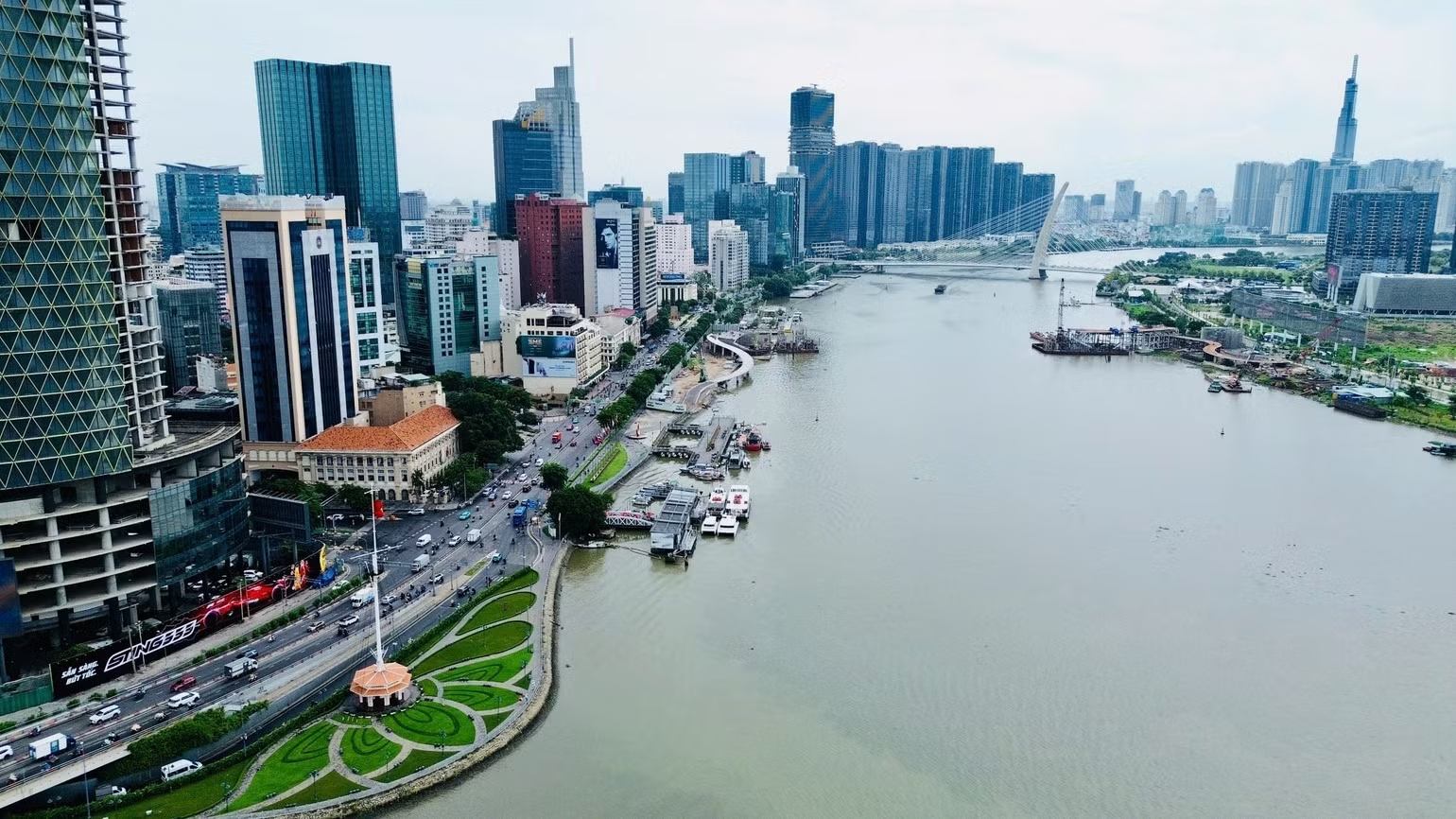
With its gross regional domestic product (GRDP) reaching nearly 3 quadrillion VND in 2025, accounting for 23.5% of national GDP and 36.7% of total state budget revenue, Ho Chi Minh City continues to affirm its position as the country's leading economic powerhouse and a major contributor to the national budget. Nguyen Van Duoc, Party Central Committee Member and Chairman of the Ho Chi Minh City People's Committee, said the city is entering a new stage of development with strong potential, thorough preparations and an ambition to achieve major breakthroughs.
Ho Chi Minh City is determined not only to maintain its role as the country's economic locomotive but also to become a liveable global city. The city's leader emphasised that this ambition represents both a source of pride and a major responsibility, requiring Ho Chi Minh City to thoroughly address long-standing shortcomings while creating new growth drivers to achieve rapid and sustainable development.
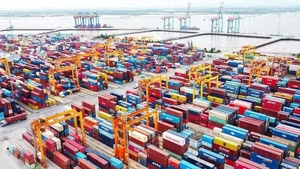
The city has identified innovative thinking and decisive action as essential requirements. Its priorities include restructuring the economy by combining traditional growth drivers with science, technology, and innovation, while fully harnessing the potential of the International Financial Centre, Free Trade Zone, logistics infrastructure, and Long Son Energy Centre.
To optimise resources following administrative consolidation, Ho Chi Minh City is focusing on leveraging the strengths of individual areas to establish new, interconnected, and mutually supportive growth poles. The city is also accelerating the completion of its master plan for the 2025–2030 period, with a 100-year vision, aimed at opening new development space, generating fresh growth momentum, and strengthening climate change resilience.
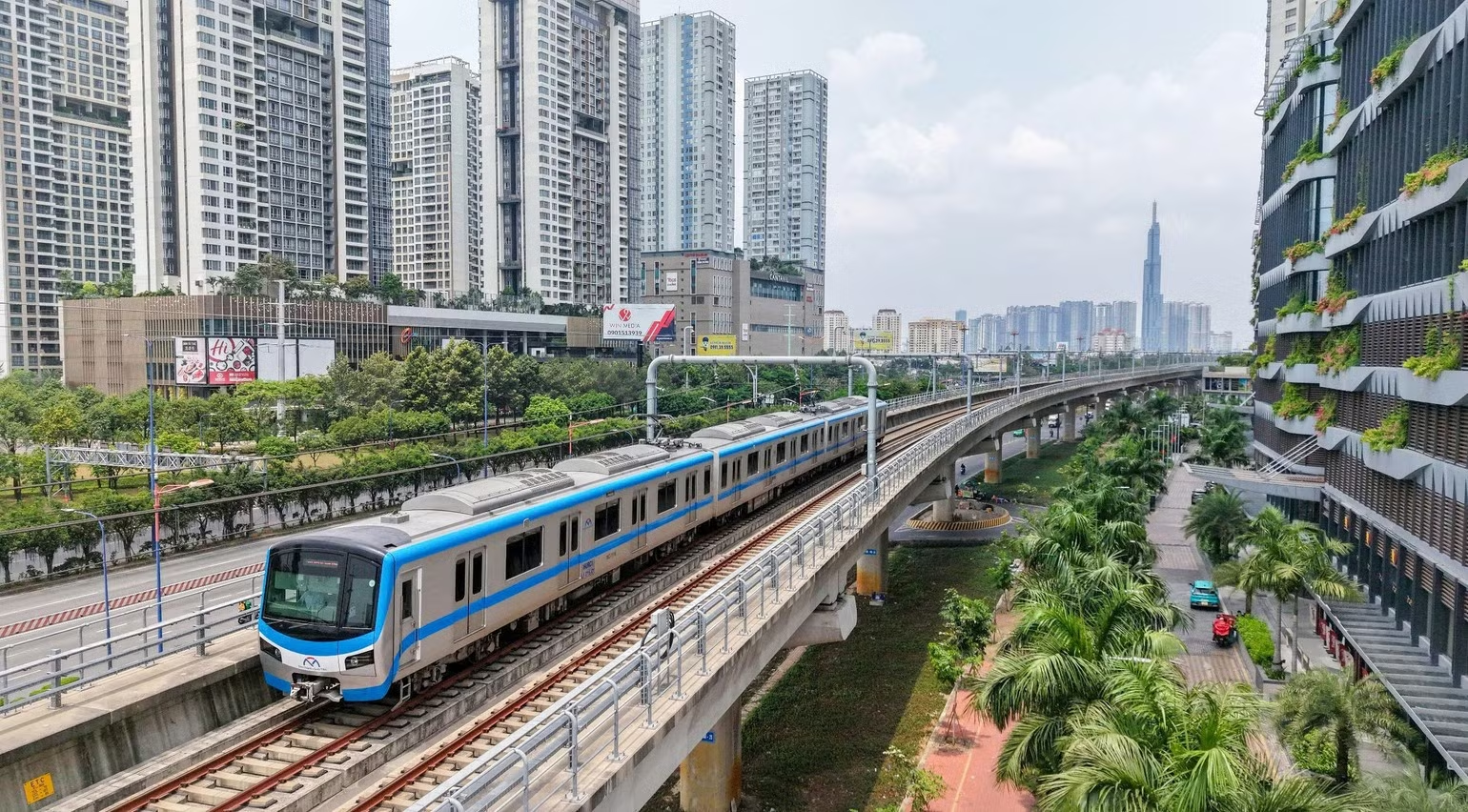
In addition, the city aims to mobilise all available resources for development investment, with public investment playing a leading role in stimulating private investment. It is also promoting public-private partnerships to develop a modern, integrated infrastructure system.
According to Nguyen Van Duoc, priority investment will be directed towards transport, logistics, digital infrastructure, and energy to meet the requirements of double-digit economic growth. At the same time, Ho Chi Minh City is accelerating administrative reform and building a streamlined, effective, and efficient administrative apparatus.
Work performance and the quality of services provided to residents and businesses will serve as key criteria for evaluating officials, helping foster an environment that encourages innovation, initiative, decisive action, and accountability in the public interest.
Nguyen Van Duoc, Chairman of the Ho Chi Minh City People's Committee, stressed that the city's development can only be considered truly successful when the benefits of economic growth are translated into improved social welfare for its people. The city cannot wait until it becomes wealthy to address social welfare and improve cultural and social well-being. Instead, these priorities must advance alongside economic development at every stage, ensuring that all residents share in the benefits of growth.







![[Infographic] GRDP growth scenarios for 34 provinces and cities in fourth quarter of 2026](https://en-cdn.nhandan.vn/images/nyM650OGFWrOVWc-xajqN-rTZ68Rlmc1fiGJOhBRYHFSa4DhrHNDxEFdnz313Vk5dNJuxdkHglPA3rLeaPeiaUheNuCI723k2lNssd-YLJuKR58epWq7s21lV5WjM-HR2-Qpbi4MwAzqt9wRjL4WjGkfEz7RO9qhcwg8o8LQFK8/grdp-growth-scenarios-for-34-provinces-and-cities-in-q42026-anh-dai-dien.jpg.avif)