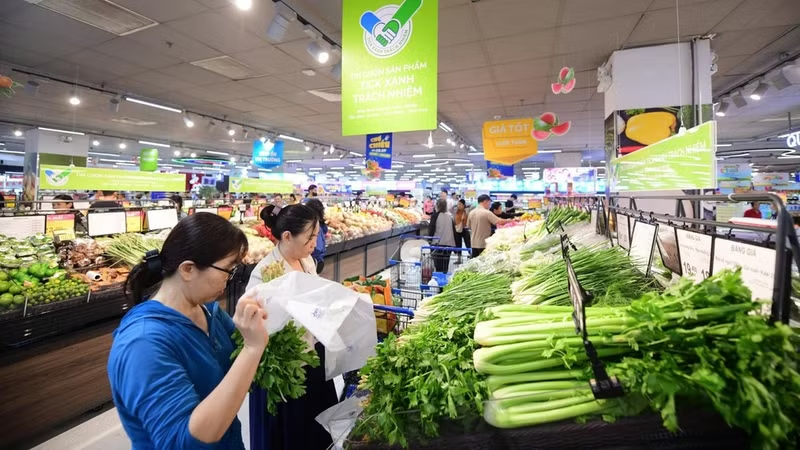
Building on a model known as “Responsible Green Tick”, many localities, schools, and businesses in Ho Chi Minh City leverage technology and information transparency to regulate food throughout the supply chain, from farm to table. This new approach yields tangible results in combating the long-standing problem of unsafe food.
Food safety must be managed across the entire supply chain
A meal served to pupils is the result of an entire process, from production areas and livestock farms to processing plants, slaughterhouses, transport, and storage. Therefore, inspecting quality only in the kitchen remains insufficient.
At the recent seminar on safe meals, Nguyen Ngoc Thang, Deputy General Director of Saigon Co.op, emphasised that the safety of every meal must be built on a safe, transparent, and responsible supply chain.
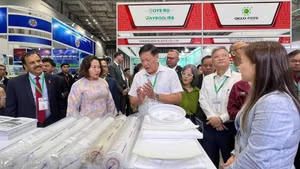
This is also the value Saigon Co.op recognises within the Responsible Green Tick programme. As one of eight pioneering distributors to join the programme in 2024, Saigon Co.op now features 1,396 products from 107 suppliers enrolled in the initiative.
This approach is also garnering wider recognition among producers as market requirements become increasingly stringent.
Le Thi Ngoc Diep of Greenfeed Viet Nam stated the company supplies chilled pork and chicken produced and processed under tightly controlled procedures. Notably, distribution channels, including schools, are increasingly setting specific standards.
This compels businesses to tighten controls over their inputs. Compliance pressures are therefore also becoming a driving force for businesses to standardise their processes and take greater responsibility for their products.
From the distribution perspective, Saigon Trading Corporation (SATRA) is also cultivating an ecosystem comprising member companies and producers to establish an input supply chain for its retail network.
Vu Duong Quan, Director of Market Research and Retail System Management at SATRA, noted this approach both ensures supply and enables businesses to take greater control of product quality and origin.
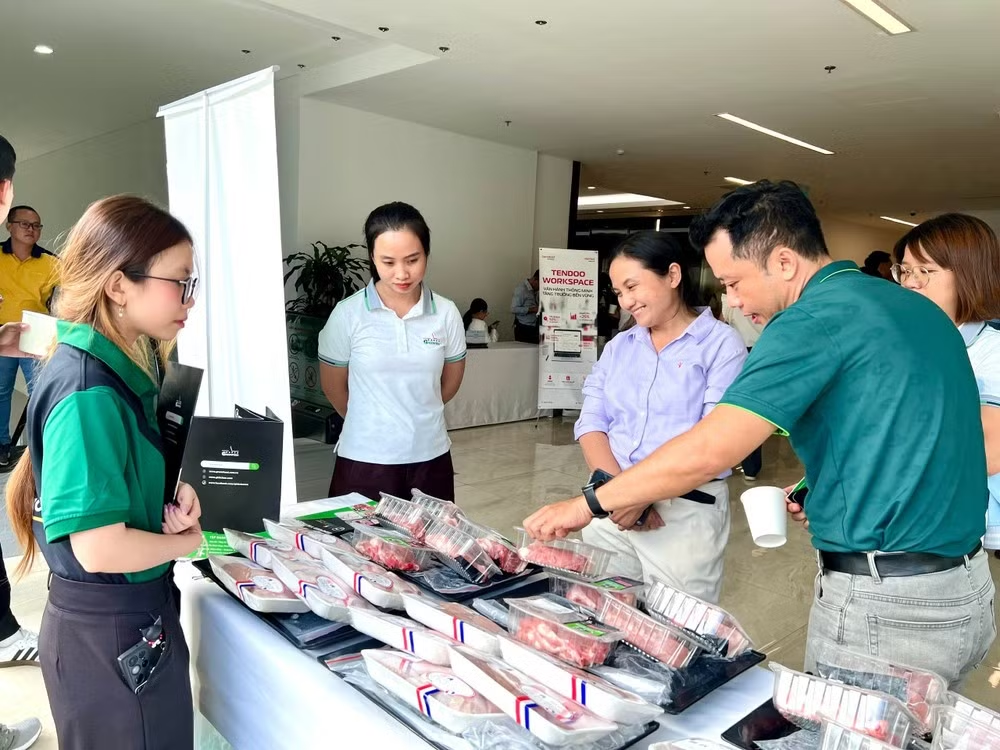
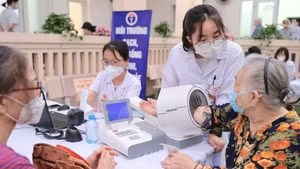
At the local level, ensuring food safety in schools receives paramount priority. Vu Yen Oanh, Vice Chairwoman of Binh Dong Ward, confirmed that so far there had been no cases of food safety violations or food poisoning at school kitchens in the ward.
However, incidents in recent years have remained a stark warning. To prevent similar incidents, she said, stakeholders require comprehensive solutions, along with greater attention from society as a whole to the origin, quality, and safety of food.
Technology as a monitoring tool
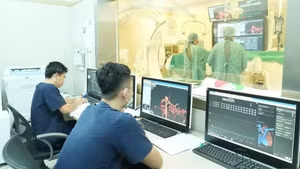
One of the key features of the Responsible Green Tick programme involves deploying technology in the control process, rather than relying solely on paperwork or manual inspections at a particular point in time.
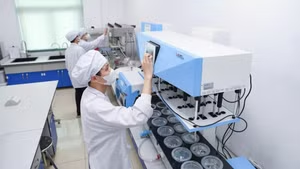
In practice, there are risks that businesses can control proactively, while other problems may arise beyond their direct control. Therefore, besides controlling raw-material zones, selecting suppliers, and managing production processes, there must be checks when goods are received and processed and, above all, the ability to trace their origin when problems occur.
Dao Ha Trung, Chairman of the Ho Chi Minh City High Technology Association, stated the current system can track information related to individual batches, assisting participating parties with inspections and traceability.
When data are managed throughout the process, from inputs to outputs, stakeholders can enhance their ability to monitor, trace, and respond when problems arise.
At Phu My Kindergarten, the use of technology for traceability empowers parents to adopt a proactive approach and feel assured about their children’s meals.
Vu Thuy Hoa, Deputy Principal of the school, explained that when logging into the green tick system, parents could view images of the day’s meals, together with information on food preparation and transport times. This is one of the factors helping to strengthen parents’ confidence and enhance the school’s reputation.
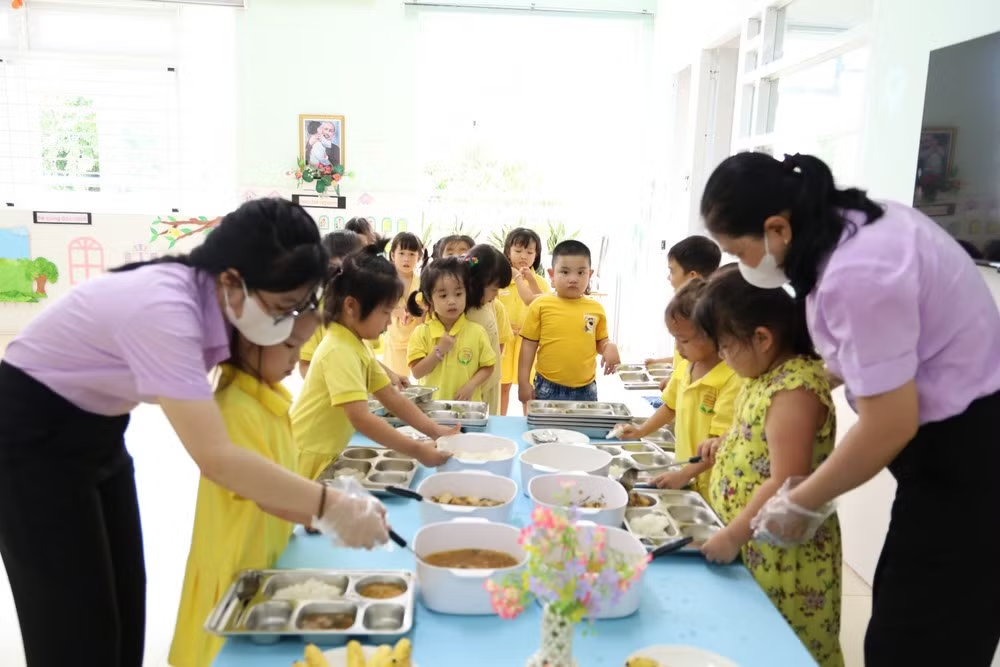
Nguyen Truong Giang, Vice Chairman of Tan My Ward, reported that after five months of implementing the green tick model, management responsibilities and coordination among the relevant units had produced concrete results. The model had also received broad community support, particularly from schools and parents.
Giang added the locality had collaborated with the city’s High Technology Association to provide training to all public and non-public educational establishments in the area.
The experience of the Responsible Green Tick programme demonstrates that ensuring the safety of a school meal cannot stop at inspecting the kitchen or requiring businesses to comply with certain standards.
Throughout the process, technology serves as a tool to connect these links through data, enabling faster and more transparent traceability when an incident occurs.