As of July 1, the health insurance policy has undergone several adjustments aimed at expanding benefits and facilitating easier access to medical services. For individuals seeking care at primary-level healthcare facilities—such as local health stations, regional polyclinics, or medical centres without inpatient beds—the health insurance fund will cover 100% of the costs, in accordance with established health insurance payment regulations.
For those seeking medical care at primary-level facilities nationwide—even if these facilities differ from the one originally registered on their health insurance card—their insurance benefits remain fully guaranteed.
Specifically, for inpatient treatment, 100% of the costs covered by the individual’s insurance plan will be reimbursed. For outpatient care, patients visiting facilities that—prior to January 1, 2025—were classified as district-level hospitals will receive 100% of their entitled health insurance coverage, subject to the specific medical services and the beneficiary’s coverage category.
Starting July 1, 2026, health insurance policyholders who seek outpatient care at certain primary-level or specialised-level (formerly provincial-level) healthcare facilities will have 50% of their entitled coverage reimbursed by the health insurance fund for medical conditions or groups of conditions that were previously ineligible for such coverage.
These adjustments help alleviate the financial burden, broaden the options for where patients can seek care, and improve overall access to medical services.
Ultimately, however, the policy will only truly prove effective when these benefits are fully realised, the quality of professional care is enhanced, and patients genuinely experience greater convenience and dedicated service during every medical visit. Therefore, improving the quality of primary healthcare is a crucial requirement for strengthening trust and increasing the appeal of health insurance.

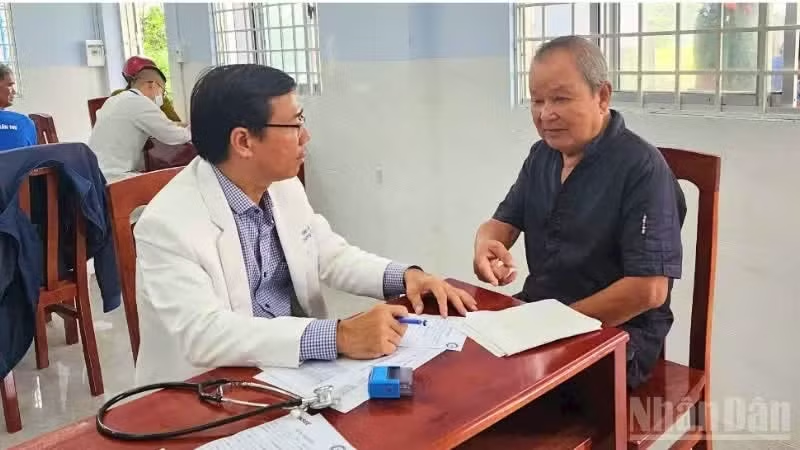
At the Truong Long Commune Health Station in Can Tho City, efforts to improve the quality of medical care are centred on a patient-focused approach.
The station prioritises the standardisation of professional procedures and the creation of a safe, welcoming environment for patients. It also promotes the “family doctor” model to manage non-communicable diseases, such as hypertension, diabetes, bronchial asthma, and cardiovascular conditions. Regular health monitoring enables patients to better manage their conditions, minimise complications, and reduce long-term treatment costs.
Alongside enhancing professional quality, the station is gradually upgrading its facilities and medical equipment, while providing opportunities for healthcare staff to undergo training and update their knowledge.
Integrating traditional medicine with modern medicine—particularly in the treatment of chronic illnesses and rehabilitation—has helped diversify healthcare options. Furthermore, the station focuses on the planning and supply of medications covered by health insurance, ensuring that patients have access to prescribed treatments and reducing the need for them to purchase medicine elsewhere.
Ease of access to services is another key priority. The station has expanded its use of information technology—incorporating chip-based national ID cards and the VNeID digital identity application—to streamline administrative procedures. It is also moving toward the implementation of remote consultations and telemedicine.
Additionally, the station places a strong emphasis on the quality of service, a sense of professional responsibility, and adherence to codes of conduct. Clear procedures, attentive guidance, and timely support all contribute to a positive experience, giving people the confidence to choose and remain committed to health insurance.
From the perspective of healthcare providers, Associate Professor Dr. Nguyen Trieu Viet, Deputy Director of the University of Medicine and Pharmacy Hospital in Can Tho, notes that health insurance plays a vital role in providing financial support—especially for individuals with chronic conditions or serious illnesses that require long-term treatment and entail significant costs.
The scope of health insurance coverage continues to expand, now encompassing a wider range of medications and modern medical procedures, which helps alleviate the economic burden on patients. Therefore, it is advisable for individuals to enrol in health insurance early—ensuring they are protected when the need for medical care arises—rather than waiting until they are already ill.
For health insurance to increasingly fulfil its role as a pillar of social security, it requires the concerted effort of regulatory authorities, healthcare providers, and the public.
Sound policy must be matched by high-quality service; expanded benefits must be implemented in a manner that is comprehensive, transparent, and accessible.
When patients receive care characterised by professional expertise, a dedicated attitude, and appropriate services, their trust in the health insurance system is strengthened. This serves as a vital foundation for achieving universal health coverage—ensuring that everyone has access to medical services—and contributes to building a fair, efficient, and people-centred healthcare system.