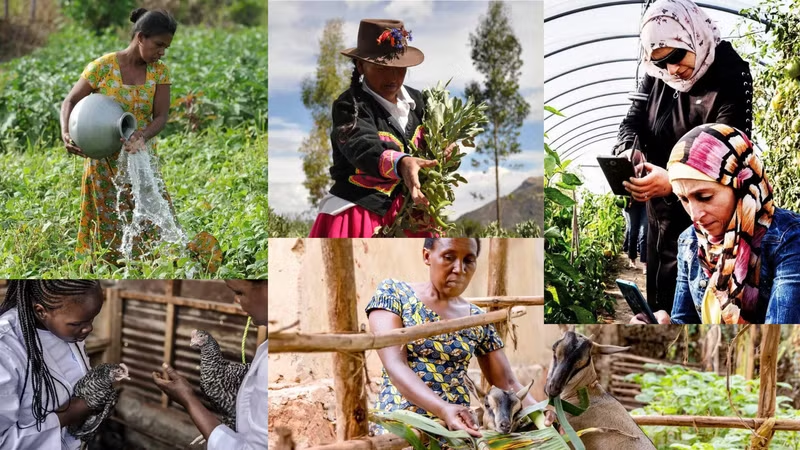
The UN General Assembly designates October 15 as the International Day of Rural Women, honouring the significant contributions of rural women and girls around the world.
These women and girls make important contributions to ensuring food supplies for communities, protecting the ecological environment, and promoting sustainable development.
The pivotal role of women in agriculture, food security, and environmental protection
According to the UN, investing in rural women and girls not only helps protect their rights, but is also key to eradicating poverty, ensuring equity in climate change adaptation, and realising the 2030 Agenda for Sustainable Development.
The UN also forecasts that around 351 million women and girls will still be living in extreme poverty by 2030. Identifying barriers and stepping up support programmes for rural women has therefore become an urgent task for the international community.
Rural women play an important role in the agricultural economy and global food security. According to figures released by the Food and Agriculture Organisation of the UN (FAO), women produce between 60% and 80% of food in most developing countries. They account for half of total global food production.
The UN agency reports that approximately 1.2 billion people worldwide work in agrifood systems, with women accounting for up to half of this workforce.
Among employed women, around 25% work directly in agriculture, forestry, and fisheries. In low-income and lower-middle-income countries, agriculture remains the sector that employs the largest number of women.
The UN also affirms that, beyond their direct role in production, rural women make significant contributions to preserving indigenous knowledge, traditional crop varieties, and biodiversity.
From communities in Mexico and India to Latvia and Nigeria, women select seeds, tend gardens, preserve indigenous seed banks, and pass down traditional culinary knowledge through generations.
These activities help maintain the diversity of local agricultural ecosystems while ensuring a varied and nutritious diet for families and strengthening local food self-sufficiency.
At the same time, by adopting ecological farming methods and climate-smart agriculture, rural women contribute to protecting natural resources and the environment.
Rural women in some regions, countries, and communities continue to face barriers
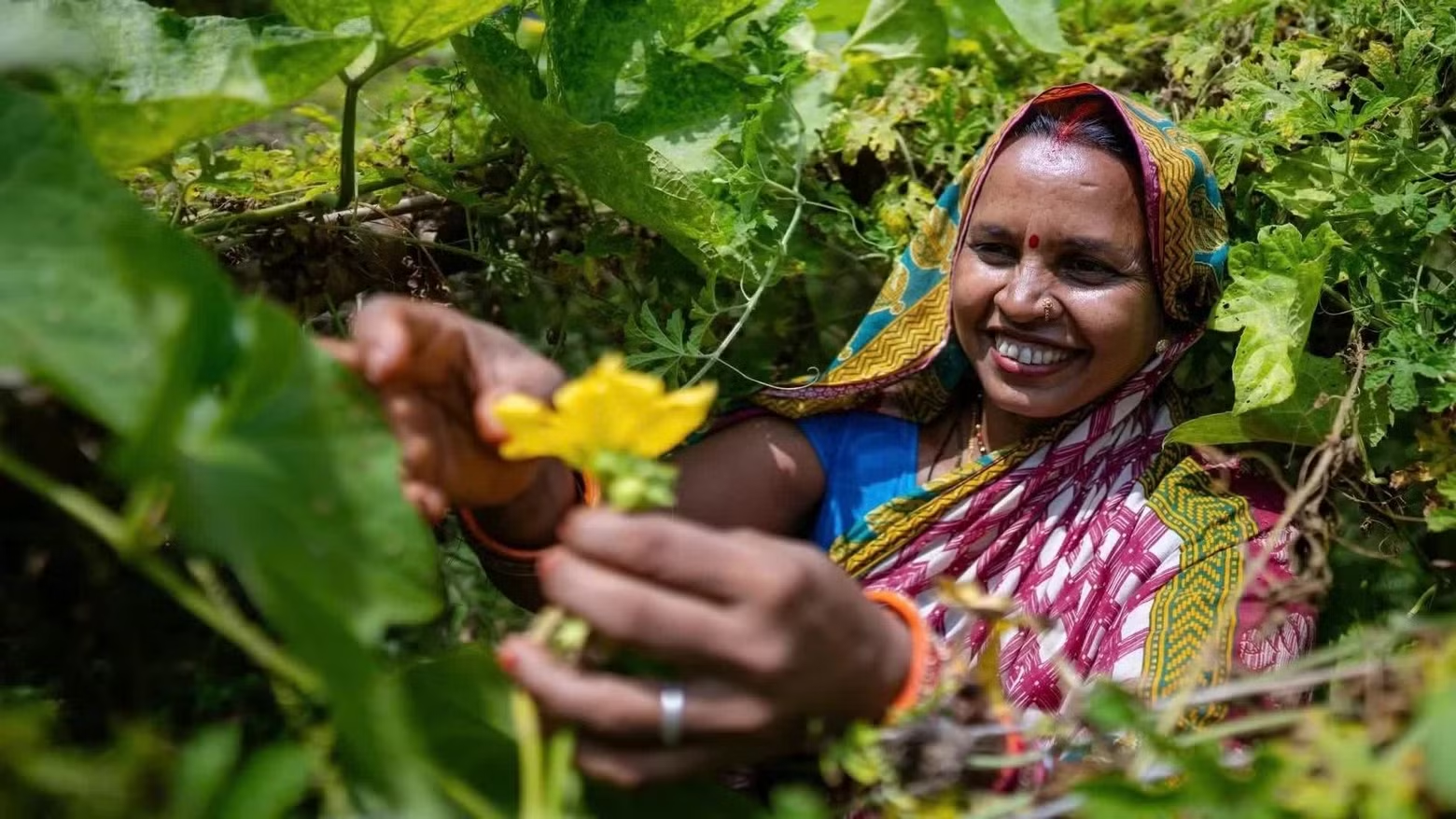
Despite their pivotal role in society and production, rural women and girls continue to face poverty and inequality, and have fewer opportunities to access resources than rural men and women living in urban areas.
A UN report points out that although 164 of 180 countries have enshrined women's equal rights to own and use land in law, only 29% of countries effectively guarantee these rights both legally and in practice.
In 62% of countries, patriarchal social norms, laws, or traditional customs continue to prevent women from registering property in their own names.
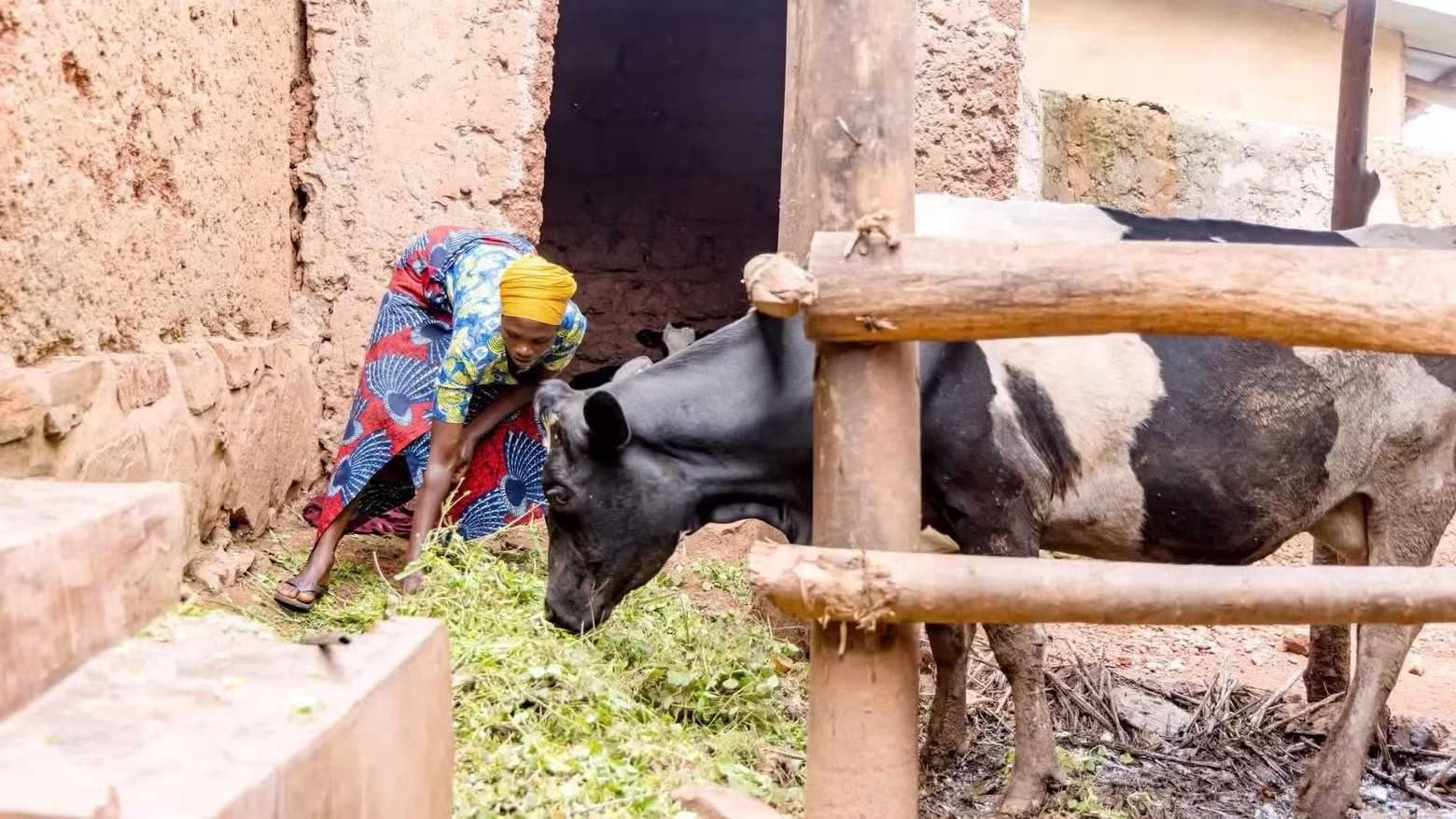
Furthermore, the laws of 43 countries and territories still do not guarantee equal inheritance rights for widows. In 41 countries and territories, daughters do not have the same inheritance rights as sons. As a result, in some places, many women fall into poverty when their husbands or fathers die.
In rural areas of developing countries, administrative barriers, a lack of collateral, and discrimination make it difficult for women to access formal credit to expand their production.
In the digital era, although mobile phone ownership among women is increasing, rural women continue to face significant constraints related to connectivity infrastructure, service costs, educational attainment, and digital skills.
Rural women and girls shoulder most household chores and family care responsibilities, leaving them little time for other activities. According to UN research, in two-thirds of households without access to water, women and girls are responsible for collecting water for their families.
This burden, combined with the long distances to schools, has hindered many girls' access to education. In a UN survey covering 20 countries, fewer than 1% of poor rural women had completed secondary education.
Under the UN's worst-case climate change scenario, this global challenge could push an additional 158 million women and girls into poverty and leave 236 million more people facing food insecurity by 2050.
When rural women rise, fields flourish, families thrive, and societies transform.
UN Women, International Day of Rural Women 2025
The UN has therefore made it clear that empowering rural women and girls is not simply a matter of providing support to a particular group, but a strategic investment in global prosperity and sustainability.
Earlier, UN Women, the UN Entity for Gender Equality and the Empowerment of Women, stated on the occasion of the 2025 International Day of Rural Women: “When rural women rise, fields flourish, families thrive, and societies transform.”
Viet Nam actively and responsibly promotes the role of rural women
As an active and responsible member committed to UN policies and initiatives, Viet Nam has implemented, is implementing, and will continue to pursue a range of legal reform programmes to ensure full equality for rural women in owning, using, and controlling land, water, and other natural resources.
Viet Nam is also focusing investment on infrastructure, public services, and comprehensive social welfare services to reduce women’s burden of unpaid work, while strengthening their economic capacity and enhancing rural women’s participation and voice in development policies and climate change response strategies.
The International Day of Rural Women is an opportunity for the world to seek ways to remove all barriers facing rural women, paving the shortest route towards a future free from poverty and sustainable food security for generations to come.
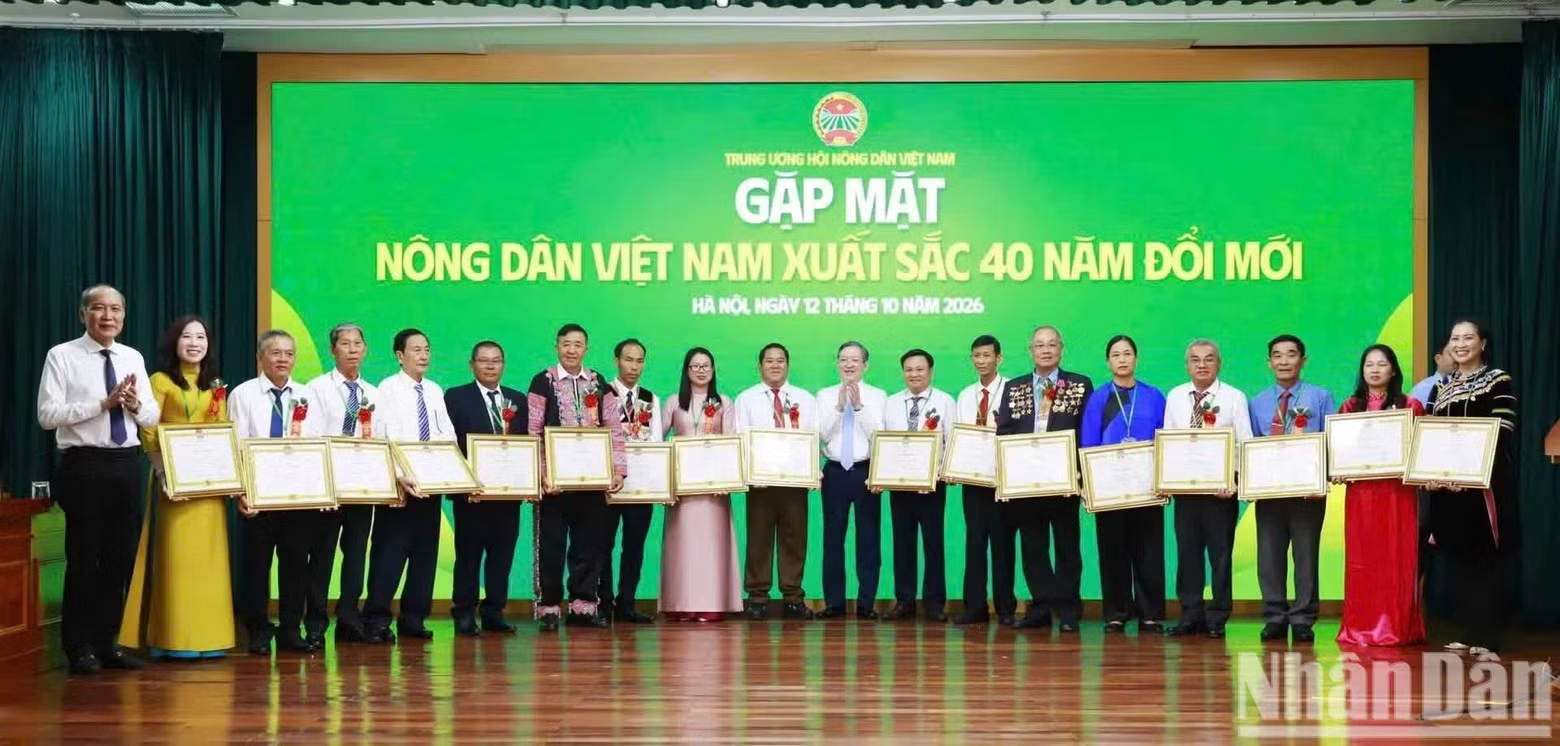
In recent years, rural women in Viet Nam have demonstrated their capabilities and role in economic development. Many successful start-ups have not only helped women improve their livelihoods but also created jobs for other women, enabling them to secure stable lives in their home communities without having to migrate elsewhere.
Moreover, moving beyond their traditional role as workers, many rural women in Viet Nam have become business decision-makers, turning indigenous knowledge into commercial products. In doing so, they have created sustainable local employment and helped address livelihood challenges for hundreds of ethnic minority workers, particularly ethnic minority women.
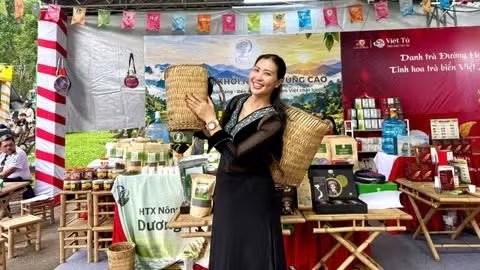
Meeting Luu Thi Hoa, born in 1993 and a member of the Co Lao ethnic group, at the conference “Digital Transformation in Cooperatives: From Production Data to Market Expansion,” recently organised by the Viet Nam Cooperative Alliance in Ha Noi, we were impressed by what she has achieved for her community.
Hoa was determined to start her own business and succeeded with a clean agriculture project. She has also been the founder of Po My Agricultural, Forestry and General Trading Services Cooperative, established in 2017 in what was formerly Ha Giang Province and is now part of Tuyen Quang Province.
As the owner of a new-style cooperative she founded herself, Hoa has effectively drawn on traditional experience while making extensive use of digital transformation and circular economy thinking. In our conversation with her, it was clear how skilfully she has combined indigenous knowledge with modern economic thinking.
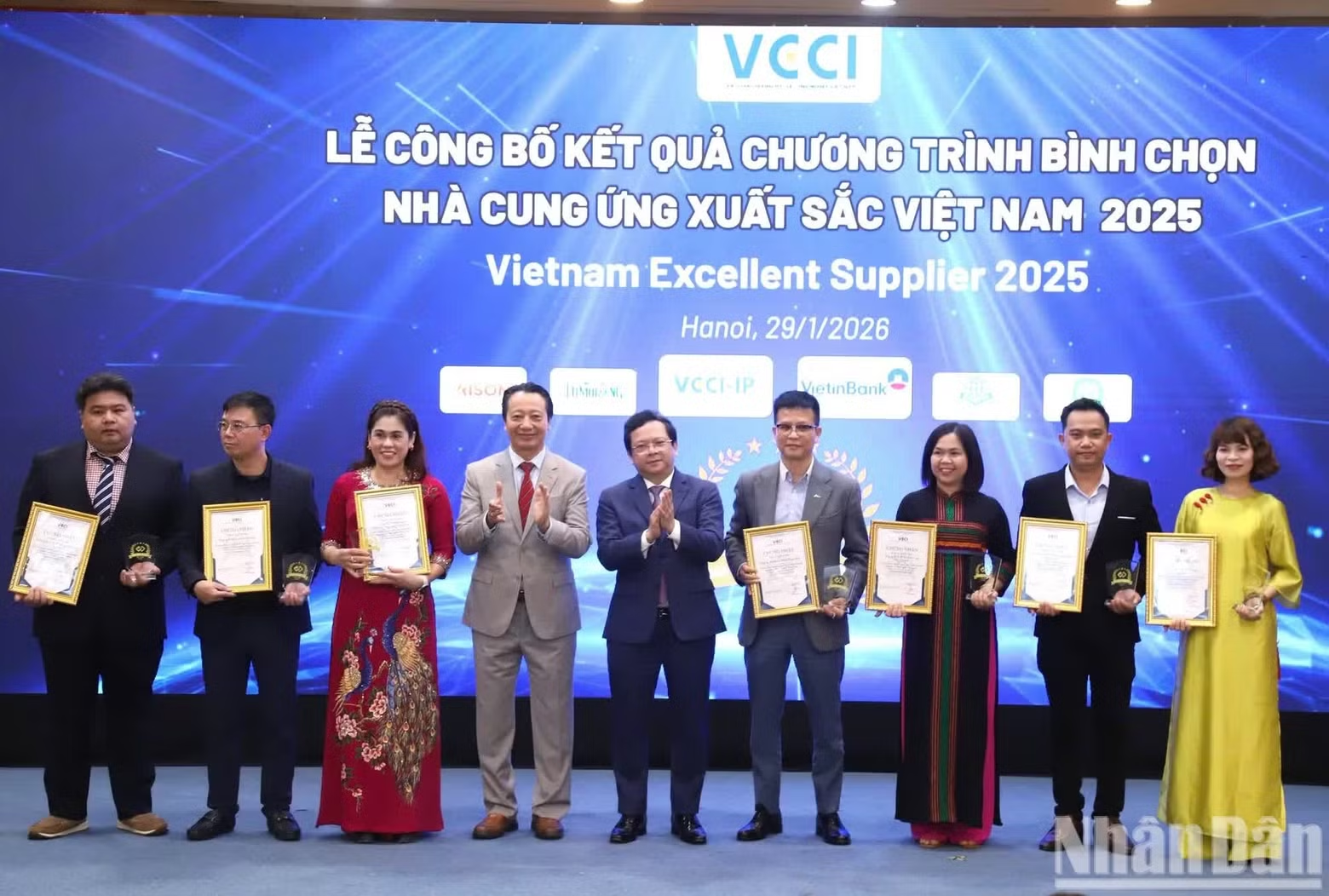
Similarly, speaking with Luong Thi My Hue, born in 1982, founder and chief executive officer of Tay Nguyen Herbal Company Limited (DATO), which has operated since 2018 in what was formerly Kon Tum Province and is now Quang Ngai Province, we were impressed by her determination and perseverance in pursuing her goals.
Operating as a social impact enterprise committed to sustainable development and community support, DATO's business model focuses on working with ethnic minority communities in Dak To Commune, Quang Ngai Province, to grow indigenous spices and medicinal plants.
“At DATO, we have established a sustainable value chain, from providing seeds, fertilisers, and technical support to purchasing, processing, and market development. Everything is aimed at building a transparent, fair, and closed-loop ecosystem in which farmers are respected as the most important link in the value chain,” Hue said.
Our conversation with Bui Thi Hieu, born in 1986, Director of the Vien Son Clean Agricultural Production and Consumption Cooperative in Son Tay Ward, Ha Noi (formerly Vien Son Ward, Son Tay Town, before the administrative merger), further highlighted the value of a scientific and sustainable production model that delivers strong economic results.
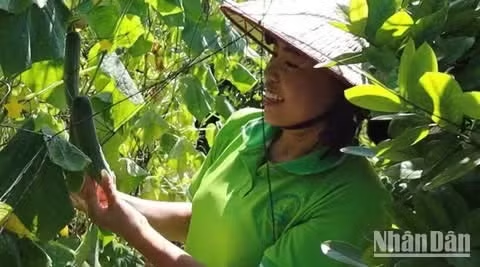
Beyond her success in farming, Hieu is also an active participant in mass organisations and social activities. She is an honorary member of the Youth Union and has received commendations and certificates of merit on several occasions for outstanding achievements in activities organised by the Farmers’ Union and the Viet Nam Women’s Union.
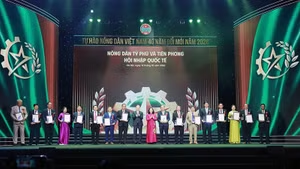
Most recently, Thach Thi Chal Thi, born in 1989 and founder and general director of Tra Vinh Farm Company Limited, was selected by FAO in Viet Nam as one of the 10 Outstanding Women in Agrifood Systems and Rural Development 2026.
This marks a special milestone in Chal Thi and Sokfarm’s journey and recognises the efforts of a Khmer woman entrepreneur to develop indigenous agricultural products, create livelihoods for local communities, and promote a sustainable agricultural model in the Mekong Delta.
FAO’s recognition of Chal Thi reflects appreciation for her efforts to enhance the value of indigenous agricultural products, link production with farmers’ livelihoods, and pursue sustainable agricultural development in the Mekong Delta in response to saltwater intrusion and climate change.
For years, Chal Thi and Sokfarm have remained committed to developing products made from coconut blossom nectar, a local resource closely associated with the lives of people in the coconut-growing region. Their work has also opened up a new direction for local organic agriculture, expanded the domestic market, and brought their products to many countries around the world.
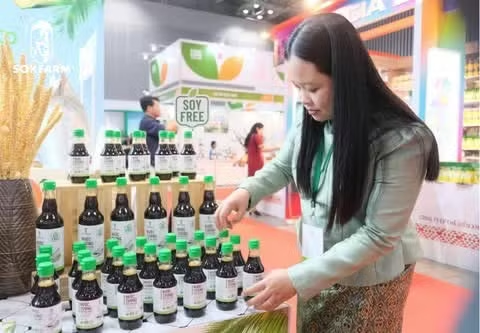
“Throughout this journey, guided by our motto ‘Happy Agriculture,’ we at Sokfarm have pursued an approach to farming in which business growth is linked to farmers’ livelihoods, community benefits, and environmental sustainability,” Chal Thi shared.
The achievements of Luu Thi Hoa, Luong Thi My Hue, Bui Thi Hieu, Thach Thi Chal Thi, and many other women in rural Viet Nam demonstrate how women, particularly those in rural areas, including ethnic minority women, are making progress and taking on increasingly prominent roles.
More profoundly, this progress is transforming the socio-economic landscape of rural and mountainous areas. Most notably, it is helping shift production from raw commodities towards value chains based on deeper processing, directly creating a rural workforce with sustainable livelihoods in the very communities where these women live and work. This is making a positive contribution to the country’s broader sustainable development.