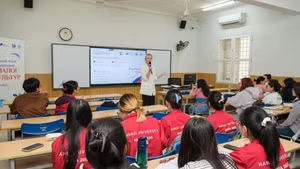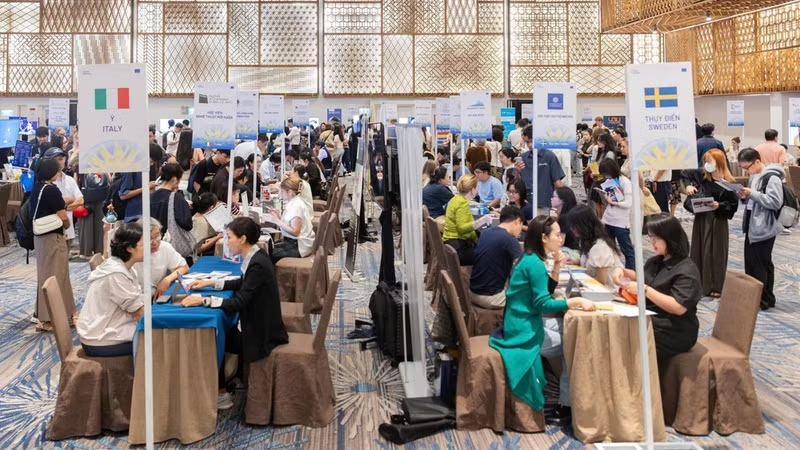
The Study in Europe Fair 2026 was one of the lively activities demonstrating the strategic cooperation between the European Union and Viet Nam in key areas, including education, research, and innovation.
The European Union regards Viet Nam as a strategic partner in the region and considers education one of the top priorities under its Global Gateway strategy.
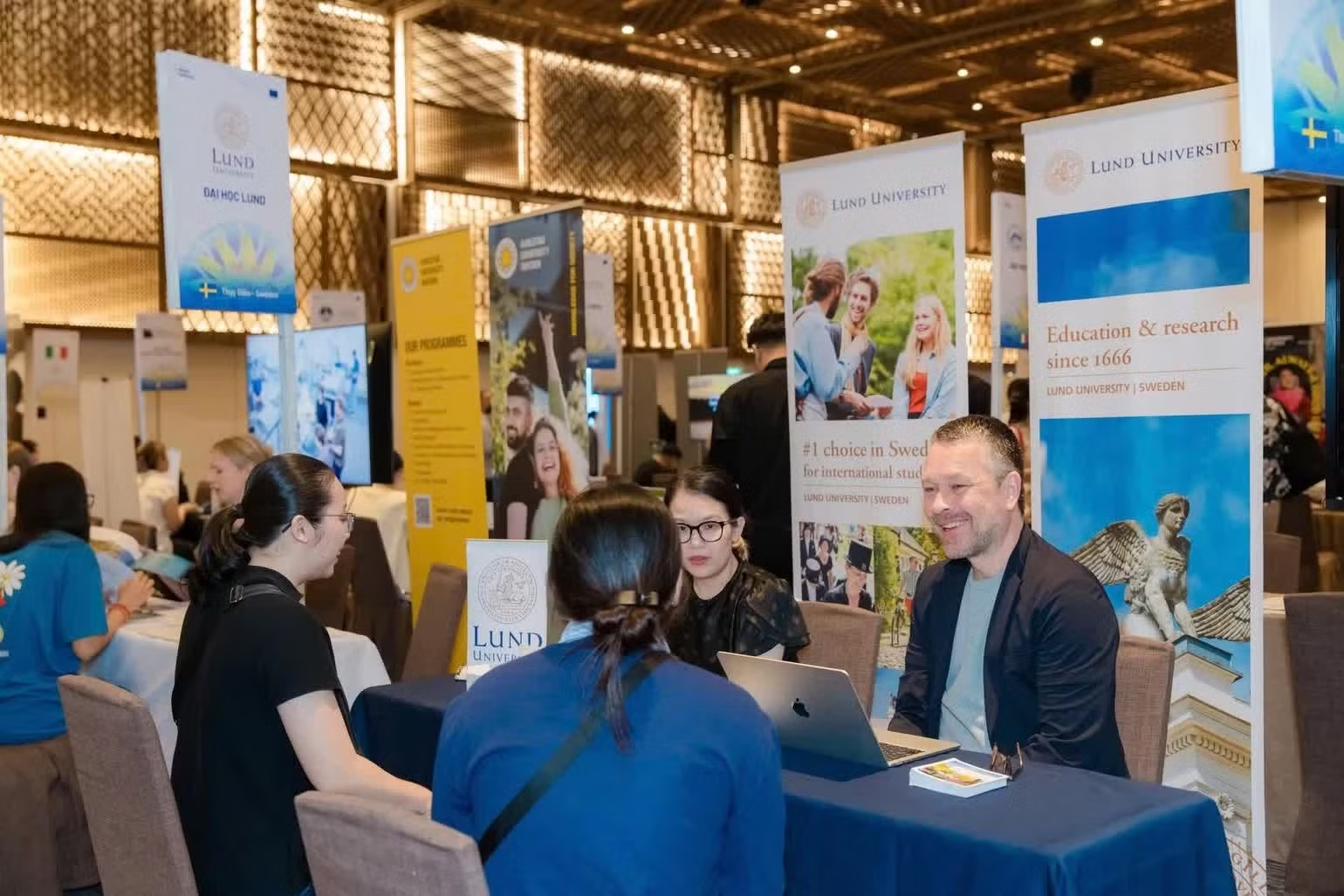
Amid increasingly deep international integration, Europe has established itself as one of the world’s leading study destinations, thanks to its diverse range of English-taught programmes and competitive tuition fees.
The Study in Europe Fair 2026 in Ha Noi and Ho Chi Minh City opened a wealth of study opportunities for Vietnamese pupils and students at universities and educational institutions in Belgium, Bulgaria, Czechia, Denmark, Germany, Ireland, Spain, France, Italy, Lithuania, Hungary, Austria, Poland, Romania, Slovakia, Finland, and Sweden.
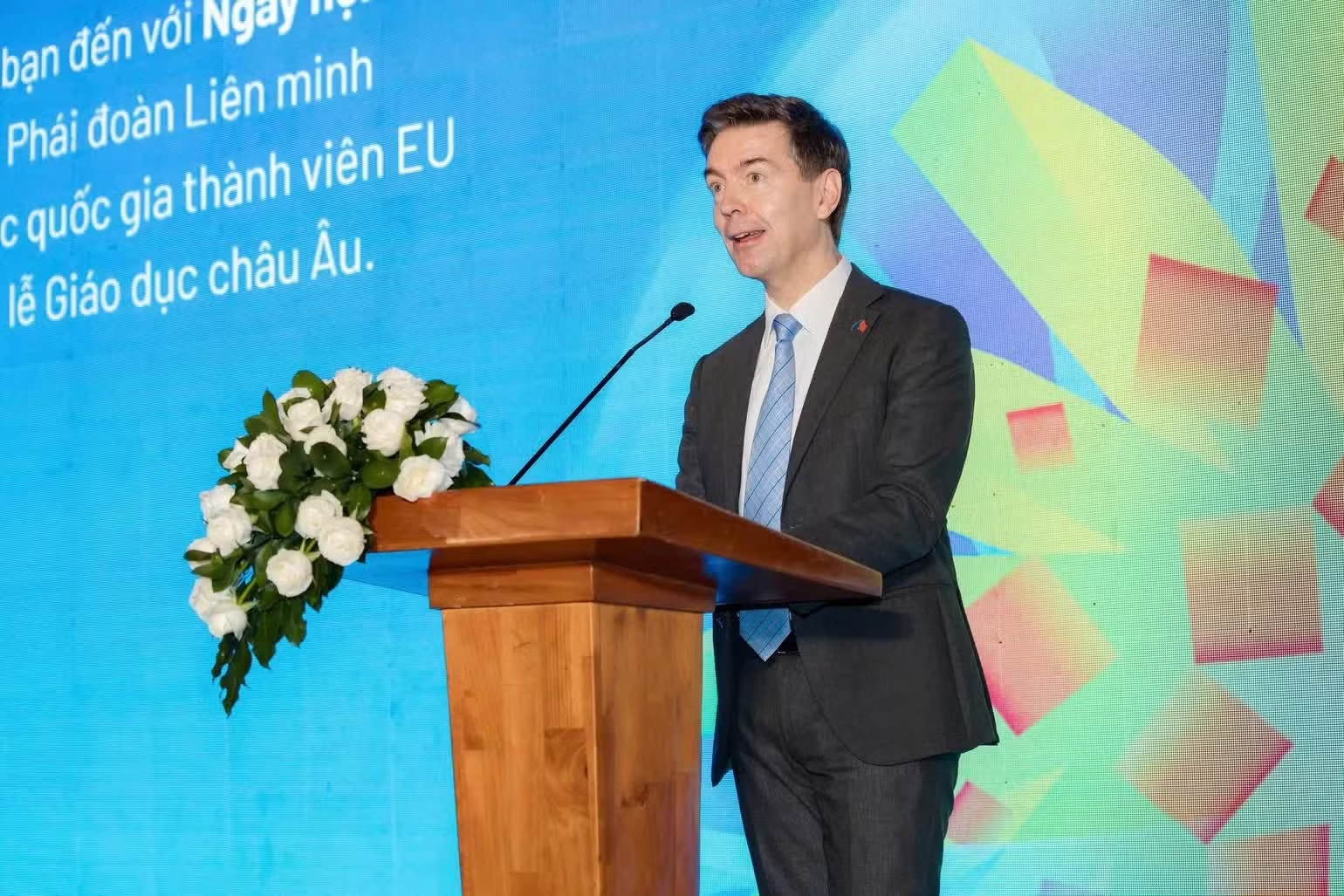
Highlighting the practical value and wide range of study opportunities in Europe, EU Ambassador to Viet Nam Julien Guerrier said that among the world’s major study destinations, Europe offers a wide range of study options at some of the most affordable costs. Many programmes are taught in English, with competitive tuition fees and scholarship opportunities making studying in Europe more accessible.
In addition, financial support schemes such as Erasmus Mundus scholarships for joint master’s programmes have opened educational opportunities for a large number of international students, including those from Viet Nam. From 2004 to 2026, nearly 800 Erasmus Mundus Joint Masters scholarships were awarded to Vietnamese students, alongside study, exchange, and cooperation opportunities for students, lecturers, and educational institutions through Erasmus+.

A key feature of European education today is its focus on training a workforce ready to adapt to the rapid expansion of artificial intelligence (AI) and digital technologies. European higher education institutions provide specialist knowledge in fields such as AI and data science, while closely linking teaching with practical research and business needs.
Exposure to Europe’s rich heritage, diverse languages, and inclusive way of life helps young people broaden their perspectives and develop the skills needed to work in multicultural environments.
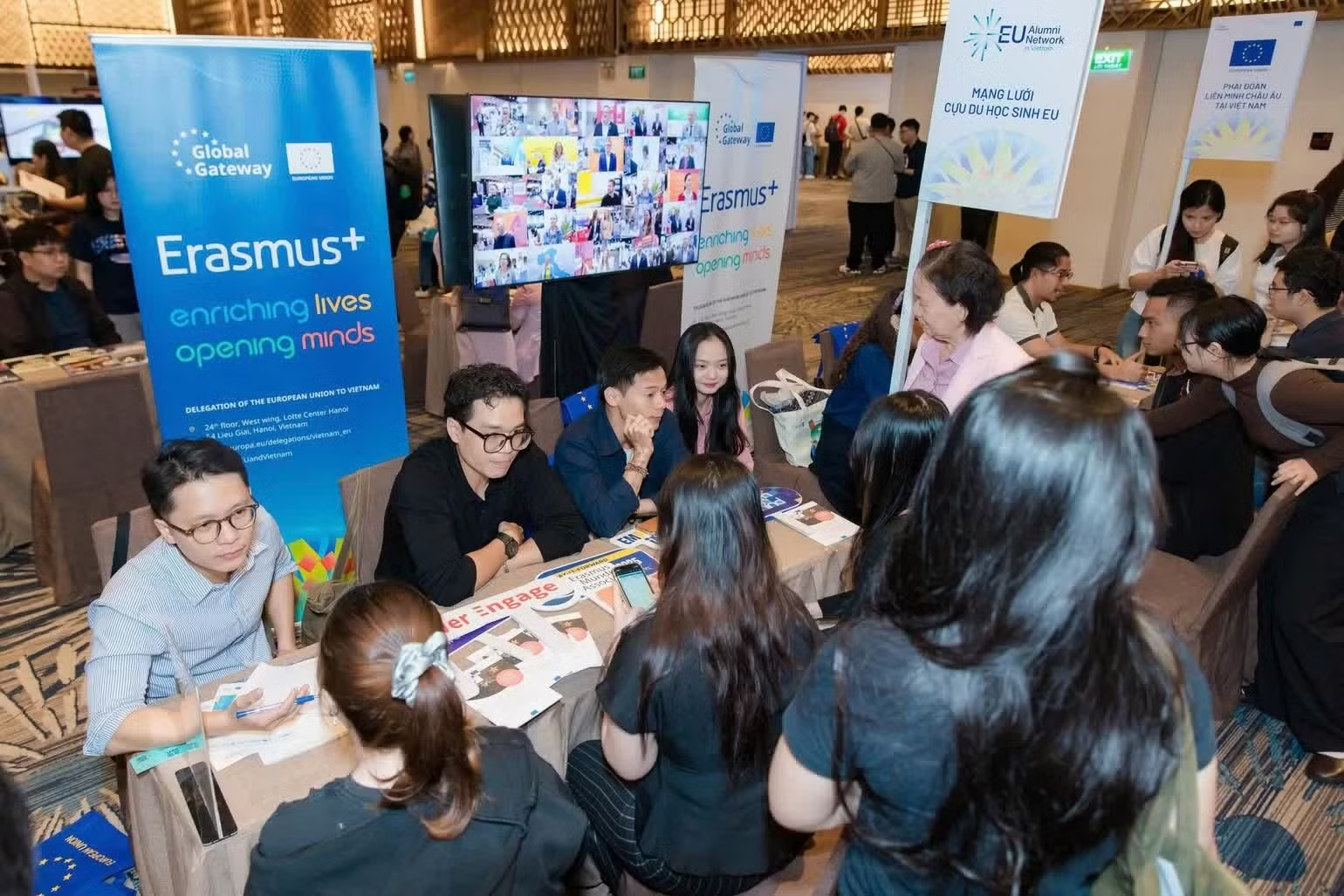
Currently, around 40,000 Vietnamese students are studying in EU member states, accounting for nearly 30% of all Vietnamese students studying abroad.
In addition, hundreds of joint training programmes are being implemented between Vietnamese universities and those in EU member states, providing clear evidence of the effective educational cooperation that has been established in recent years.