Strengthening cooperation with international universities and businesses
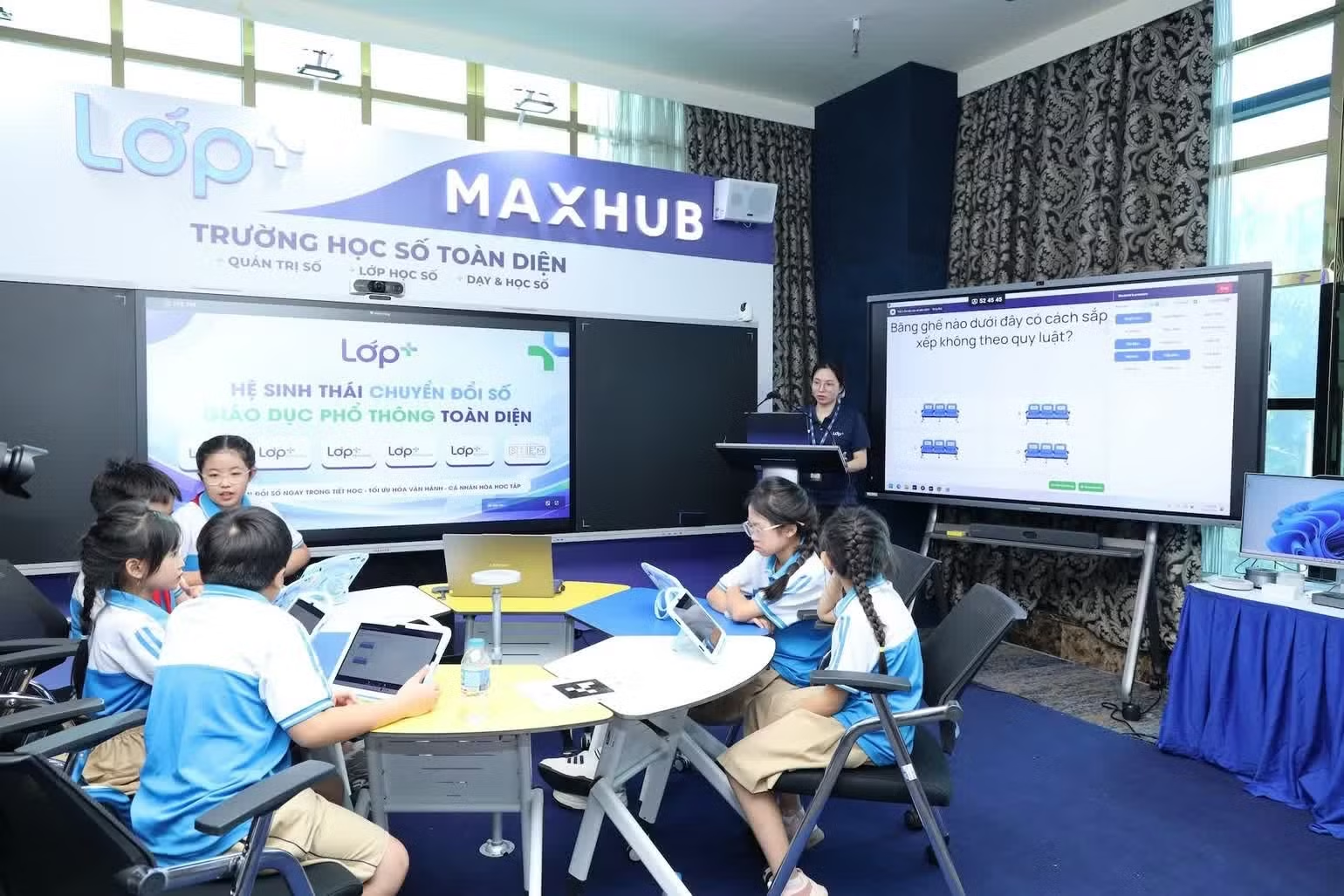
The International Conference on Education Cooperation in the Digital Era, recently held by the Ministry of Education and Training, attracted 900 delegates from various countries and territories. Taking place alongside the conference was an Education and Educational Technology Exhibition, bringing together technology businesses, universities, educational organisations, and solution developers serving the education sector. Products and technologies were showcased in various fields, including AI, digital learning platforms, personalised education, foreign languages, STEM, educational data, simulation, and solutions supporting teachers, schools, and learners.
The exhibition featured a number of technology companies, including Qualcomm, Amazon Web Services (AWS), Google, Meta, ELSA Corp, and Khan Academy. Many internationally renowned higher education institutions also participated, including the Georgia Institute of Technology (Georgia Tech), the University of Illinois Urbana-Champaign, the University of Massachusetts Amherst (UMass Amherst), the University of London, and universities from the US, the UK, Canada, the Republic of Korea, the European Union, and other countries.
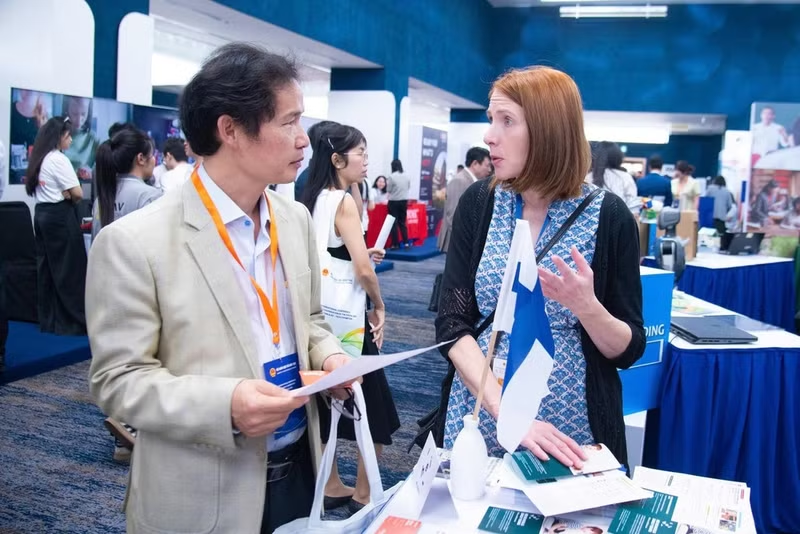
Participating in the conference and exhibition, Vietnamese educational and training institutions viewed the event as an opportunity to promote international cooperation and integration in education, expand ties with international universities and educational organisations, and share innovative models, methods, and technologies in teaching, learning, and management.
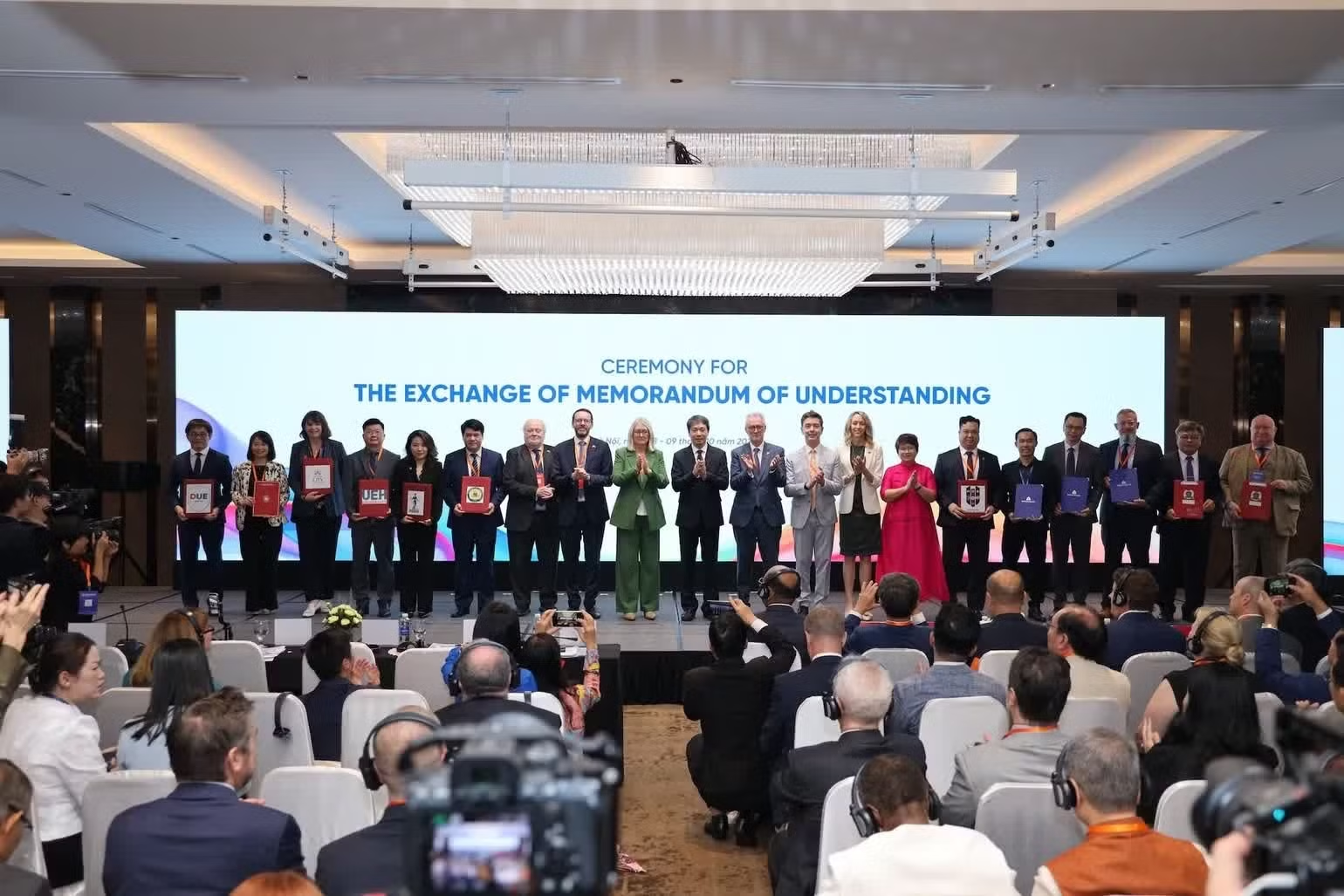
During the event, numerous domestic and international organisations, educational institutions, and businesses signed agreements and exchanged memoranda of understanding, aiming to connect training and research needs with resources, experience, and technological solutions.
Through academic exchanges and student exchange programmes with international universities, educational institutions gain greater access to new technologies and knowledge, helping improve training quality and meet labour market trends.
Assoc. Prof. Dr. Pham Van Song
Assoc. Prof. Dr. Pham Van Song, Rector of Gia Dinh University, said that cooperation in training with international universities and businesses created opportunities for students and lecturers to share and learn from international experience, thereby broadening their development prospects.
He said Gia Dinh University had signed a cooperation agreement with ABE Global Co., Ltd. (the UK).
“The cooperation agreement will therefore open up further opportunities for learners,” Assoc. Prof. Dr. Pham Van Song said, explaining the significance of the initiative. According to him, as international cooperation in education continues to grow, students’ employment prospects are no longer limited to the domestic market but are also expanding internationally.
In addition, academic exchanges and student exchange programmes with international universities give educational institutions greater opportunities to access new technologies and knowledge, helping improve training quality and meet labour market trends.
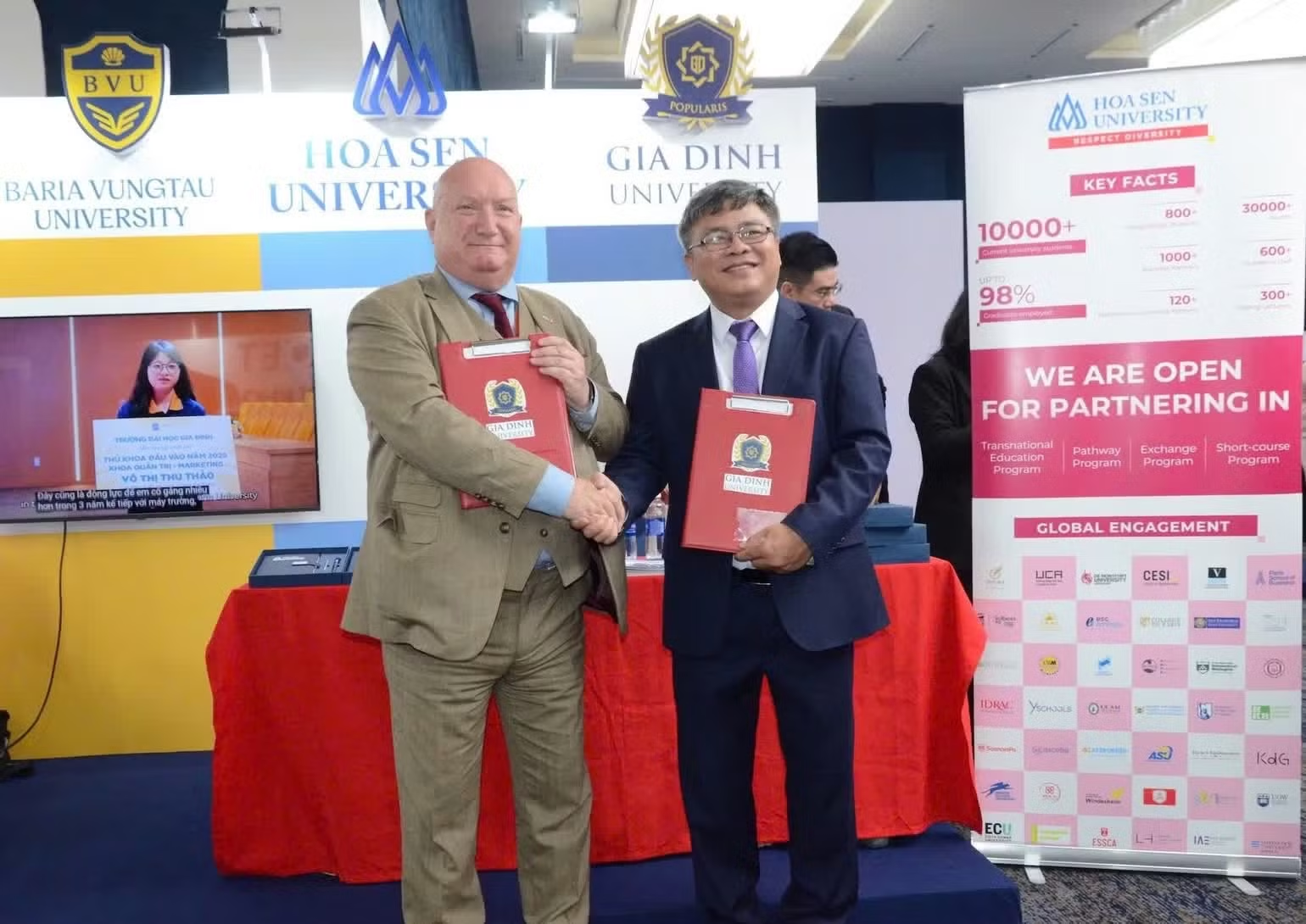
A representative of Nguyen Hoang Group said that five universities under the group — Hoa Sen University, Mien Dong University of Technology, Hong Bang International University, Gia Dinh University, and Ba Ria–Vung Tau University — had signed cooperation agreements with international universities and businesses, expanding opportunities for collaboration in training, academic exchanges, scientific research, and human resource development.
Among them, Hoa Sen University signed cooperation agreements with three international universities. Cooperation with Griffith College (Ireland) focuses on articulation programmes, exchanges of lecturers, staff, and students, scientific research, academic activities, curriculum development, and the exchange of learning materials and information.
With De Montfort University (the UK), the two sides agreed to cooperate in implementing transnational education (TNE) programmes at undergraduate and master's levels. Cooperation between Hoa Sen University and Oklahoma State University (the US) focuses on implementing international cooperation programmes, exchanging students and lecturers, and collaborating on scientific research.
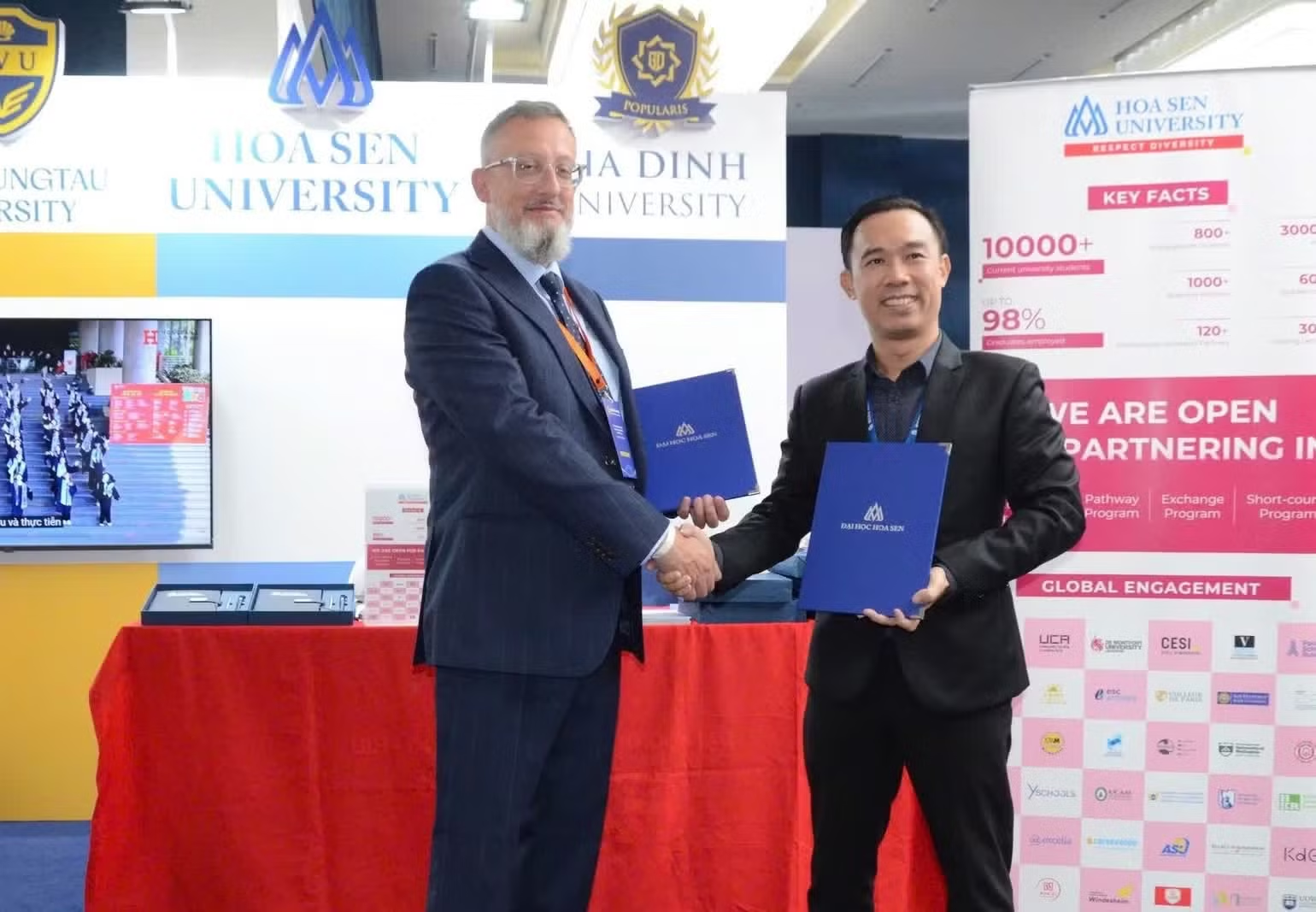
Hong Bang International University also signed a cooperation agreement with an international partner on implementing international cooperation programmes, student and lecturer exchanges, and scientific research.
Mien Dong University of Technology's cooperation with Pukyong National University (the Republic of Korea) focuses on six areas: exchanges of lecturers and staff; undergraduate and postgraduate student exchanges; development of joint educational programmes; joint research activities and the exchange of information and academic publications; organisation of seminars, conferences, academic discussions, and other cooperative activities.
Rob Kindness, Director of ABE Global Co., Ltd., said that cooperation between businesses and educational institutions aimed to create more opportunities for students to undertake internships, experience international educational environments, and improve their employment prospects after graduation.
Jointly conducting research, developing, and sharing valuable solutions
The signing of agreements and exchange of memoranda of understanding at the conference have helped expand cooperation networks between domestic educational institutions and businesses, and international partners. They have also promoted links between training, research, and practical experience, meeting human resource development needs as education enters the digital era.
Viet Nam wishes to access the world's advanced achievements while standing ready to contribute its own knowledge, experience, human resources, and initiatives. We seek to promote concrete cooperation programmes in educational data, AI in teaching, assessment, and management, teacher training, and the development of standards for ethics, safety, and responsibility.
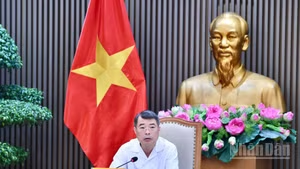
Minister of Education and Training Hoang Minh Son
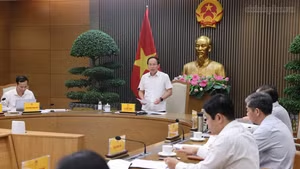
According to Minister of Education and Training Hoang Minh Son, amid digital transformation, one of Viet Nam's priorities in education is to regard international cooperation as an urgent requirement and a direct resource for educational innovation, particularly in the application of digital technology and artificial intelligence.
“We need stronger and more substantive cooperation to seize opportunities, overcome challenges, and achieve development and prosperity together. Cooperation is not merely about transferring knowledge or adopting technology. Each country has its own strengths and experience; what matters is complementing one another's strengths, conducting research together, developing and testing solutions together, and sharing valuable solutions,” the minister said in his opening speech at the International Conference on Education Cooperation in the Digital Era.
Also at the conference, Tran Nam Tu, Deputy Director General of the Department of Science, Technology, and Information under the Ministry of Education and Training, said that cooperation in scientific research and innovation with Vietnamese higher education institutions focused on three areas: conducting research together, jointly investing in incubation, and jointly developing talent.
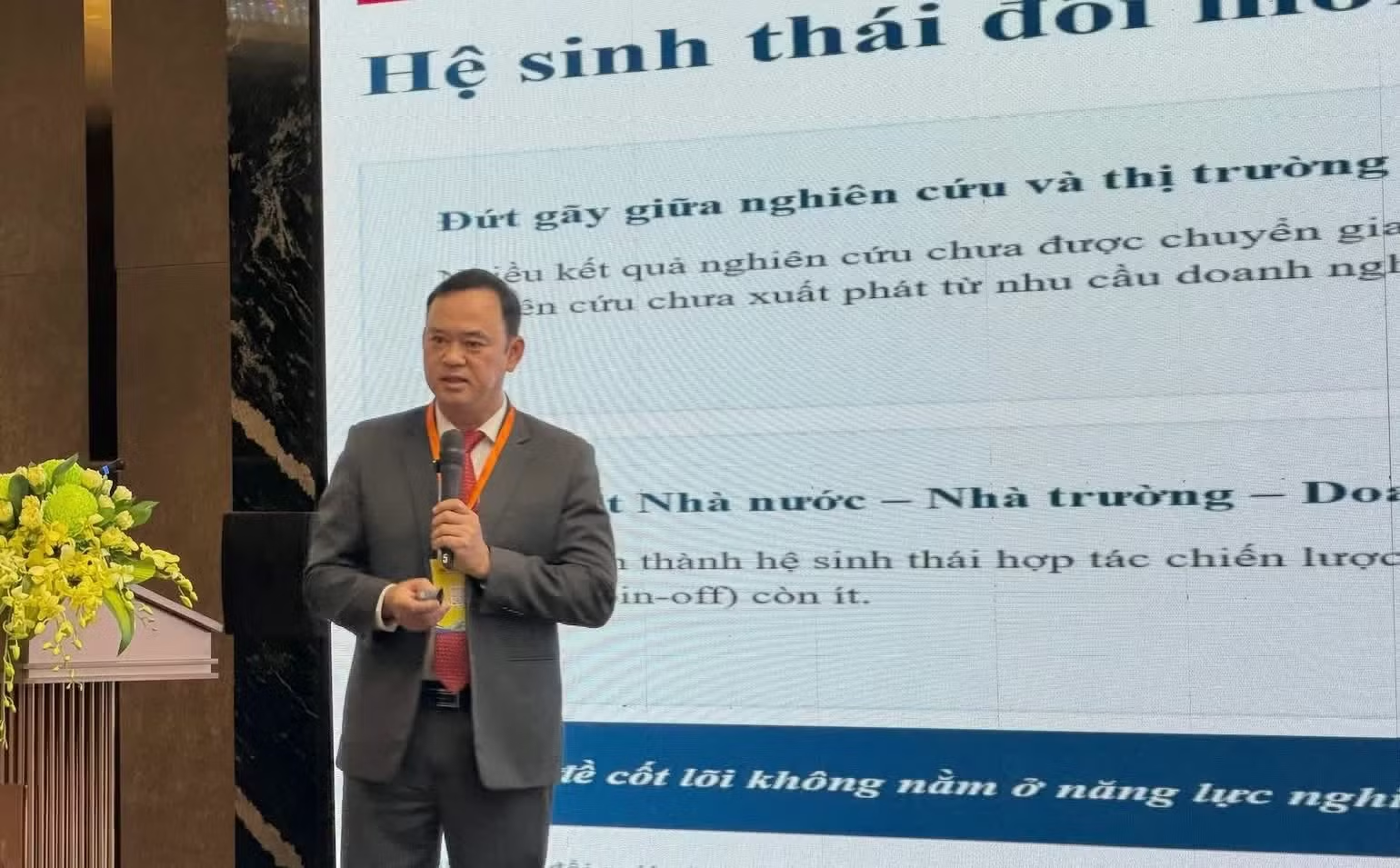
According to Tran Nam Tu, Viet Nam has recently embarked on a reform drive backed by major Party and State policies on breakthroughs in the development of science and technology, innovation, and national digital transformation (Resolution No. 57-NQ/TW); breakthroughs in education and training development (Resolution No. 71-NQ/TW); and international integration in the new situation (Resolution No. 59-NQ/TW), alongside ministerial-level institutional frameworks related to science and technology, digital transformation, digital technology, education, and training.
Vietnamese higher education institutions and vocational education establishments now enjoy extensive autonomy, from input processes to outcomes.
“The institutional framework has paved the way, educational institutions are at the centre, and international cooperation is the path,” Tran Nam Tu stressed, expressing his hope that Vietnamese educational institutions would strengthen international cooperation, particularly in science, technology, and innovation.
Cooperation in scientific research and innovation among Vietnamese educational and training institutions focuses on three areas: conducting research together, through joint research programmes and co-ownership of results in AI, semiconductors, biotechnology, new energy, and new materials; jointly investing in incubation, by establishing laboratories, research and development (R&D) centres, and incubators at Vietnamese universities under new incentive mechanisms; and jointly developing talent, through co-supervision of doctoral candidates, exchanges of scientists, and connections with Vietnamese intellectuals overseas.