Beyond providing immediate livelihoods, these training programmes help establish effective production models, leverage local raw materials, and foster sustainable rural economic development.
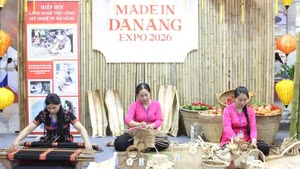
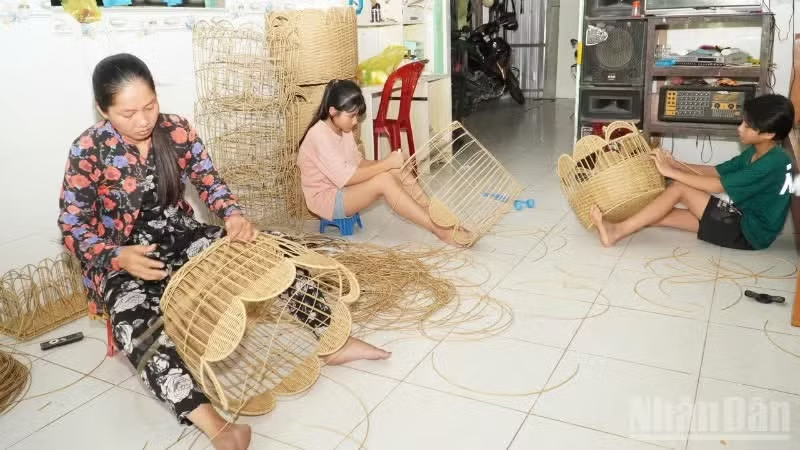
Balancing her small stall and daily household chores, Mai Thi Kim Phung—a resident of Xuan Tho Hamlet, Vinh Tuong Commune—has dedicated time to sitting at her familiar weaving frame, crafting products from plastic strips.
Having practiced this trade for nearly five years, what once seemed like a simple task has become a stable source of income, helping to ease her family’s financial burden.
Previously, the family relied primarily on her small-scale trading and her husband's manual labor. Seeking to earn extra income while still having time to care for her children, she decided to enroll in a local vocational training course on plastic strip weaving.
In the early days, mastering the weaving techniques and new product patterns was far from easy. However, through perseverance and the knowledge she gained, she gradually became proficient and is now able to take on contract work for various products right from her home.
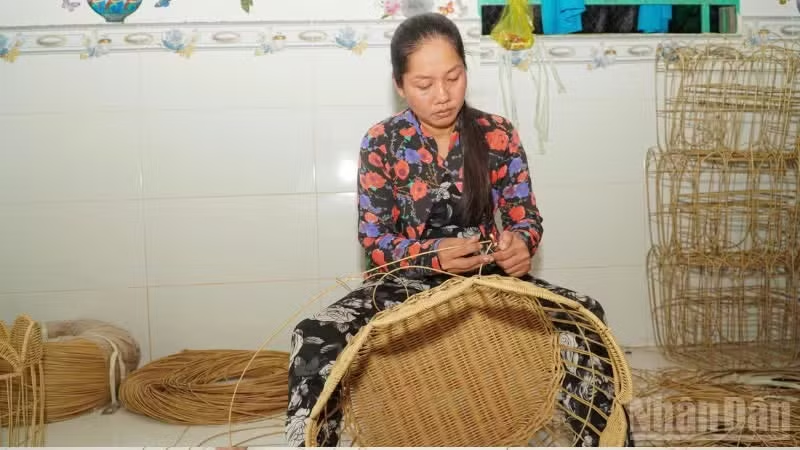
According to Phung, plastic weaving does not require great physical strength but demands meticulousness and dexterity. Each day, fitting the work in around her trading activities and household chores, she completes about one set of products comprising multiple components.
Depending on the design, consistent work can yield a monthly income of 3–5 million VND. This money helps the family cover living expenses, fund their children’s education, and build up savings.
Crucially, the work can be performed at home, providing the flexibility to balance economic activity with family care. Drawing on the experience she has gained, Phung also guides relatives and other women in the neighborhood to join in, helping to spread the craft throughout the community.
Mai Thi Kim Phung’s story is not an isolated case. In Vinh Tuong Commune, many women have taken advantage of vocational training courses to secure home-based work, turning their spare time into a stable source of income. As a result, many households have alleviated financial hardships and gradually improved their quality of life.
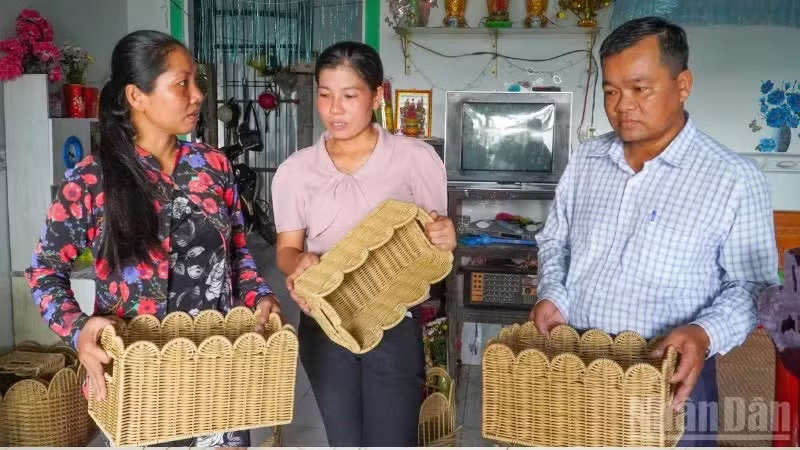
According to Bui Thi Cam Tuyen, Vice Chairwoman of the Vinh Tuong Commune Women’s Union, the plastic cord weaving trade originated from vocational training classes for rural workers under the National Target Program on New Rural Development.
Following their training, many participants have not only taken on contract work but have also proactively created new products to meet market demand, such as handbags, household items, and goods made from water hyacinth.
While the income from this supplementary trade may not be substantial, it provides tangible benefits, particularly for women facing financial hardship or those unable to work far from home.
Currently, in addition to plastic cord weaving, the locality organizes various other training courses—such as cooking, livestock husbandry (pigs, chickens, ducks), and eel farming—tailored to local conditions and residents’ needs.
These courses have fostered various livelihood models, including mobile catering services, home-based production groups, and households applying new techniques to production, thereby helping to diversify rural income sources.
Despite these achievements, local authorities recognise that for these models to develop sustainably, challenges regarding capital, market access, and product promotion must be addressed.
Moving forward, relevant organisations will step up support for members by facilitating market connections, utilising digital platforms for product promotion, and enabling access to preferential loans for production expansion.
Beyond Vinh Tuong, Vi Thuy Commune is also effectively leveraging available raw materials to generate employment for local residents. Valuable handicrafts have been created from water hyacinth—a plant that grows naturally along riverbanks—providing stable income for hundreds of local workers.
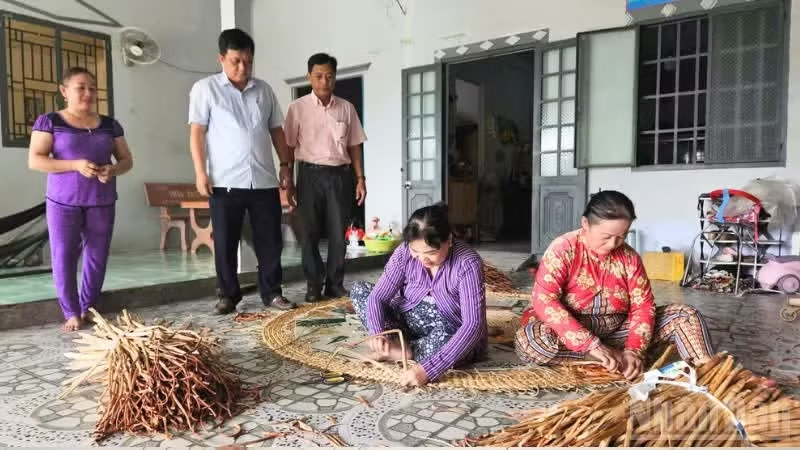
A prime example is Thanh Tu Cooperative, led by Director Le Thi Ngoc Thu. Starting with small-scale processing orders over two decades ago, the cooperative has evolved into a substantial production entity; it provides regular employment for dozens of members and partners with nearly 200 workers who handle processing tasks from their own homes.
Thousands of water hyacinth products are supplied to the market each month, generating steady revenue and providing many women with an additional income source right in their local communities.
According to Mai Hoang Hieu, Deputy Head of the Vinh Tuong Commune Economic Division, the model’s success lies not only in its economic value but also in its ability to utilise local raw materials, capitalise on idle labour time, and create suitable jobs for women and the elderly. This approach also helps preserve traditional crafts, enhance the value of rural products, and foster local economic development.
Experiences in Vinh Tuong and Vi Thuy have demonstrated that vocational training goes beyond merely equipping individuals with skills; it also creates opportunities for workers to generate their own employment, boost their incomes, and stabilise their lives.
When coupled with support regarding capital, technical expertise, and market access, these vocational courses serve as a vital foundation for building sustainable livelihoods, effectively reducing poverty, and improving the quality of life for rural residents.