Harnessing resources and promoting gender equality
In recent years, Project 01 has gradually shifted its focus from supporting the establishment and consolidation of cooperatives to enhancing their production and business capacity, creating jobs, increasing incomes, and expanding women's opportunities for economic development. During the 2023–2025 period and the first six months of 2026, the project supported the consolidation of approximately 1,137 cooperatives and 6,598 cooperative groups, and the establishment of more than 550 new cooperatives. It has created jobs for more than 15,000 female cooperative members and workers, as well as more than 40,000 female workers in cooperative groups.
Of the 4,429 members of newly established cooperatives, 3,890 were women, accounting for more than 87%. This demonstrates that women are increasingly affirming their role as key actors in establishing, governing, and managing cooperatives. This provides an important foundation for further harnessing women's resources, promoting gender equality, and building an ecosystem to support women's development of the collective economy in a professional, innovative, and sustainable manner.
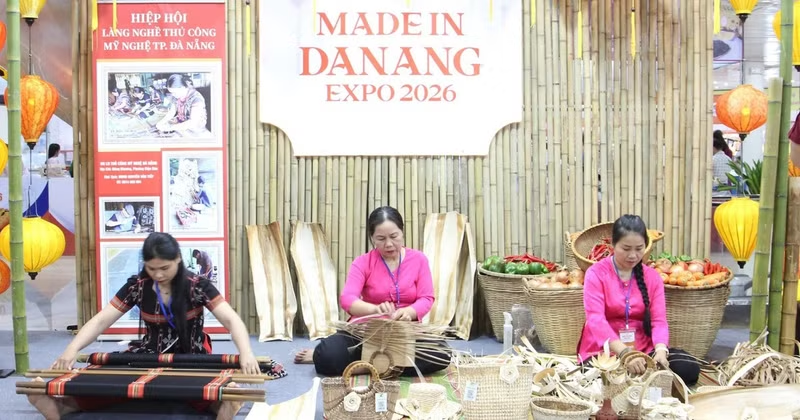
In Thanh Binh Commune, Da Nang City, the Cau Xanh Dat Quang Cooperative, led by Director Vo Thi Thu Thoi, provides regular employment for 50 local workers. Drawing on the local resource of areca palm trees, Thoi decided in 2023 to establish a cooperative producing handicrafts from areca palm sheaths. A range of environmentally friendly products has been developed, including handbags, flowers, baskets, trays, gift boxes, and lanterns. To date, the cooperative has gradually established stable operations, offering 100 different product designs. Its areca palm sheath handbags achieved three-star OCOP certification and have become one of its key products. The cooperative's products are now sold in many provinces and cities.
According to Nguyen Thi Huyen, Vice President of the Da Nang Women's Union, alongside continuing to implement Project 01, the municipal Women's Union will step up training activities and provide guidance to help women access new knowledge, develop online business skills, and adopt digital technologies. It will also work closely with relevant departments and agencies to connect businesses, cooperatives, cooperative groups, and production establishments managed or owned by women with domestic and overseas markets as well as support the sale of their products.
Changes in women's capabilities and status
In addition to its impact on economic development, job creation, and income generation, Project 01 has also helped enhance women's status and voice, promote gender equality, and strengthen community ties.
Son La Province currently has more than 140 cooperatives and cooperative groups owned, managed, or operated by women, working across a diverse range of fields, from crop cultivation, livestock farming, and agricultural processing to medicinal plants, handicrafts, and community-based tourism. Lo Thi Thuy Ha, President of the Son La Women's Union, emphasised that, to ensure Project 01 delivers tangible results, the union has conducted direct field surveys and selected exemplary entities to support cooperative establishment, connect them with preferential funding, and provide crop seedlings and livestock breeds. Numerous effective training programmes have been implemented to improve financial management skills, promote digital transformation, develop brands, establish product traceability, and advance trade promotion.
Thanks to the close support provided by Women's Union organisations at all levels, women in the mountainous areas of Son La, particularly women from ethnic minority groups, have undergone a marked shift in awareness, moving from small-scale subsistence production towards commodity production organised along value chains. A notable example is the Noong Pieu Local Agricultural Produce Cooperative in Phieng Khoai Commune, where women have established a strong reputation by successfully developing the “Ruby Phieng Khoai Late Plum” brand, which meets export standards. Meanwhile, in Yen Chau Commune, the Tay Bac Cooperative, founded by eight members, specialises in the deep processing of local agricultural products. Since its difficult early beginnings, the cooperative has now created stable-income jobs for 12 regular workers and approximately 10 seasonal workers.
Notably, in tourism and services, the Vat Hong Tourism and Agriculture Cooperative in Moc Chau Ward stands out for enhancing the visitor experience through the distinctive spaces and cultural identity of the Thai ethnic group. With eight members, women take responsibility for its management and operation. The cooperative provides accommodation, food services and cultural experiences, generating stable incomes of between 8 million VND and 12 million VND per person per month. Hoang Thi Hong, Director of the Vat Hong Cooperative, shared: “Previously, local people engaged in tourism spontaneously, so the results were limited. In early 2026, the establishment of the cooperative helped women strengthen their links and become increasingly confident in management, while promoting the cultural values of their villages and making community-based tourism more attractive.”
Tran Lan Phuong, Standing Vice President of the Viet Nam Women's Union, affirmed that the impact of Project 01 was reflected not only in the number of cooperatives and cooperative groups or the number of women receiving support, but, more importantly, in improvements in women's capabilities, opportunities, employment, incomes, status, and level of participation in socio-economic life.
However, despite the results achieved, post-establishment support and monitoring of cooperative development have not yet become sufficiently in-depth. Some localities have not paid adequate attention to the process of consolidating and classifying cooperatives, improving their quality, or developing them in line with the different stages of their development. Monitoring operational results, identifying support needs and promptly resolving difficulties after establishment have not been carried out regularly. Efforts to identify, connect, and replicate models capable of leading development, creating jobs, and generating wider benefits for communities also remain limited.
Therefore, for Project 01 to achieve genuine depth and sustainability, support must be based on practical needs, with the quality, effectiveness, and sustainability of cooperatives at its core. The approach must shift from providing support based on numerical targets and individual activities to supporting cooperatives throughout their development lifecycle. At the same time, the development of cooperatives managed by women must be linked to value-chain integration, digital transformation, green transformation, and brand building. Particular attention should be paid to identifying and selecting effective models for targeted investment and replication, especially those capable of creating jobs, increasing incomes, enhancing women's economic empowerment and generating wider benefits.
The results achieved will provide an important basis for continuing to prioritise resources, consolidate and replicate successful models, and improve the quality and sustainability of Project 01 during the 2026–2030 period. This will be linked to the implementation of the Resolution of the 14th National Women's Congress and the requirements for developing the collective economy and cooperatives in the new period.