Gaps in mental health care for older people
World Mental Health Day is observed annually on October 10 by the World Health Organisation (WHO), aiming to raise public awareness and mobilise resources to make mental health an essential part of healthcare for everyone.
In 2026, WHO’s campaign carries the theme “Lived experiences heard: real voices, real change.” The message emphasises that people who have experienced mental health problems not only need to be heard, but must also be meaningfully involved in policymaking, service design, and decisions that directly affect their lives.
According to WHO, approximately 14.75% of people aged 70 and over worldwide live with depressive and anxiety disorders. The organisation also identifies loneliness and social isolation as important risk factors for mental health in later life. WHO therefore calls for a shift away from a predominantly treatment-focused model towards person-centred, community-based care that respects human rights. Such care should help older people maintain their autonomy, social relationships, participation in community life, and dignity, rather than focusing solely on treating illnesses once severe symptoms have emerged.
In Viet Nam, according to the results of the 2024 mid-term population and housing census conducted by the General Statistics Office, there are approximately 14.2 million people aged 60 and over. This figure is forecast to reach nearly 18 million by 2030. The data show that population ageing is directly affecting family life, the labour market, the healthcare system, and social welfare policies.
In practice, when it comes to caring for older people, society often prioritises visible health issues such as cardiovascular disease, diabetes, high blood pressure, musculoskeletal disorders, nutrition, and mobility, while overlooking psychological distress, symptoms of depression and anxiety, cognitive decline, feelings of worthlessness, and social isolation. The key is to identify older people experiencing mental health problems so that they can access appropriate services and improve their quality of life.
Dr. Ro Dam Thi Bich Ngoc, a psychologist at the Institute of Sociology and Psychology under the Viet Nam Academy of Social Sciences, noted that many people today regard sadness, loneliness, insomnia, and a loss of interest as inevitable aspects of ageing. When older people frequently complain, become irritable, withdraw from others, or lose their motivation to live, these signs may be dismissed as being difficult, weak, or negative-minded.
Meanwhile, older people may be reluctant to share their emotional difficulties for fear of being judged, considered a burden, or troubling their children and grandchildren. Some are unwilling to seek professional help because they are concerned about being labelled as having a mental illness. As a result, abnormal signs may go unnoticed for a long time. If depression, anxiety, and other psychological problems are not identified promptly, they can reduce a person's ability to care for themselves, affect the treatment of chronic illnesses, and diminish quality of life.
Dr. Nong Thi Nhung of the Academy of Social Sciences said changes in family structure were also creating challenges for mental health care for older people. In Vietnamese society, families have long played a central role in caring for older relatives. However, urbanisation and labour migration are leading to smaller households. At the same time, the pressure to earn a living is changing many families' ability to fulfil this role. The number of older people living alone or far from their children and grandchildren has increased considerably.
In addition, the healthcare system has yet to fully meet the mental health care needs of older people. Their care requires coordination among geriatric medicine, psychiatry, psychology, rehabilitation, and social work. Mental health-related symptoms such as insomnia, fatigue, memory loss, poor appetite, and reduced activity can have various causes, including physical illnesses, medication side effects, mental disorders, and cognitive decline. If individual symptoms are treated in isolation without a comprehensive assessment, patients may not receive support that meets their needs.
WHO's Mental Health Atlas 2024 reports that Viet Nam does not yet have a standalone policy or plan specifically addressing mental health among older people. The challenge is to strengthen links between mental health care and the primary healthcare system, while ensuring that programmes for older people include specific provisions for screening, psychological support, treatment, and long-term follow-up. Viet Nam also faces a shortage of professionals specialising in mental health care for older people, ranging from specialist doctors and psychologists to mental health nurses, social workers, primary healthcare staff, and appropriately trained caregivers.
Integrating mental health into elderly care through improved policies
Viet Nam has established policy directions for caring for older people and promoting their role through 2035, with a vision to 2045. Under Prime Ministerial Decision No. 544/QD-TTg dated April 25, 2015, October each year is designated as “Action Month for Vietnamese Older Persons.” This provides an important basis for incorporating targets on mental health, quality of life, and access to services into action programmes for older people.
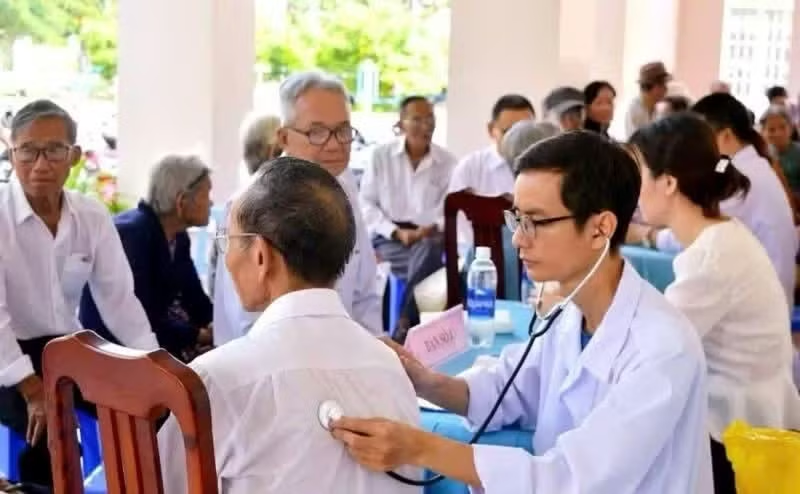
According to experts, commune-level health stations, general clinics, and primary healthcare facilities should become accessible points of contact for older people experiencing mental health problems. During regular health check-ups for older people, greater attention should be paid to signs of depression, anxiety, sleep disorders, cognitive decline, social isolation, and unusual behavioural changes.
Training in mental health care for older people should be strengthened so that healthcare workers can recognise warning signs, communicate with patients, assess underlying causes, and make referrals when necessary. Integrated care models connecting general practitioners, mental health specialists, psychologists, and social workers are particularly necessary and beneficial. For older people with limited mobility or living in remote areas, teleconsultation services and home-visit programmes could be developed, while ensuring privacy and professional standards.
According to Dr. Ro Dam Thi Bich Ngoc, support networks for older people should be developed through elderly people's clubs, peer-support groups, cultural and artistic activities, physical exercise suited to their condition, volunteering programmes, and intergenerational initiatives. These activities can help older people maintain social relationships, share experiences, learn, and continue contributing to their communities. Particular attention should be given to those living alone, people who have lost their spouses, those facing financial hardship, people with disabilities, those with chronic illnesses, and those with limited opportunities to participate in social activities.
Visiting schemes, befriending services, home-based support, and small social groups can be introduced according to local conditions. Such activities should respond to actual needs and deliver practical benefits, rather than being merely formal exercises or imposing participation on older people. Communication and training programmes for family members should also be developed to equip them with the knowledge to support older relatives, manage medication use, and recognise situations requiring medical assistance.
For older people with prolonged symptoms of depression, cognitive decline, or unusual behaviour, families should not attempt to make their own diagnoses or use sedatives at their discretion. Mechanisms to prevent and detect abuse, as well as protect older people should be strengthened, with safety and the right to self-determination given top priority.
Experts say mental health care for older people does not necessarily have to begin with large-scale programmes. Families can each make an effort to spend more time talking with older relatives, pay attention to their feelings, respect their views, and encourage them to maintain social relationships. Communities can create more suitable spaces for socialising, learning, and group activities. When signs of psychological distress persist, timely access to professional services is essential.