A liver cannot wait 90 days
In March 2026, Do Quang Ba, Chairman of the Viet Nam-Japan International Exchange Organisation (FAVIJA), received a request for assistance from a Japanese patient seeking to come to Viet Nam for a liver transplant.
Do Quang Ba contacted a medical facility in Ha Noi to explore its capacity to receive the patient. However, as the hospital had never previously performed a liver transplant for a foreign patient, the process of assessment, agreement on a point of contact, and development of a treatment plan took considerable time.
Under the plan, the treatment and postoperative period was expected to last about two months. After that, the patient would need regular follow-up examinations to monitor liver function and the risk of rejection. This is a process that is difficult to fit into a fixed schedule for entering and leaving the country.
Under current regulations, an e-visa is valid for a maximum of 90 days, while the Japanese citizen entering under the visa exemption scheme are permitted to stay for 45 days. For a liver transplant case, the expected two-month treatment and postoperative period would only be the first stage; the patient would still need follow-up examinations, monitoring for the risk of rejection, and potentially a longer course of treatment if complications arose. What patients need is a residence mechanism that can adapt to subsequent medical requirements. This uncertainty caused the patient concern and ultimately led them to cancel their treatment plan in Viet Nam.
Do Quang Ba, Chairman of the Viet Nam-Japan International Exchange Organisation
Wasting advantages because of “gateway procedures”
Dr Duong Huy Luong, Deputy Head of the Department of Medical Service Administration under the Ministry of Health, said Viet Nam has professional expertise, competitive prices, and tourism advantages, but it still lacks coordinated mechanisms, inter-sectoral links, and a national brand. This is precisely the gap between “having potential” and “having a product”.

Medical tourism is currently one of the fastest-growing segments of the service economy. However, based on the practical experience of receiving and assisting foreign patients coming to Viet Nam for medical examination and treatment, hospitals and businesses alike have found that visas are one of the biggest “bottlenecks”.
According to Nguyen Cong Minh, Deputy Director of Phuong Dong General Hospital, the hospital’s reception of international patients is currently not linked to a dedicated visa mechanism.
Patients must still choose from existing visa categories, which do not fully reflect the purpose and specific nature of medical treatment, while surgery, cancer treatment, or organ transplantation can take a long time and require follow-up examinations and accompanying relatives. This lack of flexibility not only places pressure on hospitals but also makes patients less confident about choosing Viet Nam.
According to a representative of the Department of Medical Service Administration, the global medical tourism market is forecast to maintain growth of 15-20%, with the Asia-Pacific region among the fastest-growing areas. This presents room to tap into Viet Nam’s advantages in its hospital system, specialist capabilities, and tourism infrastructure.
Ha Noi has 90 hospitals within the city’s healthcare system, with more than 16,400 beds. Of these, seven hospitals are included in specialist rankings by Newsweek/Statista: Bach Mai Hospital, Viet Duc University Hospital, Phuong Dong General Hospital, Viet Phap Hospital, Hong Ngoc General Hospital, 19-8 Hospital, and Thu Cuc International General Hospital.
However, international customers do not purchase a single “treatment” in isolation. They need an entire system, from initial enquiries and remote consultations to receiving quotations, obtaining a visa, booking flights, undergoing examination and treatment, recuperation and leisure, and continued follow-up after returning home.
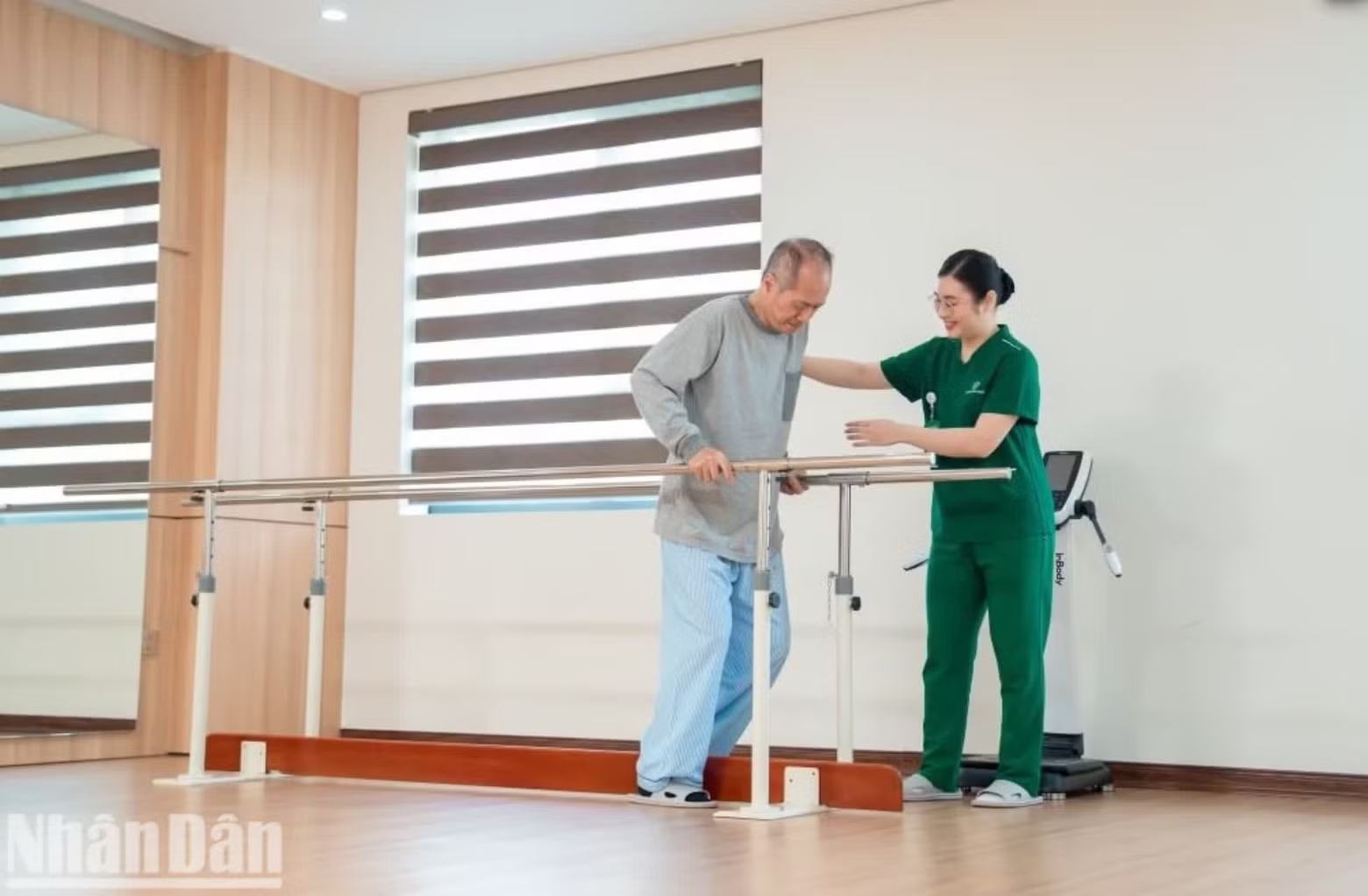
This gap also limits the potential for developing elderly care services combined with healthcare, rehabilitation, and leisure.
With competitive costs, a favourable climate, a familiar culture, and increasingly advanced healthcare capabilities, Viet Nam could target various groups with financial means, such as international elderly people and overseas Vietnamese returning to the country who need long-term care.
However, this model requires long stays, continuous medical records, accompanying caregivers, safety standards, and inter-sectoral coordination mechanisms. Unless the issues of visas, length of stay, and the responsibilities of managing agencies are resolved, it will remain difficult to medical care turn into a complete international product.
Flexible visa procedures to pave the way for a new ecosystem
To pave the way for the development of medical tourism, the first step should be to regard medical visas as infrastructure for the service industry, rather than as a standalone administrative privilege.
Do Quang Ba, Chairman of the Viet Nam-Japan International Exchange Organisation (FAVIJA), proposed establishing a three-way coordination mechanism involving hospitals, patient support providers, and immigration authorities.
Accordingly, once a hospital confirms that it will receive a foreign patient, this confirmation would serve as the basis for visa processing, determining the length of stay, identifying the needs of accompanying relatives, and arranging extensions if treatment takes longer than expected.
Sharing this view, Nguyen Cong Minh said a direct connection mechanism should be established between medical facilities and immigration authorities so that any changes arising during treatment can be promptly reported and the length of stay and visa extensions dealt with accordingly.
Under such a mechanism, the visa would become part of the treatment plan and be updated throughout the process, rather than remaining a procedure that patients must handle on their own at a time when they need to focus on treatment.
However, to prevent risks or abuse, the mechanism should be accompanied by a list of hospitals eligible to receive international patients, along with transparent criteria, reporting responsibilities, and data connectivity between the healthcare sector and immigration authorities.
Easing visa procedures is only the first step in opening the door. Beyond immigration, there needs to be a seamless chain of services in which hospitals, support businesses, and travel companies have clearly defined responsibilities, from receiving enquiries, collecting documents, providing consultations and quotations to treatment, discharge, and follow-up. This is essential to turning professional medical capabilities into healthcare products that international visitors can understand, trust and choose.
Within this chain, travel companies could serve as the focal point for coordinating the journey: connecting medical records with doctors, synchronising treatment schedules with flights and accommodation, arranging medical interpreters, managing risks, and organising post-treatment recovery. Hospitals would be responsible for medical expertise, while businesses would handle the non-medical services that are currently lacking.
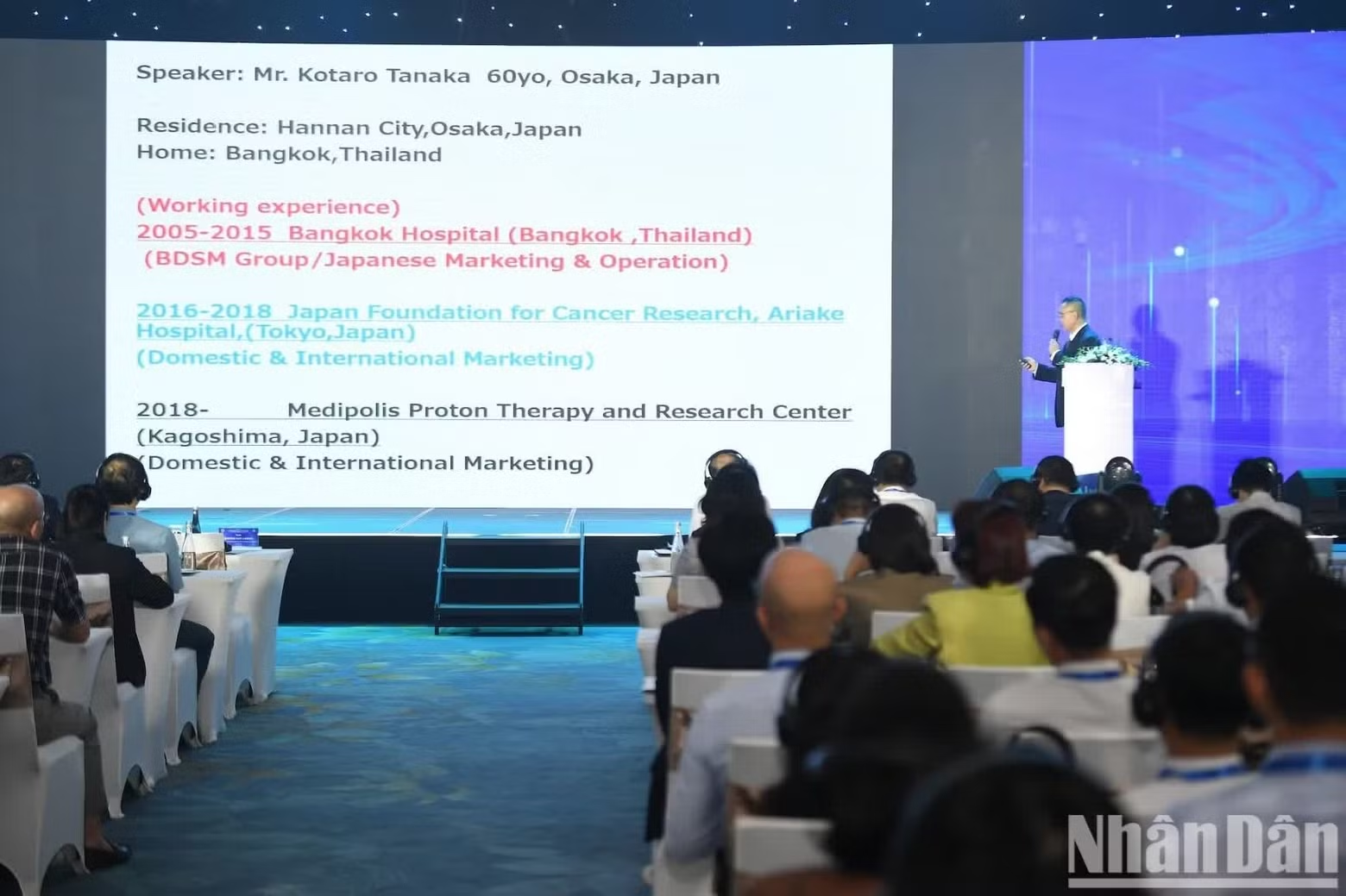
For hospitals, the immediate requirements are to standardise service packages, make their scope and costs transparent, provide remote consultations, and establish international departments staffed by doctors able to communicate in foreign languages, interpreters, and coordinators. Only when these links are connected can medical visas truly become a gateway to a complete ecosystem.
A “sandbox” for medical tourism and a national coordinating focal point
Experience from Malaysia, Thailand, and Dubai (UAE) shows that the market only accelerates when a stable ecosystem is in place. The models adopted by these countries and territories may differ, but they share one feature: customers know where to go and which party is responsible for each area.
Japan introduced its Medical Stay Visa in 2011, with applicants applying through a guarantor such as a medical coordinator or a Government-approved company. The guarantor connects patients with hospitals, develops treatment plans, prepares documents, provides proof of financial means, and supports the entire process before the patient enters the country.

Thailand issues the Non-Immigrant O (Medical Treatment) visa for people undergoing treatment for more than 60 days and a short-term treatment visa for cases lasting less than 60 days, India has introduced the Medical Visa (MED) and Medical Attendant Visa (MED-X) for accompanying persons, while Malaysia has an entry mechanism linked to an international patient coordination system through hospitals and medical tourism promotion agencies.
These policies make it easier for patients to enter the country, extend their stay when longer treatment is required, and establish a foundation for integrated links with insurance, healthcare facilities and other support services.
According to experts and medical facilities, Viet Nam could launch a “sandbox” — a mechanism allowing policies to be piloted within a controlled scope, timeframe, and target group — in Ha Noi and Ho Chi Minh City.
These are two areas with many major hospitals, air transport infrastructure, accommodation facilities, and service businesses, making them suitable for testing procedures for receiving, issuing visas to, coordinating, and monitoring international patients before evaluating, refining, and expanding the model.
The programme would identify an inter-sectoral coordinating agency; select hospitals and businesses meeting the criteria; pilot medical visa procedures; connect international insurance providers; develop shared data systems; and measure results based on the number of patients, revenue generated across the entire chain, satisfaction levels, patient safety, and repeat visits.
The health sector would establish quality criteria, identify areas of strength, and set safety standards; the tourism sector would develop branding, markets, and promotional networks; public security and immigration authorities would design visa and residence mechanisms; the diplomatic sector would support communications and partner connections; and the finance and insurance sectors would address payment issues. Associations and businesses would be responsible for training, linkages, product development, and journey operations.
Medical visas are a “test” of the entire system’s ability to coordinate. If this bottleneck can be removed, Viet Nam will not only facilitate entry but also open an opportunity to “cultivate the field” of medical tourism, which already holds considerable potential.