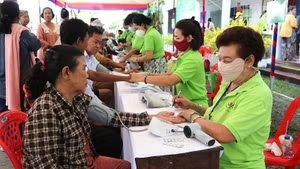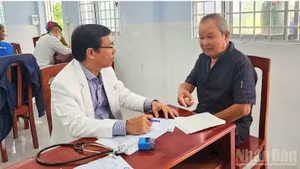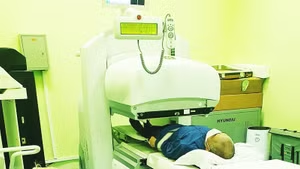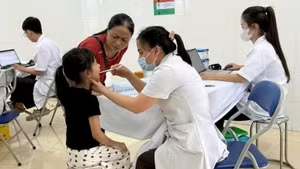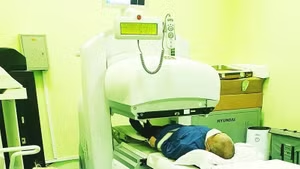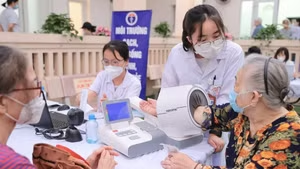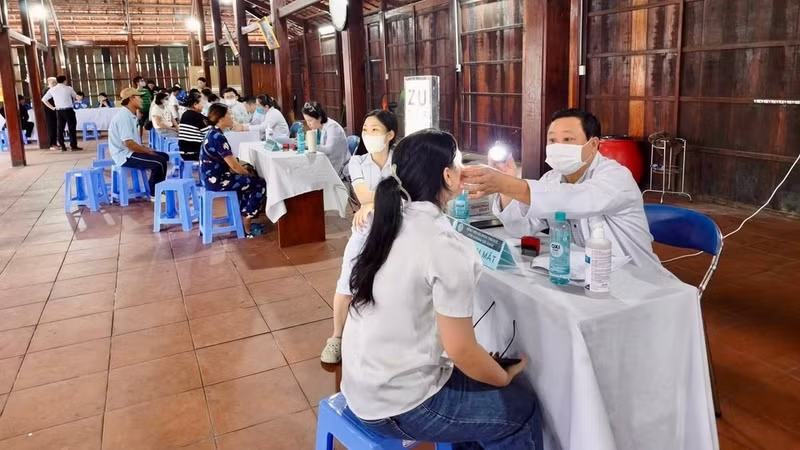
The result also highlights the need to accelerate efforts to bring health check-ups, screening and health management services closer to the nearly 9 million residents who have yet to take part. From May 25 to September 6, Ho Chi Minh City provided health check-ups for 4,009,583 people, equivalent to 31% of the population.
The milestone of more than four million people after three months demonstrates the extensive scale of implementation, the participation of multiple forces and the increasingly evident demand for healthcare within the community. Behind this result was a process of reviewing population data, encouraging residents to participate and organising appropriate health check-up sessions in each ward, commune and special administrative zone.
Public and private hospitals, clinics and medical examination and treatment facilities have mobilised personnel, expertise and medical equipment to work alongside grassroots healthcare services. Health stations have continued to perform their regular duties while directly conducting examinations and screenings, updating data and managing the health of local residents.
The Ho Chi Minh City Department of Health acknowledged the efforts of local authorities, health stations, hospitals, clinics, all healthcare workers and teams of collaborators. In particular, the cooperation and participation of residents over the past three months have been decisive factors in enabling the programme to achieve its initial results.
“Residents of the city proactively taking part in health check-ups and contributing to the community health database provide healthcare facilities with additional grounds for managing, monitoring and providing long-term healthcare right from the residential level,” Associate Professor, PhD, Dr Tang Chi Thuong, Director of the Ho Chi Minh City Department of Health, stressed.
The Department of Health’s leadership said that completing the goal of providing health check-ups for the nearly 9 million residents who have yet to participate would require localities to continue conducting thorough reviews and selecting organisational approaches suited to the characteristics of their populations and the capacity of each facility.
Progress in the next phase needs to be linked to the quality of examinations and the accuracy of data, as every piece of information that is fully updated will contribute to creating health records that can be used over the long term.
If the numerical target is achieved but there is insufficient capacity for post-examination monitoring, the significance of the programme will be diminished. Therefore, health check-ups, screening, data updates and health management need to be carried out as one continuous process.
More than four million health check-ups mark one stage in the journey of bringing healthcare closer to the people. When every resident’s health is continuously monitored right from the grassroots level, the programme’s results can truly be transformed into sustainable value for community health.