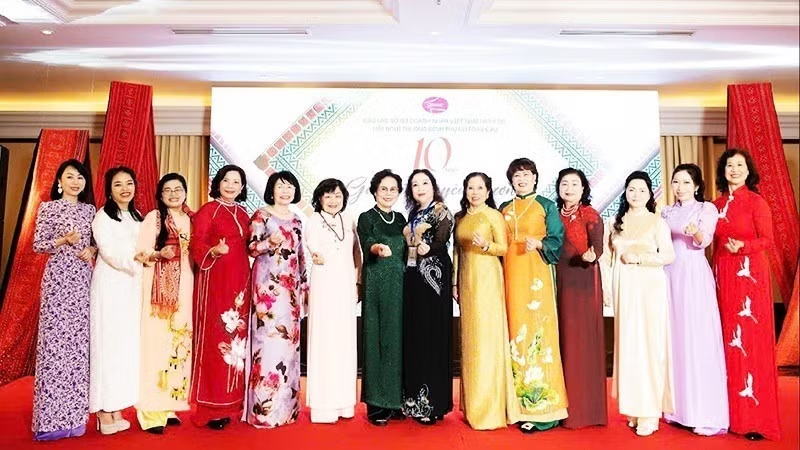
According to the Viet Nam Chamber of Commerce and Industry (VCCI), businesses owned by women currently account for about 25% of the total number of enterprises nationwide — an impressive proportion within ASEAN, placing Viet Nam among the leading countries in terms of the share of women entrepreneurs. This represents a “golden opportunity” for women-led businesses to make breakthroughs, seize opportunities from international economic integration and the digital economy, and help Viet Nam integrate more deeply into global value chains.
However, despite their growing contributions, statistics from VCCI show that more than 20% of small and medium-sized enterprises led by women still face difficulties in expanding due to limited financial resources and a lack of access to modern technologies. The greatest barrier remains persistent gender stereotypes in society, which make it difficult for women to gain the trust of investors and business partners. In addition, a lack of practical skills — particularly in digital management, digital marketing, and foreign languages — makes it challenging for many businesses led by women, especially small enterprises, to participate in global supply chains.
Another common challenge is balancing work and family life. Women often shoulder the dual responsibilities of motherhood and family care alongside their roles as business leaders. Amid intense competition driven by climate change, disaster risks, and digital transformation, these constraints can make women-led enterprises more vulnerable to falling behind and losing competitiveness. Only by addressing these barriers comprehensively can Viet Nam’s economy fully unlock the potential of women entrepreneurs, thereby promoting sustainable growth, innovation, and gender equality, and contributing to the country’s development goals for 2030 with a vision to 2045.
To achieve this, it is necessary to build a favourable and equitable business environment with policies that prioritise support for women-led enterprises, such as simplifying administrative procedures and improving access to preferential credit and start-up support funds. Training programmes should also be strengthened to enhance competitiveness through the application of science and technology, innovation, and green and sustainable development.
The project “Supporting Women’s Entrepreneurship for the 2026–2035 period,” approved by the prime minister, should be implemented through coordinated measures such as legal counselling, digital skills training, and improved access to capital from banks and credit funds, with priority given to disadvantaged women and ethnic minority women.
Difficulties in balancing work and family life also remain a common challenge, as women often shoulder both the responsibilities of motherhood and family care alongside their roles as business leaders.
At the same time, it is necessary to promote connectivity and international integration by linking Vietnamese women entrepreneurs with global business and entrepreneurial networks, thereby expanding market access through trade promotion, e-commerce and international forums. Specifically, these solutions should be closely aligned with Politburo Resolution No. 41-NQ/TW on building and promoting the role of Vietnamese entrepreneurs in the new period, which emphasises the issuance of priority policies to support the development of women entrepreneurs.
Most importantly, social perceptions of gender equality must change, encouraging men to share family responsibilities and enabling women to pursue and advance their careers.