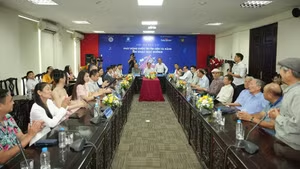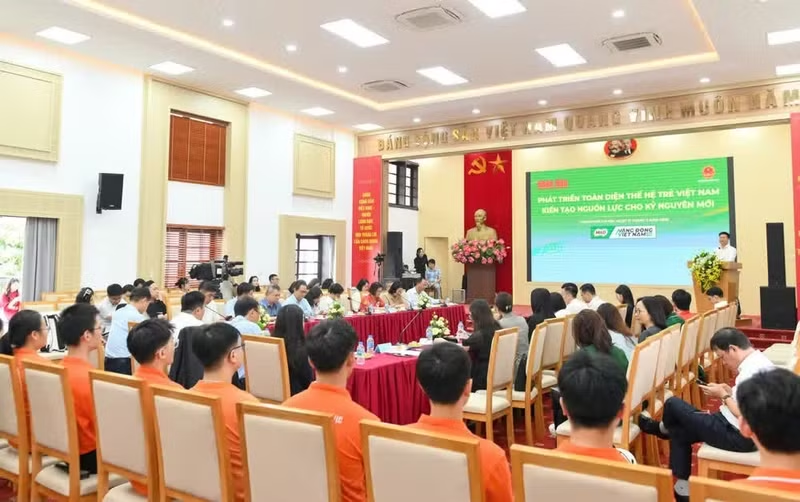
The conference was held to effectively implement the spirit and key tasks of two important resolutions related to education and healthcare: Resolution No. 71-NQ/TW on breakthroughs in education and training development, and Resolution No. 72-NQ/TW on breakthrough solutions to strengthen the protection, care and improvement of public health.
In his opening remarks, Que Dinh Nguyen, Deputy Editor-in-Chief and Deputy Secretary of the Party Committee of Nhan Dan Newspaper, said that Viet Nam is entering a new era of development with the goal of building a strong Viet Nam where all people can live long, healthy, wholesome, and happy lives; and where human resources possess sufficient physical, mental, intellectual and moral strength. These are the core and foundational factors for realising the two centennial goals: by 2030, marking the 100th anniversary of the Communist Party of Viet Nam, the country will become a developing nation with modern industry and upper-middle income; and by 2045, marking the 100th anniversary of the founding of the Democratic Republic of Viet Nam, now the Socialist Republic of Viet Nam, the country will become a developed, high-income nation.
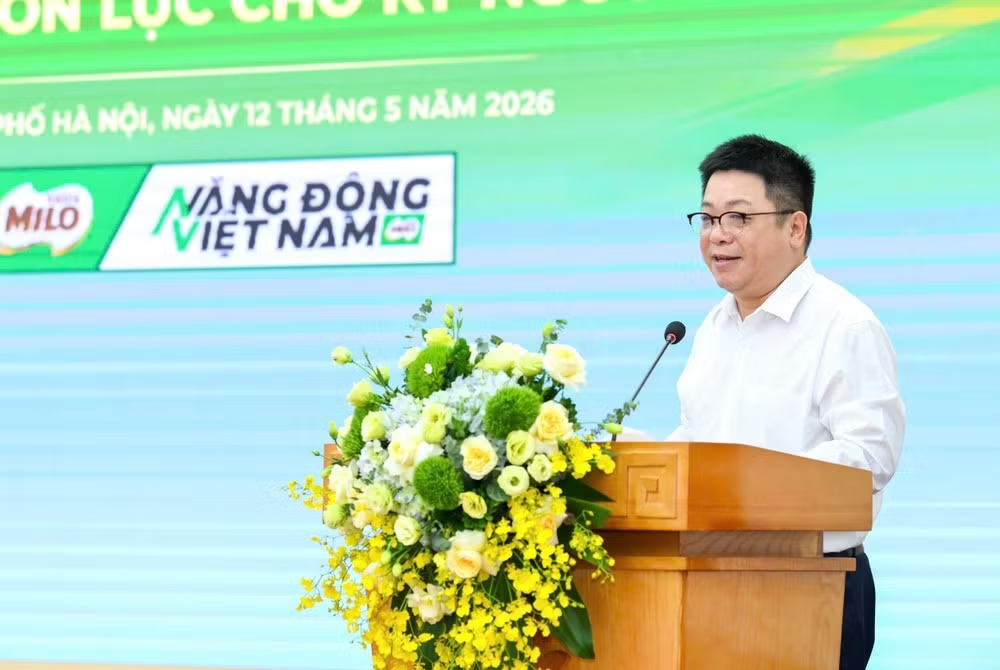
According to Que Dinh Nguyen, to effectively implement the solutions outlined by the Politburo, the conference “Comprehensive development of the Vietnamese younger generation – Creating resources for a new era” brought together experts and scientists in education, healthcare and sports to share comprehensive perspectives on school health education in Viet Nam.
From the recommendations of experts and scientists, as well as practical implementation at educational institutions, the conference aimed to contribute to improving institutions and policies on public healthcare protection, care and enhancement, while promoting innovation and development in education and training.
Speaking at the conference, Nguyen Nho Huy, Deputy Head of the Department of Students Affairs under the Ministry of Education and Training, stressed the importance of school healthcare for the intellectual, physical and mental development of pupils and students, the Party and state have always regarded the protection, care and improvement of the health of children, pupils and students as a specially prioritised task.
Various programmes and projects on healthcare for children, pupils and students were issued and implemented during the 2021–2025 period. The implementation of these programmes and projects has generated positive impacts on children, pupils, students, parents, and society as a whole, helping raise awareness and responsibility among education managers at all levels in policy development and implementation; mobilising social resources and investment in facilities and funding for student healthcare activities; organising nutritious and safe school meals, ensuring school hygiene conditions, and promoting physical activities for children, pupils and students to improve health and prevent school-age diseases and disorders.
However, Nguyen Nho Huy noted that despite the achievements, the protection, care and improvement of student health still face many shortcomings, difficulties and challenges, with many basic targets failing to meet expectations.
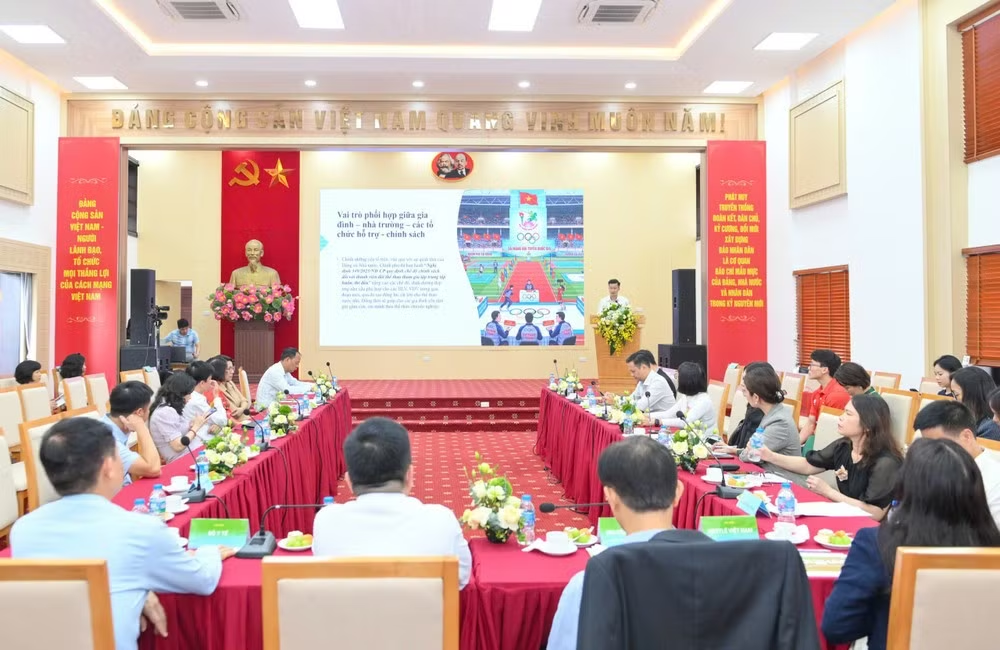
Dr. Nguyen Thi Hong Diem, Deputy Head of the Division for Non-Communicable Disease Control and Nutrition under the Department of Disease Prevention, the Ministry of Health, affirmed that to create breakthroughs in public healthcare, focusing on proper nutrition and strong physical development for children – the future generation – is the top strategy, in which caring for children during the “first 1,000 days of life” and the school-age stage is the core foundation determining their physical stature, mental and intellectual development in the future.
Highlighting the role of physical education and sports at school in building physical fitness, willpower, discipline and adaptability among the younger generation, Truong Minh Sang, head coach of the national gymnastics team, affirmed that introducing children to basic sports from an early age helps equip them with injury prevention skills, thereby supporting safe and healthy development.
Presentations at the conference focused on analysing the current situation of school health, nutrition and physical activities among pupils and students, while proposing strategic solutions to improve the stature, physical fitness and quality of Viet Nam’s young workforce.
Delegates at the conference affirmed that comprehensive development of the younger generation should not stop at improving knowledge, but must also focus on physical development, mental health, life skills, digital capacity, social responsibility awareness and aspirations to contribute. These are important foundations for building high-quality human resources, meeting the country’s rapid and sustainable development requirements in the new period.
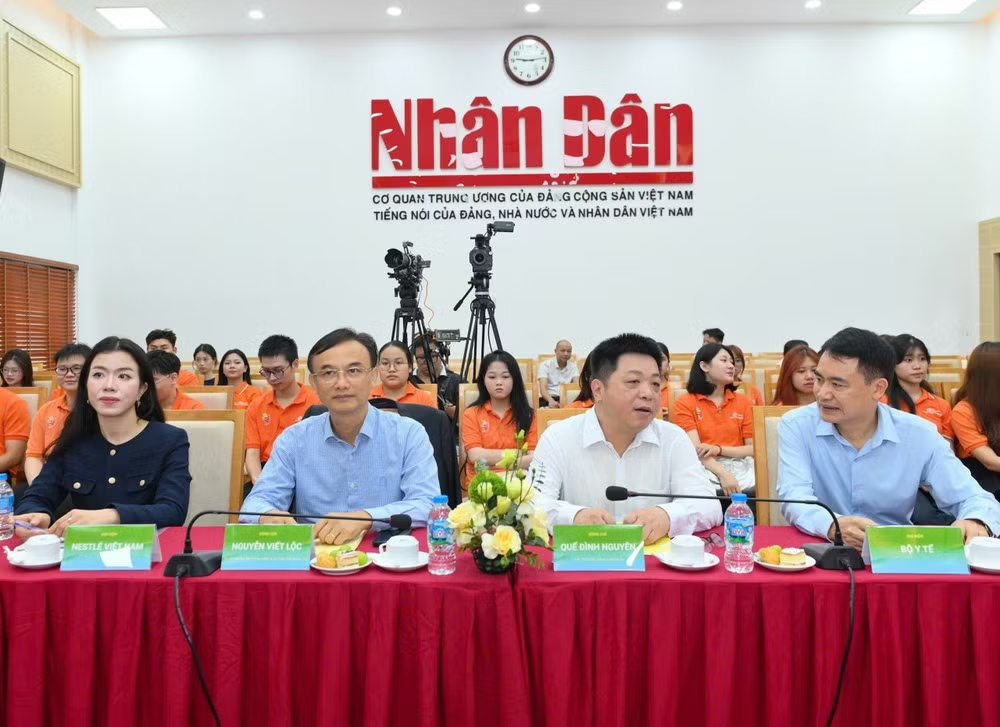
The proposals emphasised the need for strong innovation in physical education models in schools; diversification of physical activities; development of sports club systems; and stronger coordination among schools, families, businesses and social organisations to build a dynamic and healthy school environment.
The role of the business community should also be acknowledged in promoting school nutrition programmes and improving physical fitness for Vietnamese children. Over the past 30 years, Nestlé Viet Nam has coordinated the implementation of various nutrition education activities, encouraged physical exercise and built healthy lifestyles for pupils in many localities nationwide.
Concluding the conference, Nguyen Viet Loc, full-time Deputy Secretary of the Party Committee of the Ministry of Education and Training, highly appreciated the quality and depth of the presentations and discussions. Delegates clearly analysed the role of comprehensive education and healthcare protection, care and improvement, especially for children and young people, as strategic and core tasks to help the country enter a new era and enable young people to realise the nation’s aspirations for rising.
He proposed that following the conference, the Ministry of Education and Training, the Ministry of Health, the Ministry of Culture, Sports and Tourism, other related ministries, sectors and localities should strengthen inter-sectoral coordination to implement practical and effective solutions, ensuring sustainability and suitability to conditions of each locality and unit.