As Viet Nam accelerates the development of science, technology, innovation and national digital transformation, this trend is being strongly promoted through STEM lessons, extracurricular activities and a wide range of scientific competitions and playgrounds for school students.
The national final round of the Green STEM 2026 competition, held on May 24 in Ha Noi, was one of the notable activities contributing to the spread of scientific creativity and technological accessibility among students. The competition was organised by the Viet Nam Institute of Educational Sciences and Skills Development under the Association of Viet Nam Universities and Colleges.
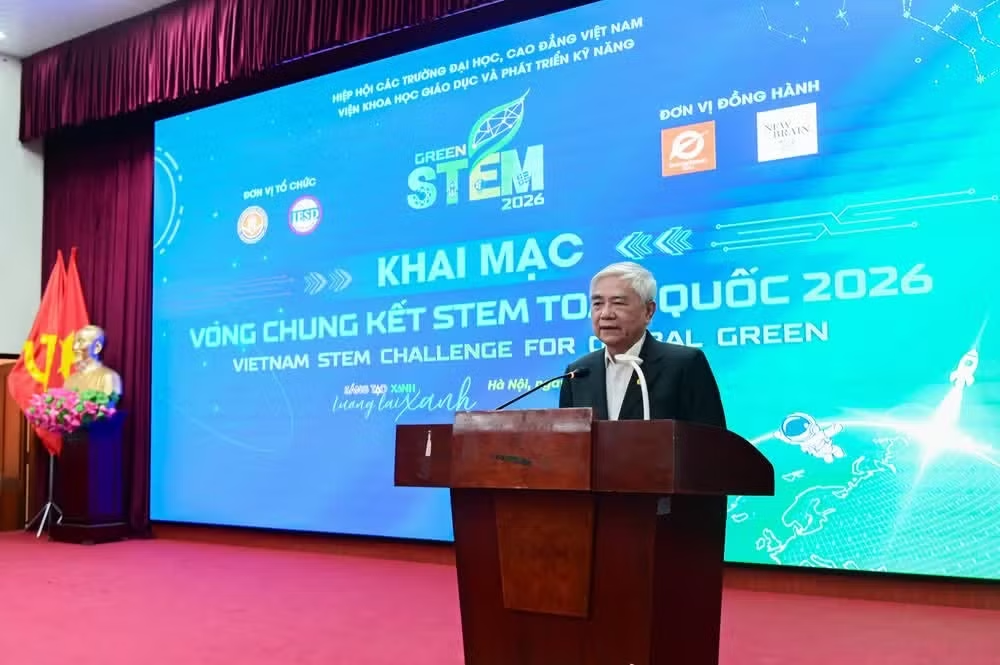
Speaking at the event, former Minister of Science and Technology, Chairman of the Viet Nam Automation Association and Head of the competition’s professional board, Dr Nguyen Quan said that, as the country vigorously implements major policies under Politburo Resolution 57 on the development of science, technology, innovation and national digital transformation, along with Resolution 71 on breakthroughs in education and training, introducing STEM into schools from an early stage carries special significance.
According to him, STEM education not only enables students to access science and technology but also lays the groundwork for enhancing digital technology capabilities among the younger generation, thereby preparing human resources for the country’s new stage of development.
Dr Nguyen Quan also highly appreciated the education sector’s efforts to promote STEM education within the general education curriculum, develop teaching staff, learning materials and learning environments that allow students to access scientific knowledge from an early age. He stressed that many students who had previously participated in STEM competitions had later matured and continued to contribute to the fields of digital technology and national digital transformation.
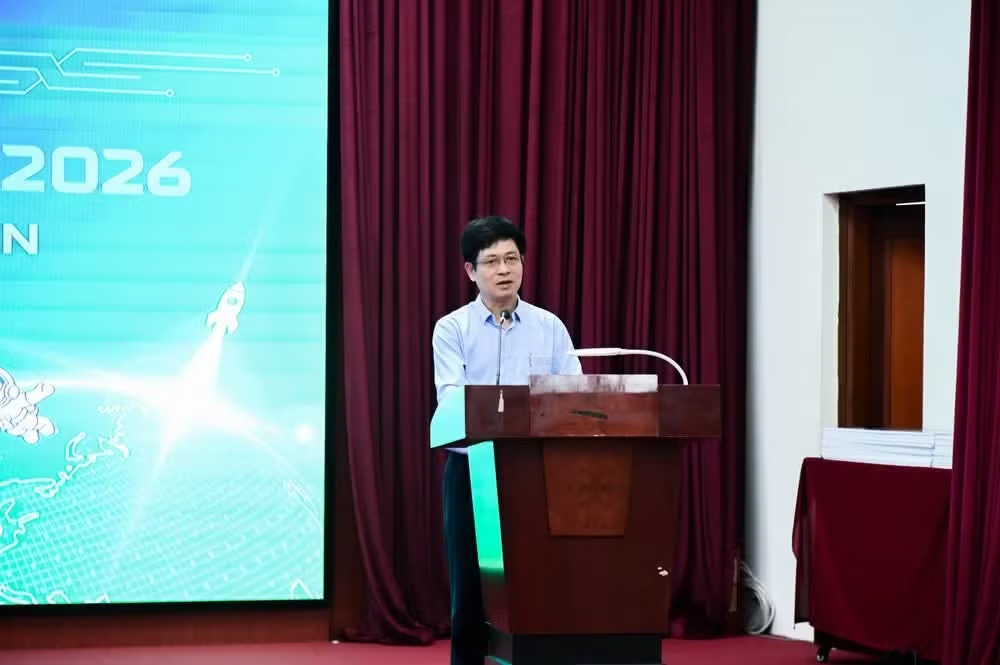
According to Associate Professor and Dr Nguyen Xuan Thanh, Principal of the Ha Noi School for Educational Management Staff Training and Chairman of the judging panel, Green STEM 2026 attracted 33 teams from 19 primary and lower secondary schools in Ha Noi, Ho Chi Minh City, Hung Yen and Vinh Phuc.
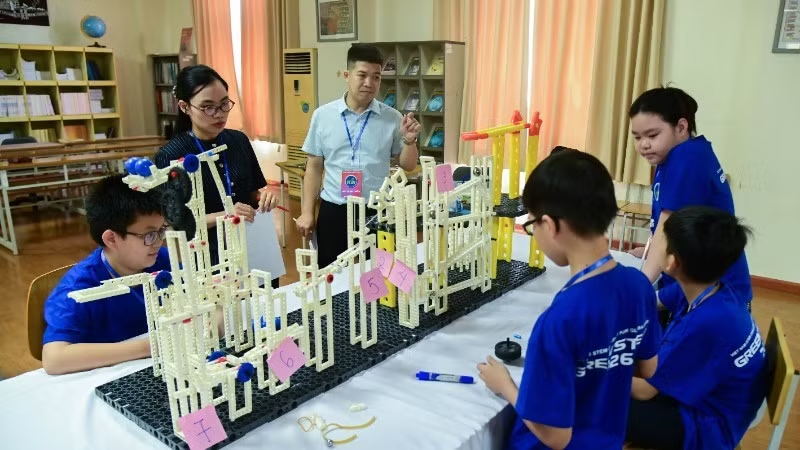
Under the theme “Ecological Balance”, the competition focused on areas such as mechanical design, robotics, programming and science-technology tasks associated with environmental protection, recycling, energy conservation and the development of green urban areas.
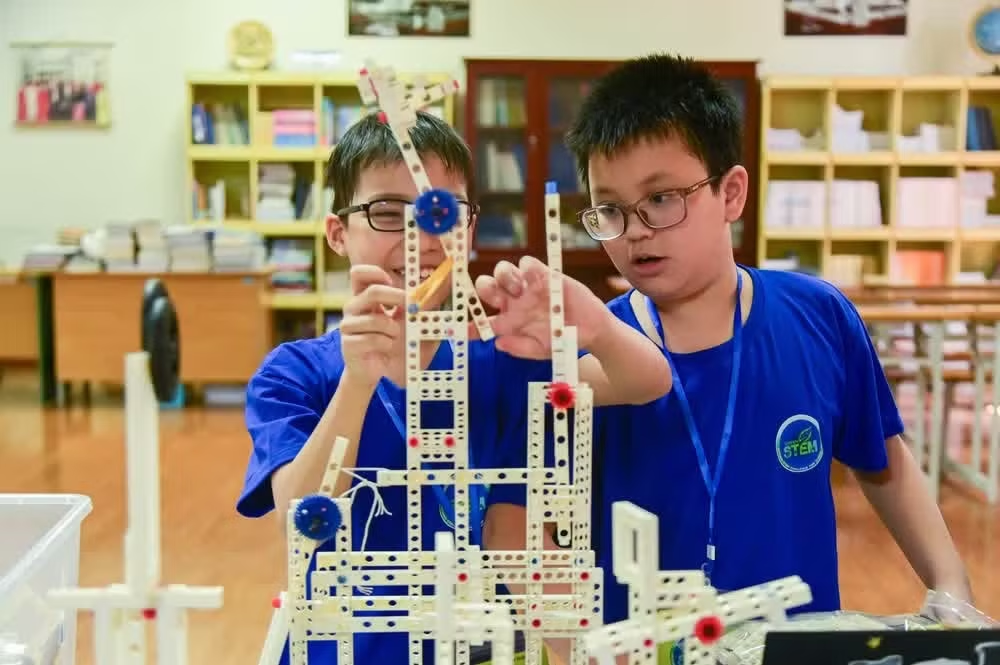
The organising committee stated that the competition was designed around the concept of “learning through experience”, encouraging students to observe, ask questions, experiment and refine solutions. The competition integrated science, technology, engineering and mathematics to address practical issues relating to the environment, green technology and sustainable development.
According to the organisers, one current limitation is that STEM education in many places is still simplistically understood as merely assembling robots or programming, whereas the core value of STEM lies in fostering scientific thinking and practical problem-solving abilities among students.
A notable feature of Green STEM 2026 was its approach of respecting the individual strengths and abilities of each student. Some students excelled in mechanics, others in scientific thinking and experimentation, while many demonstrated strengths in programming, control systems or data analysis. Therefore, the competition was designed with multiple categories to create opportunities for students to maximise their personal potential.
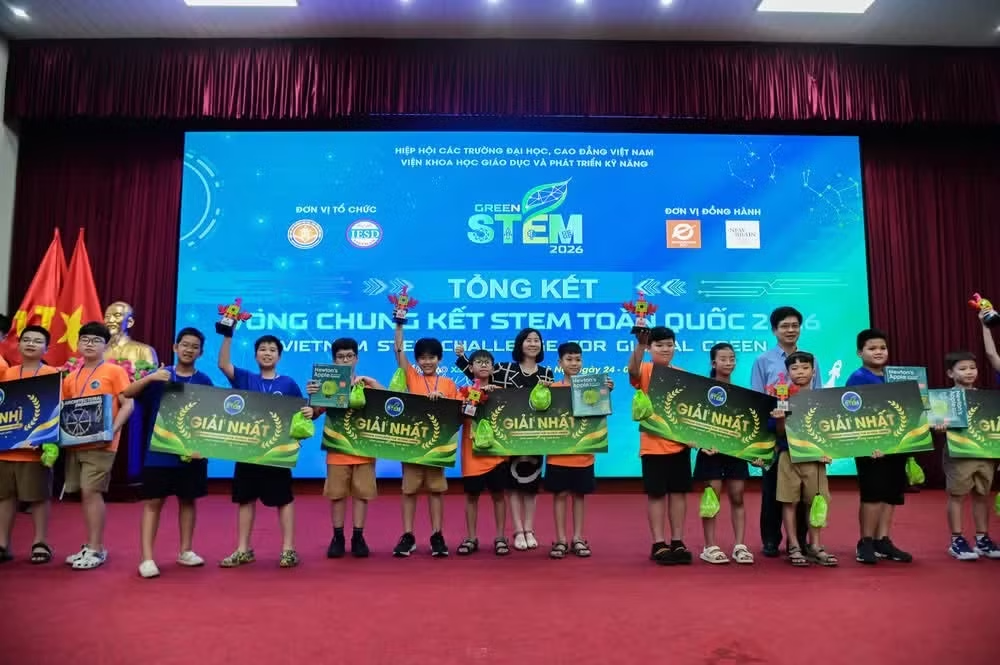
In the final results, the organising committee awarded six first prizes, 11 second prizes and 16 third prizes to outstanding teams. Teams with exceptional achievements will continue to be selected, trained and nominated to participate in the World GreenMech Contest – an international STEM competition for students featuring teams from across the region.