Schools nurture innovation through STEM learning
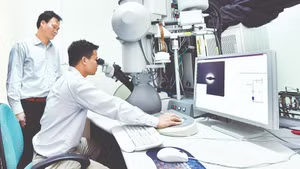
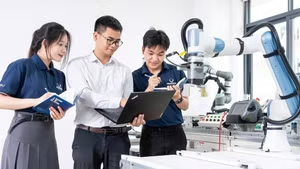
STEM (Science, Technology, Engineering, and Mathematics) is a modern educational model designed to comprehensively develop students’ abilities. It integrates science, technology, engineering, and mathematics, with an emphasis on practice, critical thinking, and creativity to solve real-world problems.
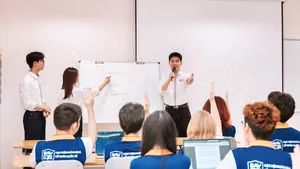
Giang Vo Secondary School in Ha Noi has pursued STEM education as part of a long-term strategic vision, nurturing students’ knowledge across these disciplines. At the school, STEM learning is not confined to textbooks but is regularly delivered by teachers. In the first semester of the 2025–2026 academic year, nearly 200 STEM-themed lessons were taught, sparking students’ passion for research and exploration.
Teacher Vu Dinh Phuong, Deputy Headmaster, explained that Giang Vo has built a diverse STEM teaching model, allowing students to freely engage in a wide range of activities.
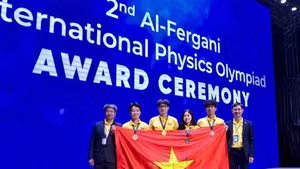
STEM education has also flourished through competitions such as Amazing Race, Giang Vo Robotics Champion, and the STEM Robotics Club, which have attracted enthusiastic participation. Beyond the school level, students have showcased their skills nationally and internationally, winning two Gold Certificates and three Silver Certificates at the final round of the Robotacon WRO 2024 competition.
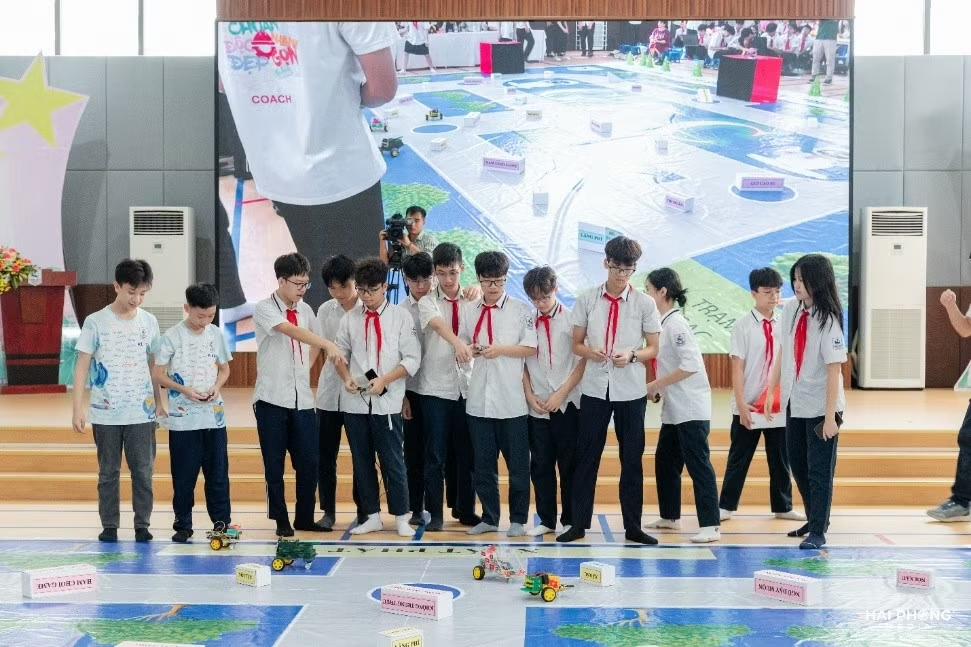
The school also ranked among the Top 2 nationwide for the highest number of finalists in the Tekmonk Coding Olympiad 2024, which attracted the participation of 350 secondary schools. Remarkably, all of its contestants advanced to the final round of the FPT Schools AI & Robotics Challenge for the 2025–2026 academic year.
Through these competitions, students not only sharpen critical thinking and teamwork but also demonstrate their ability to apply technology in practice and express their aspirations for global integration.
Tong Van Tran High School in Ninh Binh Province has also made STEM education a priority. In the 2025–2026 school year, its project “Producing effective cough prevention and support products from honey and preserved lemons” won the grand prize at the STEM Festival organised by the Ninh Binh Provincial Department of Education and Training.
Headmaster Tran Cong Hoan noted that the project delivered significant social benefits, contributing to local economic development, improving community health, protecting the environment, and promoting a green lifestyle.
Meritorious Teacher Nguyen Thi Thu Huyen of Quang Trung Secondary School in Lam Dong Province emphasised that innovating teaching methods is key to improving educational quality. She has actively attended professional training, learned from colleagues, and applied modern approaches such as STEM education.
As a result, her students’ overall performance has improved markedly, with greater opportunities to harness their strengths and develop independent thinking.
STEM education aligns with local development strategies
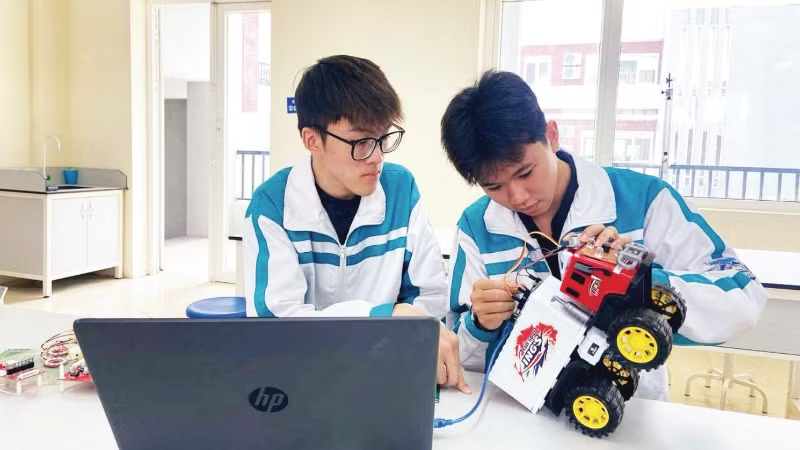
Quang Ninh Province, with its strengths in industry, tourism, services, and the marine economy, has embraced STEM education as essential. It not only connects the general education curriculum with the province’s socio-economic development strategy but also helps shape a generation of citizens capable of mastering modern knowledge and creatively applying it to local challenges.
According to the Provincial Department of Education and Training, most schools in the province are now implementing STEM education. This has transformed classroom dynamics: students are more enthusiastic and proactive, ask questions, experiment boldly, and are unafraid of failure. Teachers, meanwhile, have shifted from being mere transmitters of knowledge to organisers, guides, and companions in the learning process.
Education experts forecast that by 2030, global demand for STEM professionals will rise sharply, particularly in technology, automation, artificial intelligence, biomedicine, and energy.
Education experts forecast that by 2030, global demand for STEM professionals will rise sharply, particularly in technology, automation, artificial intelligence, biomedicine, and energy.
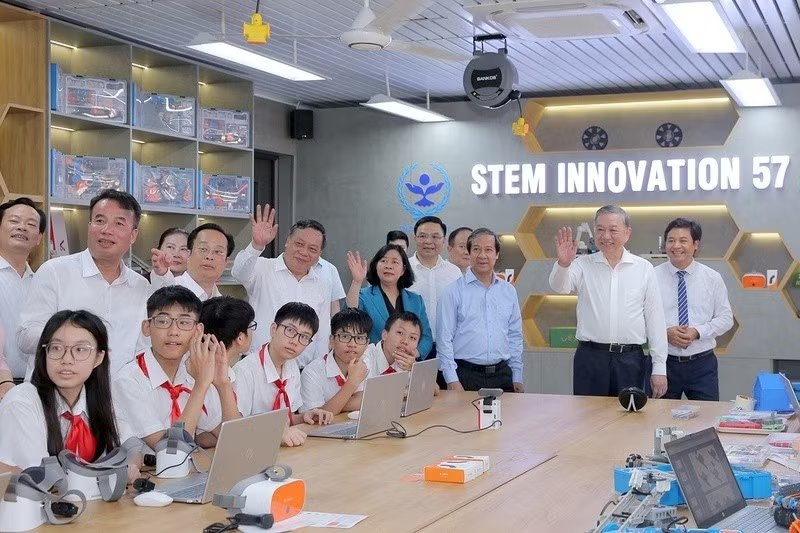
Recognising this, local authorities and businesses are investing heavily in STEM education. Notably, the Viet Nam National Industry – Energy Group (Petrovietnam) established 100 STEM practice rooms in 2025 across 34 provinces and cities, all following a unified model that meets international standards.
These classrooms are expected to serve as centres for disseminating knowledge, offering students hands-on experiences, and acting as “nurseries” for training core teachers, thereby creating a ripple effect across tens of thousands of schools nationwide. For students, they provide engaging scientific exploration; for teachers, they offer tools to innovate and inspire; and for society, they represent a long-term investment in the nation’s future workforce.
Thai Van Tai, Director of the General Education Department under the Ministry of Education and Training, explained that STEM education is fundamentally an integrated teaching and learning method. It enables students to mobilise comprehensive knowledge and skills in science, technology, engineering, and mathematics to develop qualities, competencies, and solve practical problems.
STEM education focuses on enhancing students’ attributes and abilities, moving beyond traditional teaching styles that emphasise rote knowledge transmission. Today, many provinces and cities have rolled out STEM education across their schools. Teachers and education managers have mastered the approach, while students consolidate knowledge through immediate practice, forming skills and developing competencies that prepare them for the future.