From that perspective, physical education and school nutrition are increasingly being recognised as two inseparable pillars in the strategy to improve the stature and physical fitness of Vietnamese people. When students are properly nourished, engage in appropriate physical activity and form healthy habits from an early age, this is not only an investment in their health today, but also a foundation for the nation’s future.
Healthy young people to master the future
As society moves at an ever faster pace, expectations for the younger generation are also changing profoundly. A young person who seeks comprehensive development cannot rely only on professional knowledge, but also needs adaptability, mental resilience and a strong physical foundation to pursue long-term ambitions.
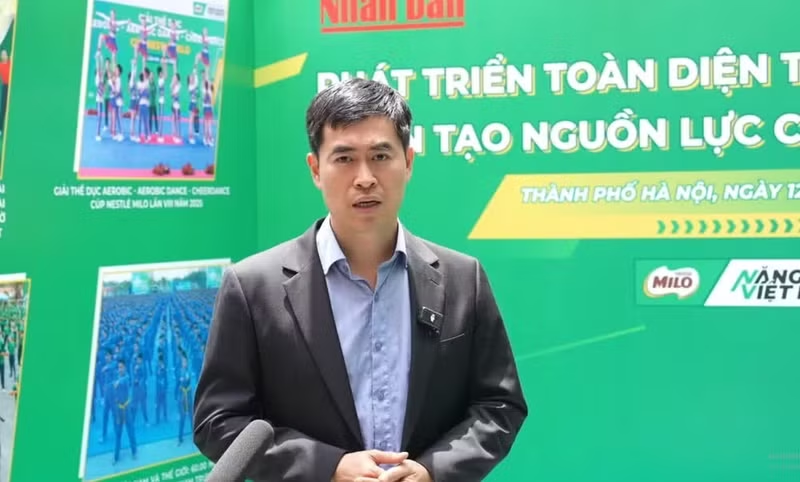
According to Vu Chi Thanh, Rector of FPT Polytechnic College, as the country enters a new stage of development with many opportunities and challenges, young people are the central force and a fundamental driver of development. Therefore, preparing the younger generation should not stop at knowledge or skills, but must also begin with health.
Thanh said that only with good physical health can young people have enough energy and endurance to study, work, master new technologies and pursue future careers. This is also a condition for them to maintain a positive mindset, clear thinking and firm life goals.
“To realise great ambitions as the country rises, the younger generation must be healthy,” Thanh emphasised.
From that reality, strengthening physical activities in schools, from preschool to university level, has become an urgent requirement. Modern education can no longer stop at training students who are good at academic knowledge, but must also nurture citizens with good health, resilience and the ability to adapt to the changes of the times.
Physical education and nutrition: Two pillars for improving Vietnamese stature
If nutrition is a prerequisite for children to develop height, intelligence and immunity, physical activity is the key to balanced physical development, an active lifestyle and long-term endurance.
Truong Minh Sang, Head Coach of the National Artistic Gymnastics Team, said that in recent years, school nutrition has received considerable attention, while physical activity in schools has not been invested in commensurately.
“Some students are suited to football, while others develop well through basketball, badminton or other sports. Therefore, physical education needs to be diversified to meet the talents and interests of each student,” Sang said.
According to Sang, to improve the stature of Vietnamese people and build a movement for physical training in the community, schools must be the starting point. Every student should have at least one favourite sport, and this habit should be formed from an early age.
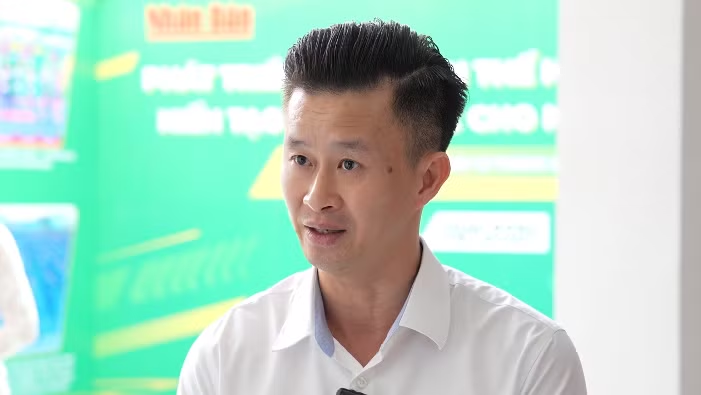
In particular, he emphasised the role of gymnastics as a foundational sport that children should be exposed to from preschool level, similar to the approach adopted in many developed countries. When children have a good movement foundation from an early age, it will be easier for them to take up other sports, while also helping them form an active lifestyle and reduce dependence on electronic devices and online games.
According to Associate Professor, Dr Tran Thanh Duong, Director of the National Institute of Nutrition, major resolutions of the Party Central Committee on the comprehensive development of the younger generation have set out the requirement to care for children and adolescents in a holistic manner, from physical fitness and stature to intelligence and life skills.
He said that after the resolutions were issued, the health and nutrition sector worked closely with the education sector to develop specific standards and action programmes to improve stature, physical fitness and school health for Vietnamese students.
This shows that a new development mindset is taking shape: improving the quality of human resources is not achieved only through intellectual education, but must also begin with school meals, sports grounds and daily physical activity.
When physical education becomes a lever for comprehensive health development
For many years, physical education was often regarded as a “secondary subject” and did not receive commensurate investment. Many schools lacked playgrounds and training equipment, the number of physical education teachers remained limited, and teaching time was insufficient.
According to statistics from the Ministry of Education and Training, the proportion of schools with indoor gyms or sports grounds remains low. At primary level, only about 17% of schools have indoor sports facilities and 15% have sports grounds. At secondary school level, the figure ranges from around 12% to 15%. At high school level, about 30% of schools have indoor sports facilities and 15% have sports grounds.
This reality has created many obstacles to the goal of improving students’ physical fitness and forming exercise habits. However, in recent years, thinking about physical education has changed markedly. Resolutions and development strategies of the Party and State have placed physical education at the centre of comprehensive education.
Resolution No. 71-NQ/TW identifies the task of strengthening comprehensive education in morality, intellect, physical fitness and aesthetics, while forming the value system of Vietnamese people in the new era. Meanwhile, Resolution No. 72-NQ/TW emphasises the need to include health and nutrition education in curricula appropriate to each educational level.
The overall project on developing the physical strength and stature of Vietnamese people for the 2011-2030 period, together with the Strategy for the Development of Physical Training and Sports in Viet Nam to 2030, with a vision to 2045, continues to affirm the requirement for strong reform of physical education in schools.
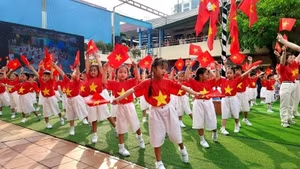
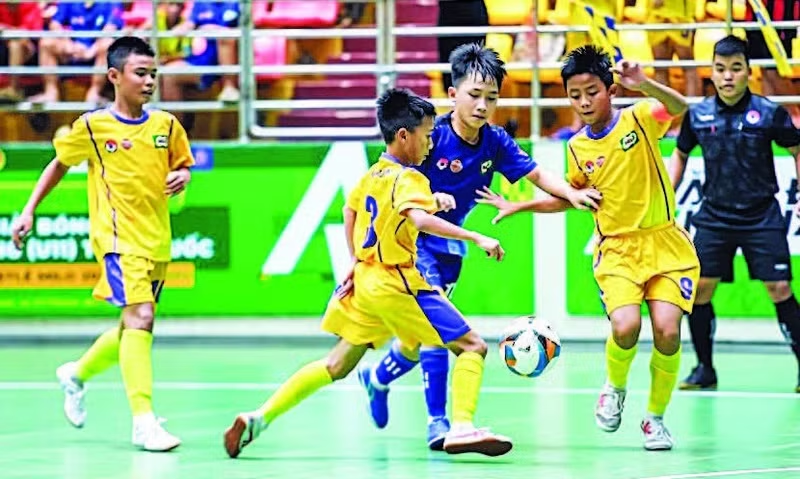
Thanks to these orientations, physical education is gradually moving beyond its previously underestimated position and becoming an important part of assessing learners’ capacity and qualities. Schools have begun to diversify sports, from football, athletics and badminton to yoga, traditional martial arts, swimming and aerobics, depending on local conditions.
School nutrition: A foundation for future stature
If physical education helps students build a foundation for movement, improve endurance and train their willpower, school nutrition is the core condition for developing the physical strength, intelligence and stature of the younger generation. A healthy body cannot be built by physical activity alone, but must be nourished through scientific, balanced meals suited to each age group.
As Viet Nam enters a new stage of development, the requirements for future human resources no longer stop at knowledge or academic achievement, but encompass comprehensive development in physical health, mental wellbeing, adaptability and a healthy lifestyle.
According to Associate Professor, Dr Tran Thanh Duong, Director of the National Institute of Nutrition, the Party Central Committee’s resolutions on the comprehensive development of the younger generation have created an important foundation for the health, education and nutrition sectors to coordinate in implementing specific action programmes to improve physical fitness, stature and school health for Vietnamese children.
“For the health and nutrition sector, policy orientations have clearly emphasised the need to care for the younger generation in a holistic manner, from physical fitness and stature to intelligence and life skills,” Duong stressed.
From the perspective of education management, Nguyen Nho Huy, Deputy Director of the Department of Student Affairs under the Ministry of Education and Training, said school health work is being identified as a priority task. In this regard, school nutrition combined with physical activity serves as two important pillars to support students in developing fully in terms of physical health, mental wellbeing and intelligence.
Notably, in the process of promoting the comprehensive development of the younger generation, a multi-stakeholder cooperation model involving enterprises is being viewed as an important supplementary resource.
Le Bui Thi Mai Uyen, Vice President of Nestlé Viet Nam in charge of the Milo and dairy business, said that through the MILO brand, Nestlé has carried out programmes aimed at encouraging children to play sports, increase outdoor physical activity, and develop initiative, willingness to experience new things and the ability to overcome challenges. These efforts contribute to building a younger generation that is healthier both physically and mentally.
From this reality, it can be seen that developing school nutrition is no longer merely a matter of boarding meals or nutritional portions in schools. It needs to be placed within an overall strategy to build a comprehensive development environment for children.
When schools, families, management agencies and enterprises work together, a generation of young people who are healthy, energetic, adaptable and resilient will become a solid foundation for the country’s sustainable development in the future.