Having stood together for more than 75 years, from the struggle for national independence to the nation‑building process, Viet Nam and Russia have fostered enduring friendship and a high degree of political trust. Those precious bonds and the achievements gained over the past years have formed a solid foundation for Viet Nam and Russia to achieve further success in bilateral cooperation.
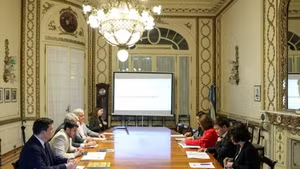
Energy is one of the pillars of particular importance within the comprehensive strategic partnership between Viet Nam and Russia. The two countries have maintained a long-standing tradition of fruitful cooperation in this field for over four decades through joint ventures such as Vietsovpetro in Viet Nam and Rusvietpetro in Russia, which stand as leading examples and symbols of effective collaboration.
Russia has strengths in oil and gas exploration and production and in operating large hydrocarbon fields. Through projects with Russia such as Vietsovpetro, Viet Nam has accumulated experience, enhanced technological capacity and gradually strengthened high‑quality personnel, making a significant contribution to the development of the country’s oil and gas industry.
Energy is one of the pillars of particular importance within the comprehensive strategic partnership between Viet Nam and Russia. The two countries have maintained a long-standing tradition of fruitful cooperation in this field for over four decades.
In the context of global energy markets facing many fluctuations, cooperation between the two countries in this strategic field is even more important. Beyond traditional oil and gas, Viet Nam and Russia have potential to expand cooperation in new energy areas, clean energy and renewable energy, contributing to the green transition and sustainable development.
In March 2026, an agreement between the Government of the Socialist Republic of Viet Nam and the Government of the Russian Federation on cooperation in constructing a nuclear power plant on Vietnamese territory was signed, marking an important step in bilateral cooperation in nuclear energy for peaceful purposes and helping to ensure long‑term energy security for Viet Nam.
Deputy Minister of Foreign Affairs Le Thi Thu Hang said that this will become a new symbolic project for Viet Nam–Russia relations in the future, akin to friendship monuments such as the Hoa Bình Hydropower Plant and the Thang Long Bridge.
Against the backdrop of strong globalisation and rapid advances in science and technology, high‑quality human resources provide a crucial competitive advantage for each country’s economy.
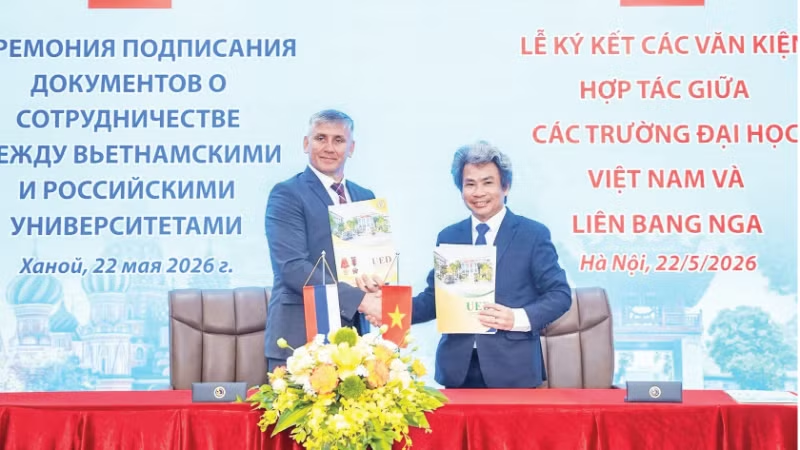
Therefore, cooperation in education, workforce training and scientific research and innovation are fields that Viet Nam and Russia will prioritise to ensure sustainable economic development, particularly for the digital economy.
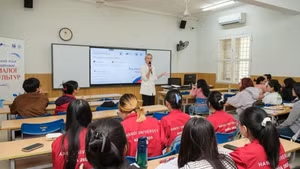
The former Soviet Union and today’s Russian Federation have provided training for tens of thousands of Vietnamese scientists, engineers, experts and managers. Many Vietnamese leaders and leading scientists received their education in Russia.
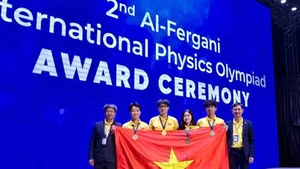
This testifies to a dynamic, substantive and effective educational partnership between the two countries, forming a lasting bridge for friendship between the peoples. Since 2019, Russia has increased its quota for Viet Nam to about 1,000 scholarships per academic year. Currently some 5,000 Vietnamese students are studying in Russia.
The two countries are also actively implementing research projects and technology transfer. Viet Nam and Russia are carrying out a project on the construction of a Nuclear Science and Technology Centre in Viet Nam, and activities under the 2026 Cross-Year of Science and Education Cooperation.
In the new era of development, when Viet Nam has an urgent need for high‑quality human resources, Viet Nam and Russia must further intensify education and training cooperation.
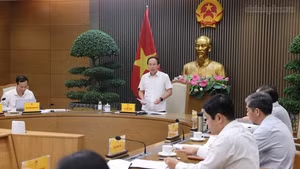
Deputy Minister of Foreign Affairs Le Thi Thu Hang
According to Deputy Minister of Foreign Affairs Le Thi Thu Hang, in the new era of development, when Viet Nam has an urgent need for high‑quality human resources, Viet Nam and Russia must further intensify education and training cooperation, especially in areas where Russia has strengths such as digital technology, quantum technology, biomedicine, basic sciences and classical arts.
The fruits of cooperation over more than 75 years allow Viet Nam and the Russian Federation to look forward with confidence to a brilliant future with longer, firmer strides in bilateral relations.
The two countries are jointly outlining a development vision for the next phase, strengthening relations in a wider and deeper manner, elevating comprehensive bilateral cooperation for practical benefits for the peoples of both nations.