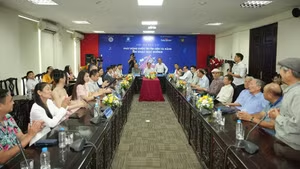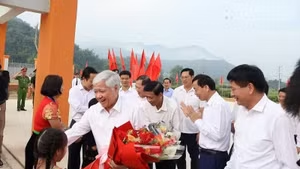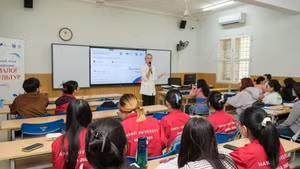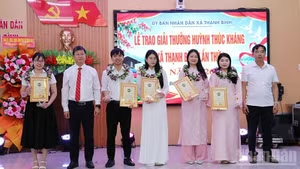
In the border commune of Thu Lum, in the final days of August, officials, teachers and school staff were urgently completing preparations for the new school year. This is the first year that Thu Lum Primary and Lower Secondary Ethnic Minority Boarding School has been established through the merger of three schools: Ka Lang Ethnic Minority Semi-boarding Primary School, Ka Lang Ethnic Minority Semi-boarding Lower Secondary School and Thu Lum Ethnic Minority Semi-boarding Lower Secondary School.
With 28 classes and 735 pupils, including 248 primary school pupils, the school is the largest in the commune. Since early August, all officials, teachers and staff have been present to clean the school premises and classrooms, prepare boarding accommodation and meals, undertake political and professional training, and disseminate information and mobilise pupils to attend school on schedule.
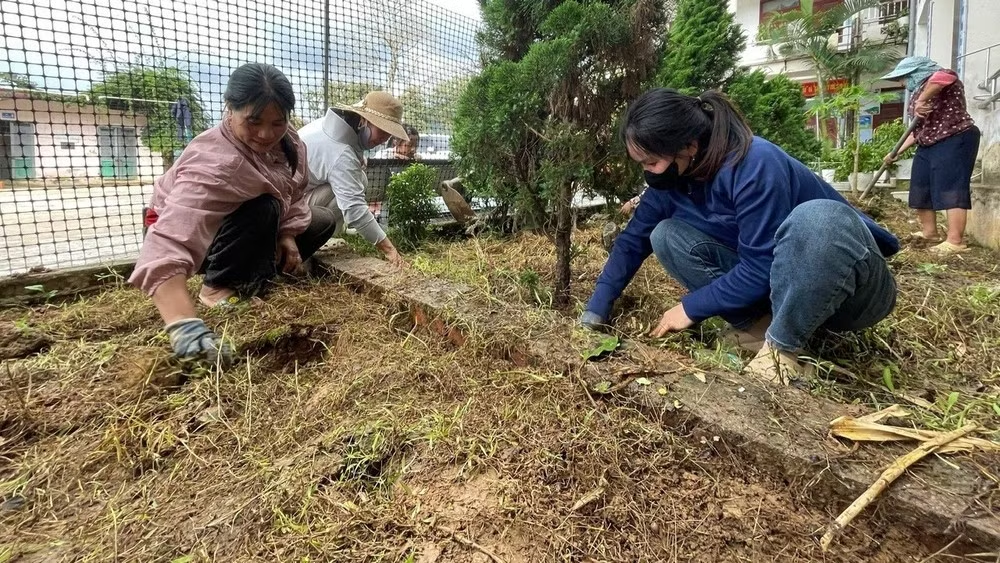
Teacher Ly Xu Po, Deputy Principal of the school, said that, in preparation for the new school year, the school had reviewed all school facilities and classrooms, workplaces, and accommodation and dining facilities for pupils. This year, as the school shifts to a boarding model, the number of pupils is larger, requiring more appropriate arrangements for accommodation and classrooms.
According to Teacher Ly Xu Po, Thu Lum Commune is among the areas designated for the construction of an inter-level boarding school in the border region. However, as the new school is still under construction, pupils will continue to study at the former branch campuses this school year. The school currently has 16 classrooms, including 10 permanent classrooms, with the remainder being semi-permanent. As the school is eliminating the village-based school sites this school year, all pupils will be concentrated at the branch campuses, making preparations for their accommodation more demanding. In return, however, teachers will no longer have to travel to the villages, while pupils will have better conditions for concentrated learning and living, and better conditions will also be provided for their care and daily needs.
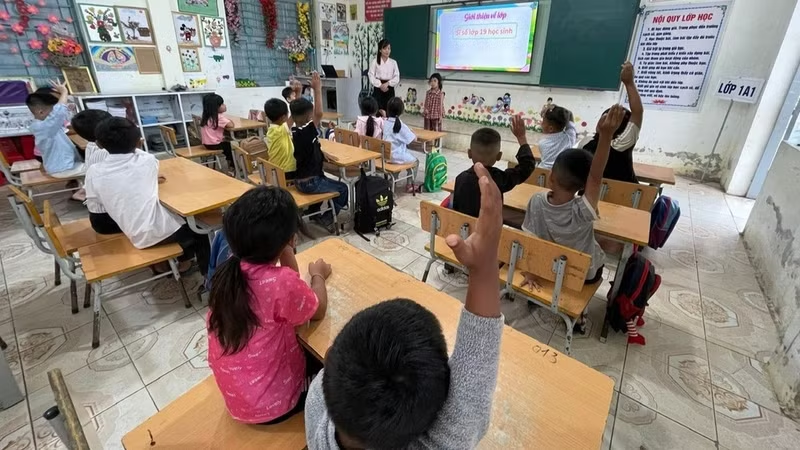
As early as August 17, the school welcomed 56 Grade 1 pupils to study and familiarise themselves with Vietnamese. To date, the arrangement of teachers, classrooms and boarding rooms at the branch campuses has basically been completed. One advantage is that parents are increasingly concerned about their children’s education. Information is sent through village groups and announced by village heads so that parents can bring their children to school, instead of teachers having to visit each village in person to mobilise pupils as they did previously.
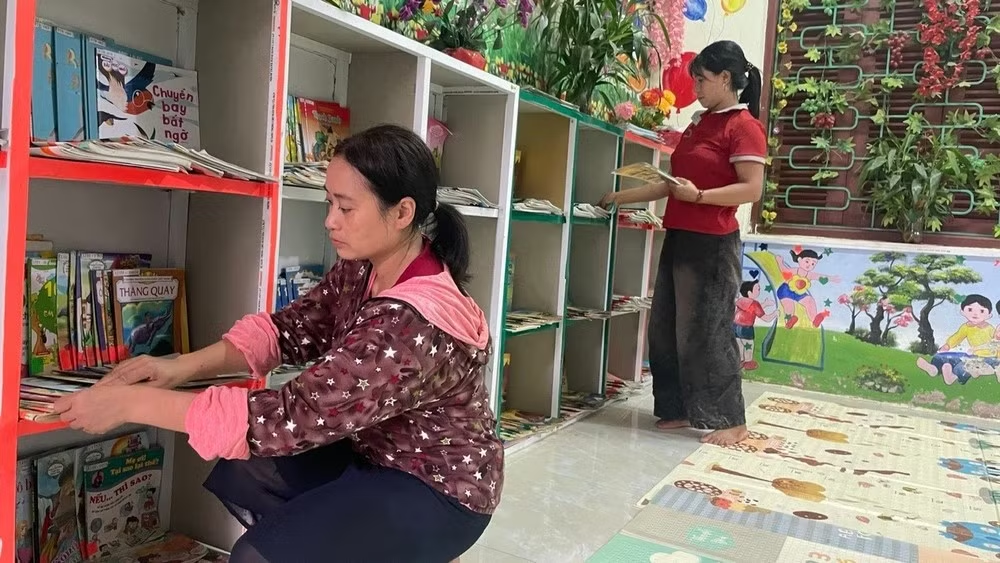
At pre-primary level, Thu Lum Kindergarten was established through the merger of Ka Lang Kindergarten and Thu Lum Kindergarten. The school has 16 school sites, 19 classes and 356 pupils. In the final days of August, school officials, teachers and staff focused on completing facilities, cleaning classrooms and school premises, arranging teaching materials and toys, and preparing the necessary conditions to welcome children.
Comrade Phung Long Ka, Vice Chairman of the Thu Lum Commune People’s Committee, said that the locality had proactively developed a plan to streamline its organisational structure, while implementing preparations for the new school year and reviewing facilities and classrooms. Following the merger, in the 2026-2027 school year, Thu Lum Commune has 58 classes with 1,328 pupils; it has completed the restructuring of six public educational establishments into three, reducing the number of management units by three, equivalent to 50%, while ensuring that there are no more than two schools at each educational level in the locality in line with the province’s orientation.
In Hua Bum Commune, preparations for the new school year have also basically been completed. Following the restructuring, the commune now has only a kindergarten and an inter-level primary and lower secondary ethnic minority boarding school. This is the first year that Hua Bum Inter-level Boarding School has been established and put into operation at the newly built school invested in under the relevant policy.
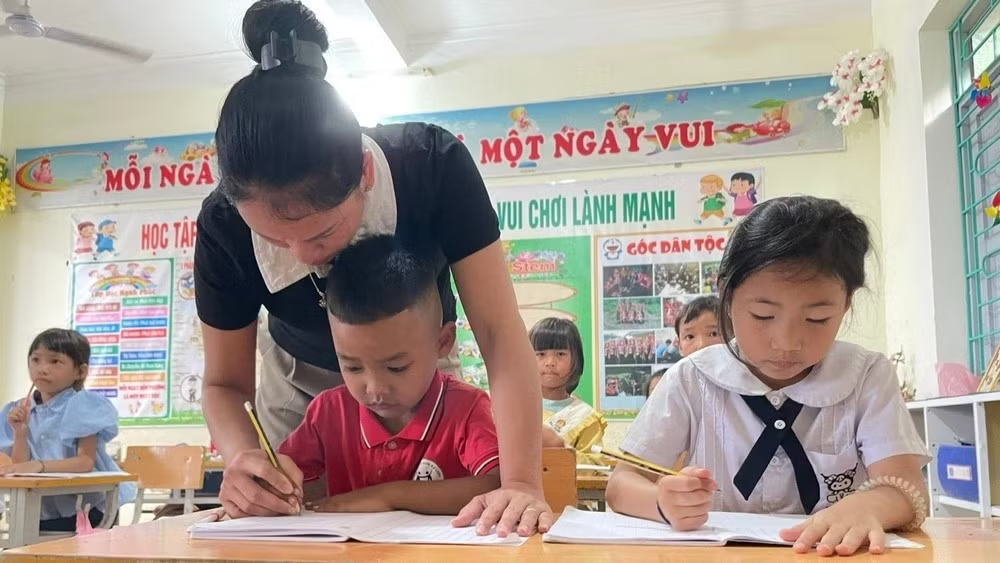
The school has 32 classes with 1,094 pupils, including 20 primary classes with 622 pupils and 12 lower secondary classes with 472 pupils. At the beginning of the school year, lower secondary pupils are expected to study at the new school, while primary pupils will study at the former inter-level school site in the commune centre. Once the new school is completed in October, the primary pupils will move there to study.
According to Ms Le Thi Kim Oanh, Deputy Principal in charge of the school, the most remote village school site is more than 70 kilometres from the centre. Previously, when village school sites were still in operation, preparations for the new school year were much more demanding because teachers had to divide themselves among the sites to clean and repair classrooms and mobilise pupils to attend school. Now that there is a new school, pupils are concentrated in the centre, making the teachers’ work less demanding. The school has organised professional, vocational and political training for teachers, informed the villages and prepared the necessary conditions to welcome pupils. Since August 17, Grade 1 pupils have been welcomed to the school to participate in the Vietnamese language familiarisation programme.
To ensure an adequate supply of textbooks during the first weeks of the school year, the school has encouraged parents to donate used textbooks from pupils in previous grades, while also calling on benefactors to support the provision of exercise books. To date, preparations have basically been completed and the school is ready for the new school year.
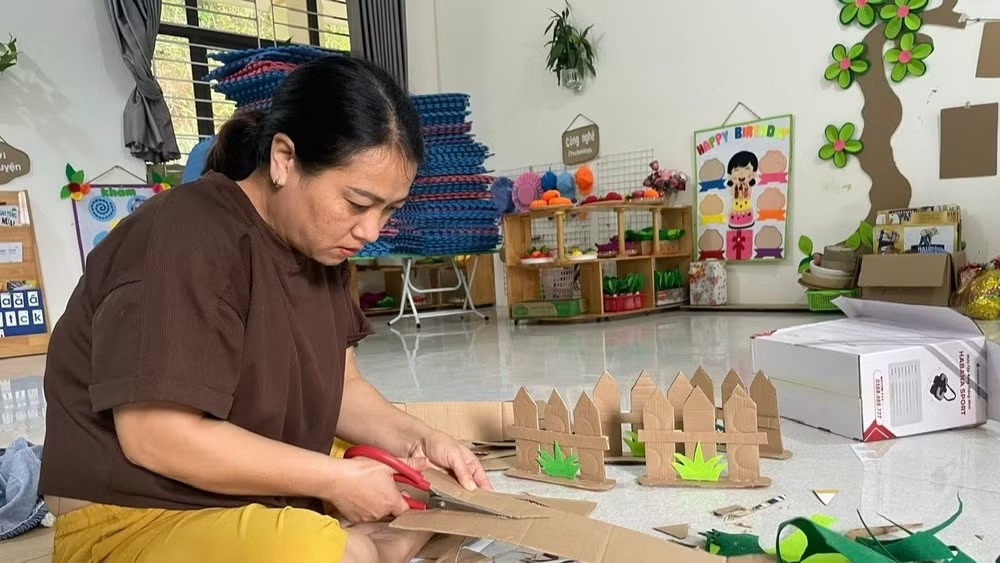
While Thu Lum and Hua Bum are preparing for a new school year amid significant changes to their school and class models, preparations at Ban Chit School Site in Muong Than Commune, which was affected by flash floods on July 17, have been much more demanding for the teachers. Following the floods, the facilities were severely damaged and were no longer safe for continued teaching and learning, so the school had to repair the former school site to provide a place for children to study.
With the joint efforts of teachers, parents and local authorities, classrooms have been cleaned, repainted and completed, gradually meeting the requirements for welcoming children in the new school year. According to Ms Kieu Thi Hong, the teacher assigned to teach at Ban Chit School Site this school year, after the former school site was repaired and its interior completed, the teachers decorated the classrooms and ensured that the grounds and pre-primary classrooms were attractive to children. The teachers have done their utmost to complete whatever basic work could be undertaken to ensure suitable conditions for children to attend school.
In the 2026-2027 school year, Ban Chit School Site has 113 pre-primary pupils. As the renovated former school site has only three classrooms, three mixed-age classes will meet the learning needs of 78 pupils; the remaining 35 pupils will be accommodated at the central school.
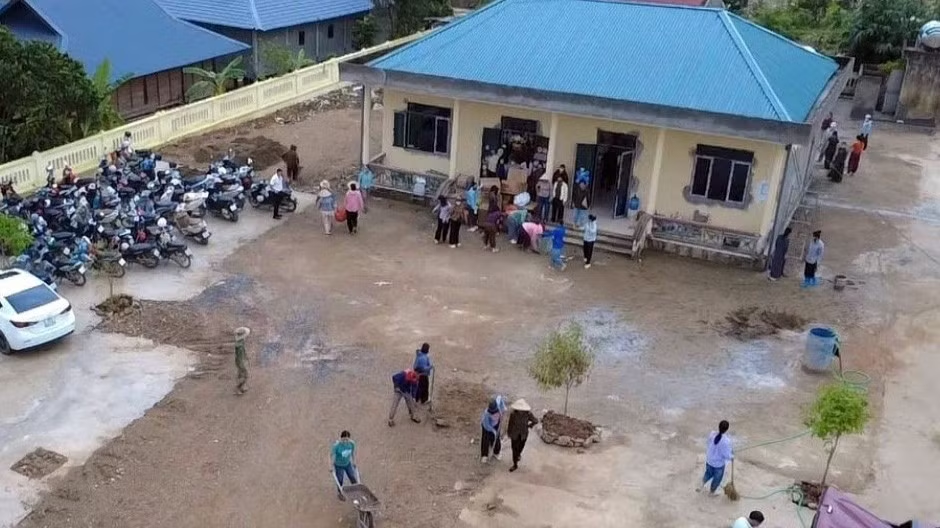
Hoang Phi Hung, Vice Chairman of the Muong Than Commune People’s Committee, said that the commune had allocated more than 4 billion VND from the budget and socialised funding to repair and restore the classrooms, invest in equipment and facilities for Ban Chit School Site, and ensure teaching and learning needs in the new school year.
Alongside preparations for facilities in different localities, Lai Chau has completed the restructuring of its school system and staffing. According to the Lai Chau Provincial Department of Education and Training, before the restructuring, the province had 335 public educational establishments. Following the restructuring, there are now only 194 establishments, a reduction of 141, equivalent to approximately 42.1%.
Alongside the reduction in management units, the province has reduced the number of school sites by 33; the Provincial Centre for Continuing Education and Vocational Guidance and seven Centres for Vocational Education and Continuing Education have been reorganised into four Centres for Vocational Education and Continuing Education. The system of 14 upper secondary schools and nine ethnic minority upper secondary boarding schools has remained stable.
The restructuring is also associated with adjustments to the contingent of management officials, teachers and staff. Before the restructuring, the province had 918 principals, deputy principals, directors and deputy directors; following the restructuring, 605 positions have been arranged, a reduction of 313 positions. Among the surplus management officials, the proposed plan is for 304 people to be transferred to teaching positions, two to be assigned to other duties, and seven to retire under the applicable regime at their own request.
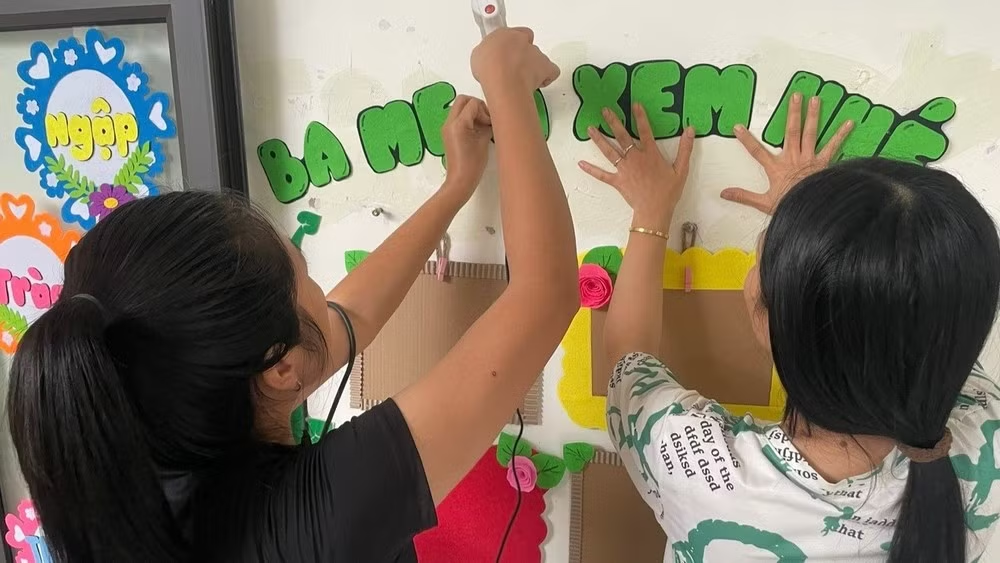
The province has a total of 9,043 teachers, including 2,929 pre-primary teachers, 3,311 primary teachers, 2,063 lower secondary teachers and 740 upper secondary teachers. Initially, the staffing adjustment plan identifies 200 teachers to teach at multiple schools, including 118 primary teachers and 82 lower secondary teachers. The transfer, secondment, movement between educational levels and further adjustment of teachers will be reviewed according to the needs of each subject, each locality and the relevant management authority.
As for support staff, before the restructuring, the province had 908 staff members; following the restructuring, 880 positions have been arranged. There are 28 surplus staff members, of whom nine are expected to be assigned to other positions, 18 transferred, and one case subject to further review of the staffing arrangement.
To date, localities and units have basically completed the conditions for operation following the restructuring, from legal procedures and the consolidation of leadership and management to the handover of finances, assets, facilities, records and data, as well as staff arrangements and the organisation of professional activities. This ensures that educational establishments operate stably and are ready to organise the 2026-2027 school year without disrupting teaching and learning activities.