From the AU-HUST Cooperation Centre at Ha Noi University of Science and Technology (HUST) to the partnership networks of Viet Nam National University, Ha Noi (VNU), the key question is how to translate these commitments into tangible benefits for learners and strengthen domestic research capacity.
New model of cooperation
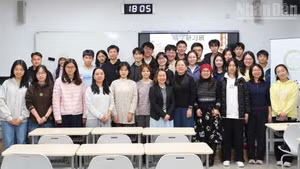
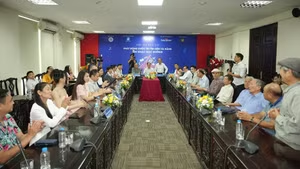
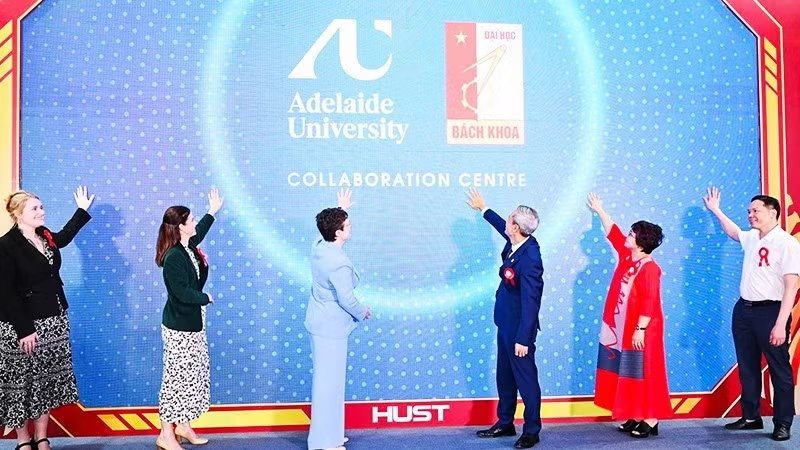
Ha Noi University of Science and Technology recently inaugurated the AU-HUST Cooperation Centre in the Ta Quang Buu Building, marking a new stage in its partnership with the University of Adelaide (Australia). The centre focuses on three pillars: teaching, research, and industry engagement.
Speaking at the inauguration ceremony, Professor Le Anh Tuan, President of Ha Noi University of Science and Technology, emphasised that the University of Adelaide's academic strengths, research capabilities, and international outlook would complement HUST's expertise in engineering, science, and technology. He voiced hope that the centre would serve as a testament to a long-term partnership involving lecturers, students, and businesses, with support from the governments of both countries.
According to Professor Nicola Phillips, Vice-Chancellor and President of the University of Adelaide, the launch of the centre comes at a time when Viet Nam–Australia relations are expanding, particularly in higher education, research, science, and technology. She described it as a concrete example of the partnership between the two countries.
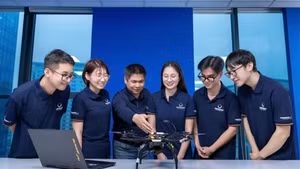
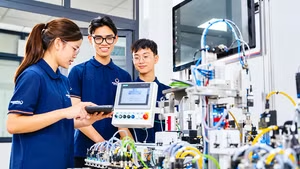
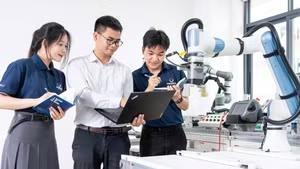
Since 2019, the two universities have undertaken various cooperation activities, including student exchanges, credit recognition in several engineering disciplines, and research in semiconductors and artificial intelligence. The centre will provide a framework for consolidating these initiatives under a longer-term partnership, with a view to developing joint training programmes, research projects, and business collaborations.
In August 2026, Ha Noi University of Science and Technology, the University of Adelaide, and Viet Nam Electricity (EVN) held discussions on opportunities for cooperation in training, human resource development, and scientific research, focusing on energy transition, decarbonisation, energy security, future power grids, artificial intelligence, and cybersecurity. This collaborative approach could bring practical challenges faced by businesses into research and training activities, while enabling students to better grasp labour market demands.
Chargé d'Affaires of the Australian Embassy in Viet Nam Renée Deschamps said that the complementary strengths of the two universities created opportunities to foster research partnerships, strengthen training, and develop highly skilled human resources.
At the ceremony, Associate Professor Nguyen Thu Thuy, Director General of the Department of International Cooperation under the Ministry of Education and Training, stressed that such partnerships should not stop at agreements and exchanges, but must be translated into tangible outcomes in teaching, research, innovation, and human resource development.
This direction is consistent with Politburo Resolution No. 71-NQ/TW, dated August 22, 2025, on breakthroughs in education and training development. The resolution calls for the expansion and diversification of international cooperation in education, training, and scientific research, while encouraging Vietnamese universities to establish partnerships with reputable foreign institutions and major businesses, particularly in key sectors and emerging technologies. The establishment of joint training institutions and research institutes is also envisaged to bolster research capacity and improving the quality of education and training.
Ha Noi University of Science and Technology is not alone in this effort. Viet Nam National University, Ha Noi (VNU), has also been expanding cooperation with leading higher education institutions worldwide, linking teaching and research with talent development.
One notable partner is Tsinghua University in China. The two universities established relations in 2006 and have gradually expanded cooperation in research, exchanges of lecturers, researchers, and students, and hosting academic conferences. In 2025, they signed a student exchange agreement, while also promoting the establishment of the Viet Nam–China University Network and strengthening collaboration in digital education.
In addition, VNU maintains partnerships with numerous prestigious universities, including Peking University, Seoul National University, the National University of Singapore, Nanyang Technological University, the University of Tokyo, and Université Paris-Saclay. Between 2020 and 2024, VNU attracted 1,418 international experts and lecturers to conduct research and teach, and welcomed 6,326 international students.
Exchange programmes enable students to experience different educational environments, improve their foreign language skills, develop research methods, and enhance their adaptability.
For universities, international cooperation helps improve governance capacity, develop academic staff, expand scholarly networks and gain access to international standards. When lecturers work with foreign experts, participate in joint projects, and publish research findings on international platforms, both teaching quality and research capacity are significantly enhanced.
Avoiding the risk of superficial cooperation
Despite the many opportunities it offers, international cooperation among Vietnamese universities still faces considerable challenges. According to experts, the first is the disparity in resources, facilities, research capacity, and management experience. Universities with strong academic teams, modern laboratories, and stable funding are generally better positioned to attract reputable partners and implement large-scale projects. By contrast, institutions with limited staffing and infrastructure may struggle to move from signing agreements to putting them into practice.
Funding is another significant barrier. Exchange programmes, joint research, and co-organised training courses entail costs for travel, accommodation, equipment, and project management. Even when tuition fees are waived by partner institutions, students may still have to cover their own airfares, insurance, and living expenses.
Foreign language proficiency and the ability to work in international environments also require greater attention. Associate Professor Nguyen Vu Quynh, Vice-Rector of Lac Hong University, noted: "Lecturers and students must be able to exchange professional knowledge, write scientific reports, and present research findings in foreign languages. Without adequate preparation, cooperation opportunities may be confined to a small group, failing to generate a broader impact."
In addition, issues such as credit recognition, the alignment of learning outcomes, the development of joint curricula, the allocation of intellectual property rights, and the management of research data need to be addressed early on. Differences in regulations, academic calendars, approval procedures, and financial mechanisms between countries can prolong implementation. In scientific research, partners must also agree on objectives, resource contributions, rights to use research findings, and responsibilities for sustaining projects after funding ends.
Another challenge is the risk of cooperation becoming merely formalistic. Signing numerous memoranda of understanding does not necessarily translate into meaningful results without action plans, designated implementing units, or evaluation mechanisms. Cooperation is also unlikely to be sustainable if it depends on personal relationships or short-term projects rather than being integrated into universities' development strategies.
Drawing on practical experience, Deputy Director General of the Department of International Cooperation under the Ministry of Education and Training Nguyen Tien Dung said that universities should shift their focus from increasing the number of partners to improving the quality of cooperation. They should prioritise resources for areas of strength, build capable research teams, provide financial support for students, and develop academic staff equipped to work in international environments. Regulatory authorities, meanwhile, need to continue refining rules and addressing procedural obstacles, particularly those relating to the recognition of academic and research outcomes, thereby creating favourable conditions for cooperation models to operate stably.
International integration in higher education is not simply about sending students abroad or attracting foreign experts to Viet Nam. Its deeper objective is to strengthen the capacity of domestic universities, develop highly skilled human resources, and gradually build the country's ability to master knowledge and technology. Only when cooperation commitments are translated into concrete results in education and training, research, and innovation can international integration truly become a driving force for the development of Vietnamese higher education.