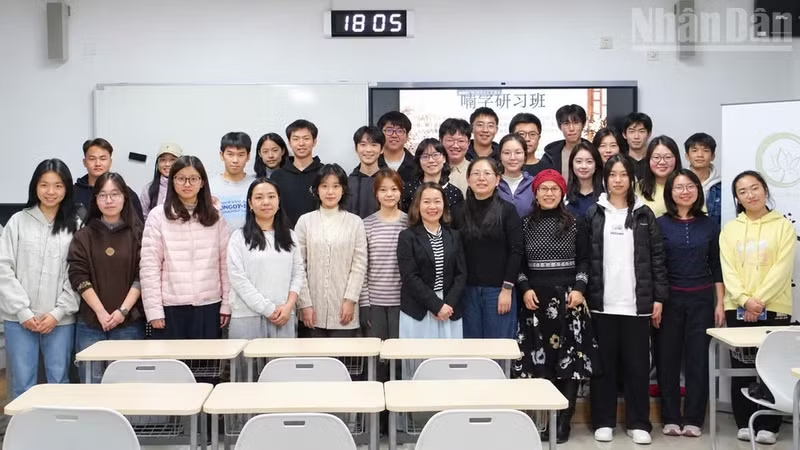
The course is being held after a seven-year hiatus. It aims to help students learn about Viet Nam’s traditional writing system and improve their ability to read ancient texts, while enabling them to conduct more in-depth studies of Vietnamese language, literature, and culture.
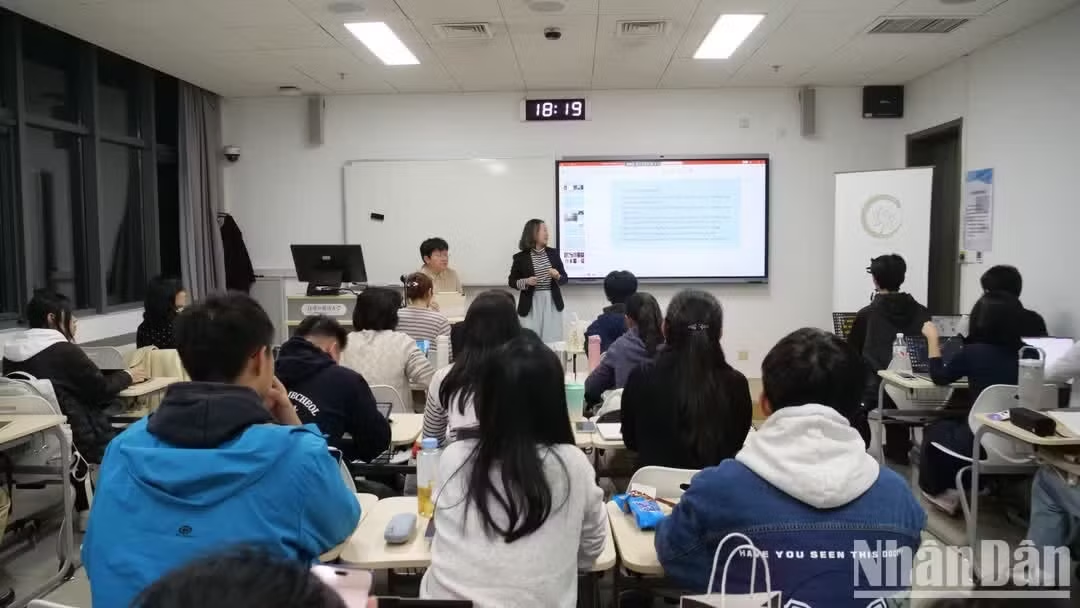
Shao Zhu Shi, Director of the Centre for Vietnamese Studies at Beijing Foreign Studies University, said that the course was designed to broaden the scope of Vietnamese-language teaching and Vietnamese studies, giving students an opportunity to engage with Viet Nam’s traditional texts. A sound command of the Nom script would enable students to access original materials directly in Vietnamese literature, history, and thought, gain a deeper understanding of the development of Vietnamese culture, improve their ability to read and comprehend source materials, and broaden their academic research horizons.
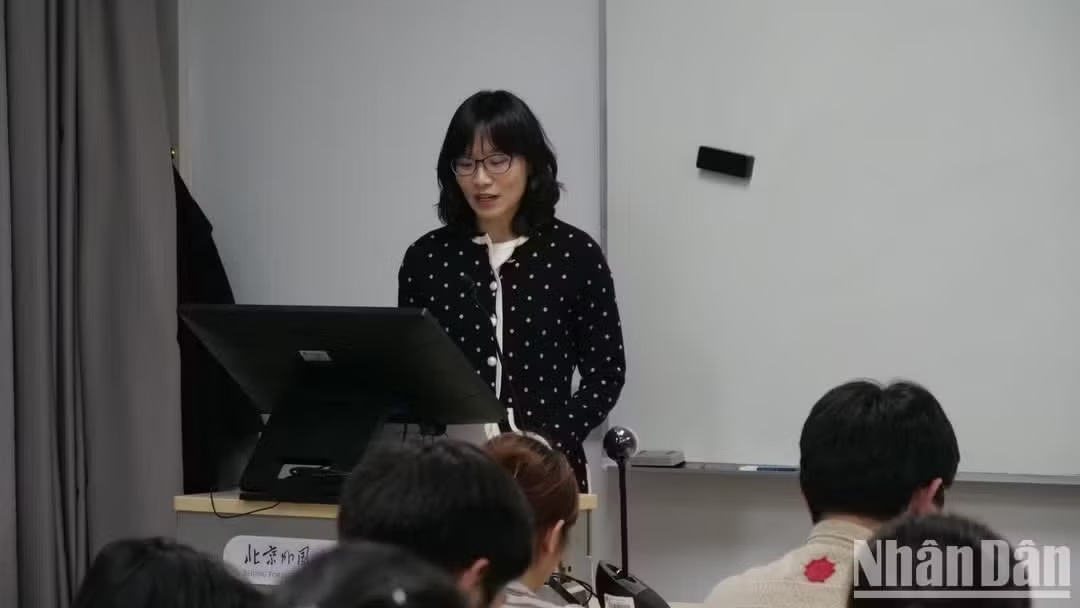
She affirmed that the university hoped to use this eight-week course as a starting point for accumulating teaching experience and gradually fostering students’ interest in the Nom script and Viet Nam’s traditional literary heritage.
Through the participation of lecturers and students from both countries in teaching and learning, the course would also create more opportunities for intercultural exchange and lay a new foundation for academic cooperation and linguistic and cultural exchanges between Viet Nam and China.
Gao Xiao Ya, a third-year Vietnamese-language student at Beijing Foreign Studies University, said she hoped the course would enable her to read and understand original texts, thereby gaining deeper insights into Vietnamese literature and culture. If the opportunity arose, she would share what she had learnt with her friends and contribute to fostering friendship between young people in the two countries.
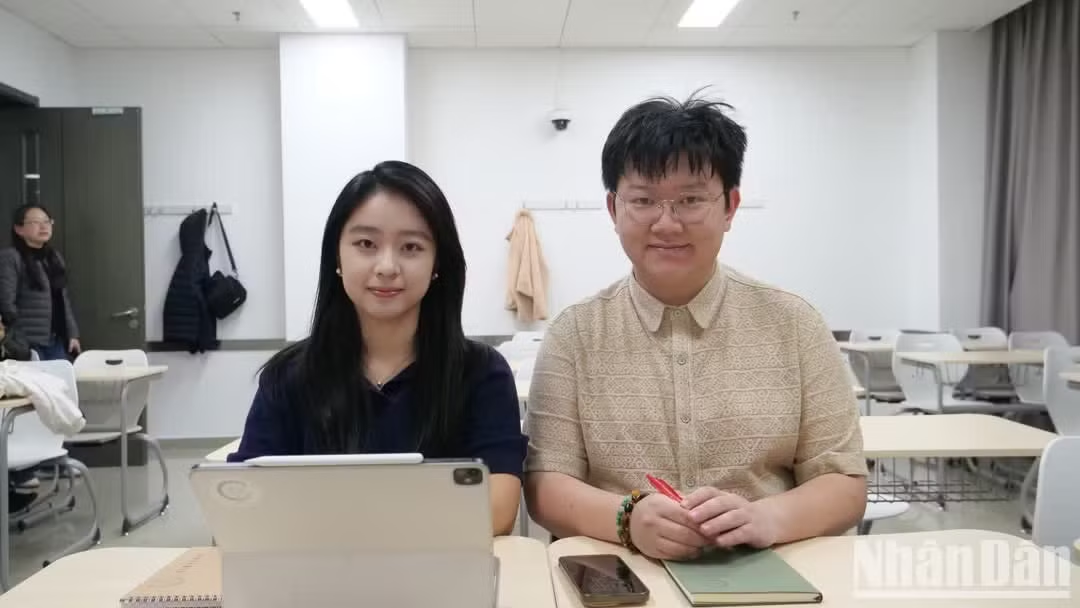
Lu Xuan Lin, also a third-year Vietnamese-language student at Beijing Foreign Studies University, regards the study of Han-Nom as an important avenue for preserving and researching Viet Nam’s cultural heritage. In his view, Han-Nom is not merely a tool for reading and understanding ancient texts, but also a key to exploring Vietnamese thought, history, customs, and the process of cultural exchange between Viet Nam and China.
From classroom teaching to academic research, learning the Nom script opens up an important avenue for exploring traditional Vietnamese culture. As educational cooperation and people-to-people exchanges between the two countries continue to develop, courses of this kind are expected to spark young people’s enthusiasm for research, nurture a new generation of specialists in ancient texts, and help promote the value of precious materials that preserve the history of cultural exchanges between the two countries in the modern era.