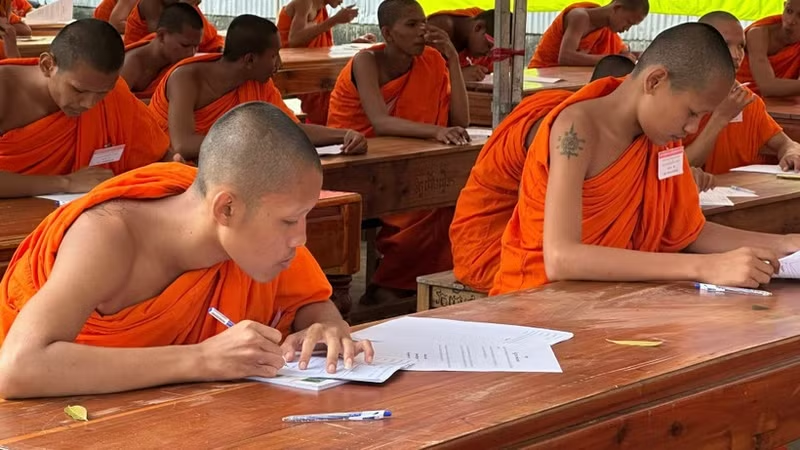
Aware of this value, An Giang—one of the localities with a large Khmer population—has persistently implemented a range of measures to preserve, safeguard and promote Pali script as an inseparable part of the ethnic cultural identity.
Preserving script as a cultural mission
Pali is the canonical language of Theravada Buddhism, recorded in its own script and widely transmitted within the Khmer community in Viet Nam through the system of Khmer Theravada Buddhist pagodas.
In the cultural and spiritual life of the Khmer people, Pali script holds a special position, as it is the language of Buddhist scriptures, Buddhist teachings and a repository of moral knowledge passed down through generations.
According to scholars of Khmer culture, learning to read and write Pali is not simply about acquiring literacy, but a process of absorbing, practising and transmitting core spiritual values—from views on life and the world to patterns of conduct within the community.
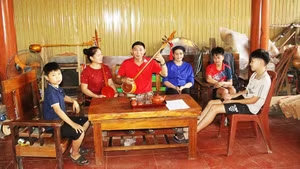
In An Giang, Pali script remains vividly present in the religious and cultural activities of the Khmer people, particularly in Theravada pagodas. Many senior monks and achar continue to devote themselves daily to teaching Pali to younger generations under the pagoda roof, regarding this as a sacred duty to their predecessors. According to the monks, preserving Pali means preserving the “soul” of Khmer Theravada Buddhism, for once the script disappears, the correct understanding and practice of Buddhist teachings will inevitably fade.
However, amid rapid social change, Pali script faces considerable challenges. Urbanisation, livelihood pressures and the strong influence of modern entertainment have made learning the ancient script less appealing to a segment of Khmer youth.
Many traditional classes rely heavily on the personal dedication of monks or artisans, lack standardised curricula and suffer from insufficient funding, creating the risk of decline without timely support from the State.
Recognising these difficulties, An Giang Province has proactively incorporated the preservation of the Khmer language and script, including Pali, into its socio-economic and cultural development programmes linked to ethnic affairs. A key foundation is Plan No. 10/KH-SDTTG on supporting Khmer language teaching, issued by the An Giang Department of Ethnic and Religious Affairs on August 4, 2025, which provides a legal framework and resources for organising language classes in the community, particularly at Khmer Theravada pagodas.
The document clearly reflects the province’s perspective that preserving script is not merely a cultural task, but a fundamental solution for strengthening national unity and enhancing the spiritual life of the Khmer people.
The right approach
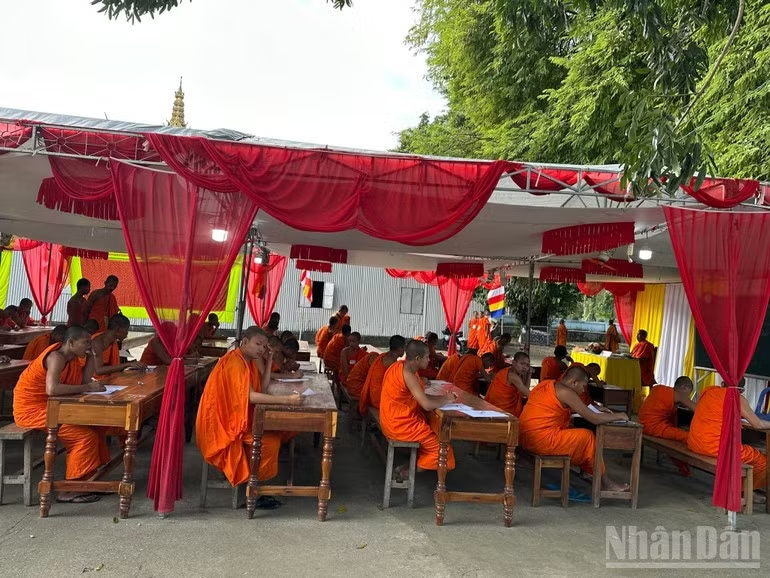
In practice, from policy to implementation, An Giang has adopted flexible approaches suited to local conditions. Pali classes are mainly organised under the pagoda roof—a familiar and sacred space for the Khmer community—thereby fostering a sense of closeness and voluntary participation.
The State provides partial funding and learning materials, while recognising and honouring the role of monks who have quietly spread knowledge for many years. A representative of the An Giang Department of Ethnic and Religious Affairs noted that support for teaching Khmer and Pali scripts is not imposed, but based on actual community needs, with pagodas as the centre and religious dignitaries as the core force.
In some localities, script teaching has been integrated with moral education and life-skills training for young people, helping Pali script move beyond a purely religious space and allowing its humanistic values to permeate community life.
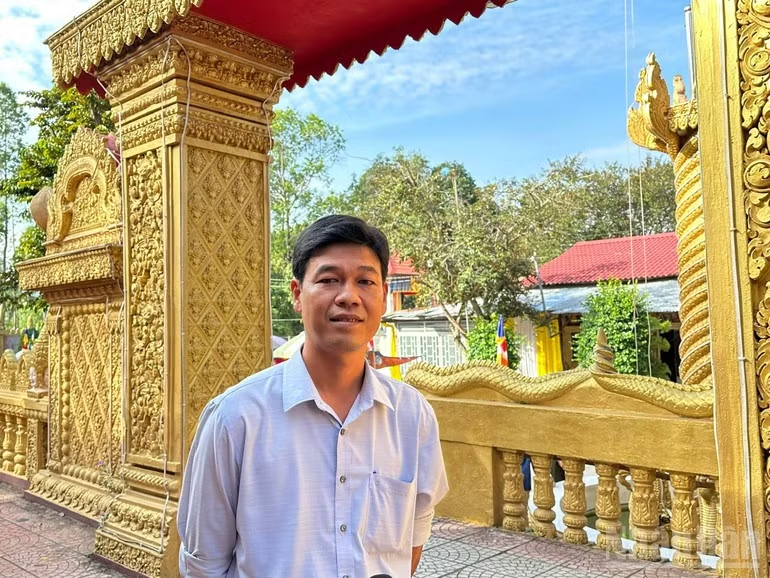
Nguyen Hoang Vinh, Vice Chairman of the People’s Committee of Chi Lang Ward—home to a large Khmer population—said that the Ward Party Committee and People’s Committee regard the preservation and promotion of Khmer cultural identity as an important, regular and long-term task, contributing to the strengthening of great national unity. Languages, scripts and customs of ethnic groups, he stressed, must be respected, preserved and passed on to younger generations.
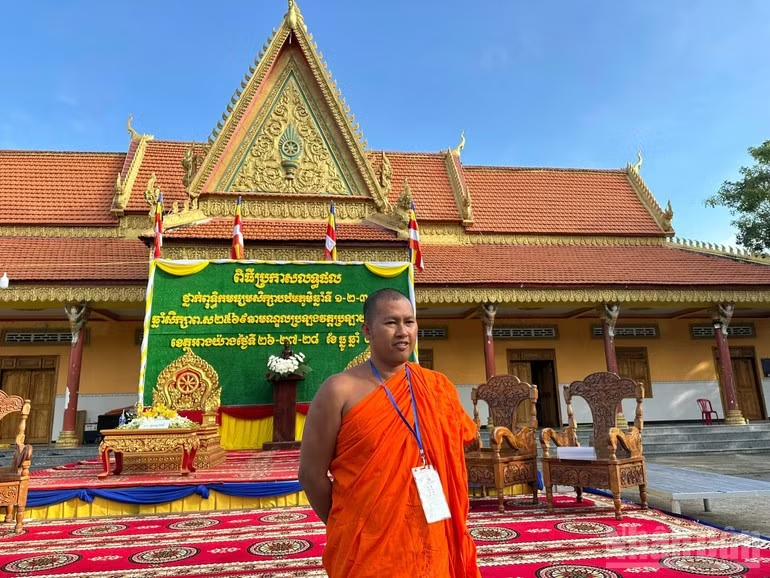
Venerable Chau Soc Quanh, Deputy Abbot of My A Pagoda in Chi Lang Ward, who also directly teaches the classes, said that Pali classes at the pagoda have been maintained for seven years (2019–2025). Thanks to the attention of the Party and State and support from authorities at all levels, teaching and learning outcomes have been positive. The number of novice monks and Khmer children studying Pali in 2025 increased compared with 2024. The pagoda has now drawn up enrolment plans for 2026, with an expansion of classes.
The results achieved demonstrate that An Giang’s approach is sound. Many Khmer youths who have attended the classes can now read and understand basic Pali scriptures, assist in pagoda rituals, and develop a stronger awareness of valuing their ethnic cultural heritage.
Nevertheless, preserving Pali script is not an endeavour that can be resolved overnight. In practice, it requires further refinement of policies in a more sustainable and long-term direction.
First, attention must be given to training a new generation of teachers. Compiling Pali teaching curricula and materials suited to different age groups and proficiency levels is also an issue that requires joint efforts from professional sectors and researchers. In addition, applying digital technology to the preservation and digitisation of Pali scriptures, and developing bilingual Khmer–Vietnamese electronic learning resources, is considered an inevitable direction in the current digital transformation context
From a state management perspective, script preservation needs to be situated within an overall strategy for cultural development in ethnic minority areas, linked to the goals of improving education levels, developing human resources and strengthening trust in the Party’s and State’s policies.
For An Giang, a province with a long-standing tradition of ethnic solidarity, continued investment in Pali script is also an investment in the sustainability of the great national unity bloc.
Looking at today’s Pali classes under pagoda roofs in An Giang, a clear message emerges: cultural heritage truly lives only when it is cherished by the community and supported by the State. Preserving Pali script is not merely about safeguarding an ancient writing system, but about preserving historical memory, moral values and the bonds linking generations of Khmer people amid modernisation.
This is also how An Giang is contributing to enriching the diverse yet unified cultural tapestry of Viet Nam’s ethnic communities.