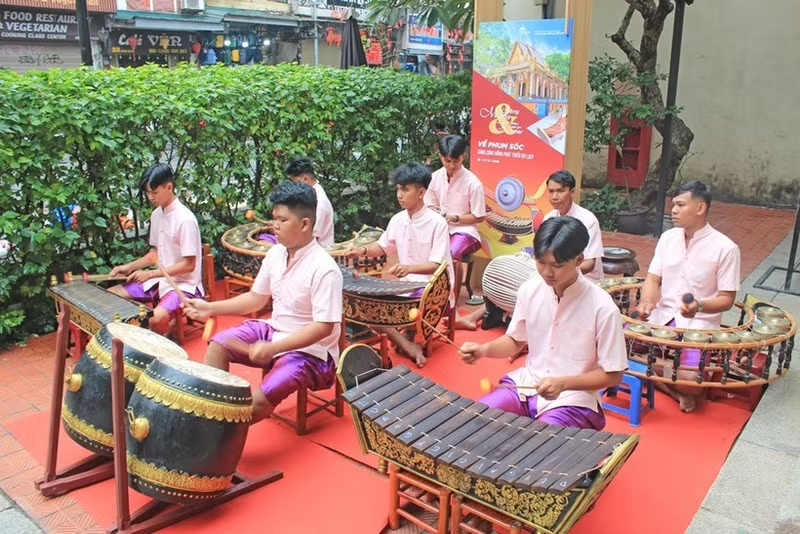
In the spiritual and cultural life of the Khmer ethnic minority, five-tone music is regarded as a time-honored musical “treasure” passed down through generations. For the Khmer community, five-tone music is not only festival music, but the sound of belief and a symbol of harmony between humans, deities, and nature.
At the programme introducing and displaying intangible cultural heritage in association with tourism development in ethnic minority and mountainous areas in 2025, organised by the Tourism Information Centre under the Viet Nam National Authority of Tourism from December 19 to 21, the Khmer five-tone music heritage was widely introduced to people and visitors in the capital Ha Noi.
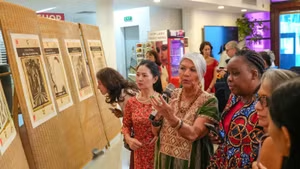
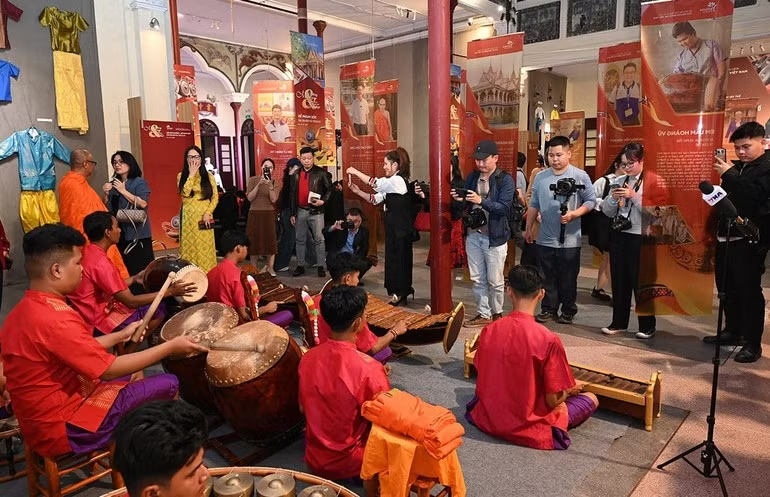
The Khmer Five-tone music performance within the framework of the event attracted large numbers of visitors who came to see, learn about, and experience the heritage. The programme not only honoured the distinctive values of the heritage, but also opened a new direction: turning heritage into a core resource for sustainable tourism development and promoting community cohesion.
Introducing this form of outstanding folk music of the Khmer ethnic minority, Venerable Ly Hung, abbot of Pitu Khosa Rangsay Pagoda in Can Tho, shared that Viet Nam’s 54 ethnic groups represent 54 unique cultural identities. The Khmer community is one of the ethnic groups with a long-standing cultural life, closely associated with Khmer Buddhist pagodas and the traditional village living space.
“Can Tho has around 120 pagodas and more than 400,000 Khmer people, accounting for the highest proportion in the Mekong Delta region. As a result, many traditional cultural values have been preserved, including language, script, customs, arts, culture, traditional outfits, and folk festivals. Accordingly, five-tone music is an indispensable element that plays an important role in the spiritual and cultural life of the Khmer community,” Venerable Ly Hung emphasised.
According to Venerable Ly Hung, integrating Khmer cultural values, especially five-tone music, into tourism development, particularly cultural tourism, spiritual tourism and festival tourism, will help domestic and international visitors gain a deeper understanding of this ethnic community. At the same time, it helps Khmer ethnic groups better recognise the value of the heritage they are preserving, thereby creating motivation to transmit, inherit, and enhance traditional musical knowledge among younger generations.
Five-tone music is an indispensable element that plays an important role in the spiritual and cultural life of the Khmer community.
Abbot of Pitu Khosa Rangsay Pagoda (Can Tho)
“In recent years, Khmer Theravada Buddhism has upheld its role in the social life of the Khmer community in the southwestern region. Many cultural and artistic forms have been preserved and spread their values, such as Du Ke (a form of musical theatre), Ro Bam (classical dance drama), Sa Dam dance, Xa Lo dance, Lam Vong dance, and five-tone music. Khmer Theravada Buddhism has played an important role in safeguarding and promoting values of the language, script, speech, customs, and rituals of the Khmer ethnic group in the Southwest,” Venerable Ly Hung added.
Pagodas and reputable monks in the Khmer community have coordinated with local authorities to support the training of local young people, through language practice and the preservation of language, script, and speech, especially culture, arts, customs, and rituals of the Khmer people.
According to the Viet Nam National Authority of Tourism, one of the most outstanding features of five-tone music is its strong sense of community. Performance usually involves many artisans and requires close coordination among orchestra members. Through this process, performance skills, folk musical knowledge, and traditional cultural values are passed down from generation to generation, contributing to maintaining the vitality of the heritage in the Khmer community.
The five-tone orchestra of the Khmer ethnic group is composed of various instrumental groups, including a set of bronze, a set of iron, a set of wooden, a set of wind, and a set of percussion instruments, featuring gongs of different sizes, drums, oboes, bells, and boat-shaped zithers. Each instrument has its own tonal colour, but when performed together they blend harmoniously to create a richly layered and colourful symphony, sometimes deep and resonant, at other times clear and ringing.
In community life, the five-tone music appears in many important rituals and events, such as religious ceremonies at Khmer pagodas, life-cycle rituals, traditional festivals, community activities, and cultural and artistic events.
The sound of five-tone music is regarded as a means of communication between humans and deities, expressing faith, aspirations for peace and happiness, and the enduring cohesion of the community.
Expressing his desire to spread Khmer five-tone music to a larger number of tourists, Venerable Ly Hung said that in the future, the five-tone music should be widely popularised not only in the villages of the Khmer community, but also in all pagodas associated with cultural tourism, spiritual tourism, and folk belief tourism, traditional craft villages of the Khmer ethnic minority in the Southwest. Through this, domestic and international visitors can experience and clearly recognise the cultural identity of the Khmer ethnic community.
Through such dissemination, pagodas of Khmer Theravada Buddhism will also have their value promoted, becoming cultural centres and hubs for community cohesion, contributing to preserving and promoting Khmer language and script. In addition, there is a need for orientation and broader development to train professional and outstanding artisans, helping preserve this heritage.
“Through activities of displaying and introducing heritages, the organising board hopes that cultural heritage values will be widely disseminated, creating bridges to bring heritage closer to the public and visitors. At the same time, this will gradually exploit the effective use of intangible cultural heritage values to form attractive tourism products that draw visitors,” said Hoang Quoc Hoa, Director of the Tourism Information Centre under the Viet Nam National Authority of Tourism.
The programme introducing and displaying intangible cultural heritage associated with tourism development in ethnic minority-inhabited and mountainous areas in 2025 follows the success of the programme introducing and displaying Central Highlands gong culture and Thai dance heritage in 2023, and the programme introducing and displaying Then practice and Cham pottery-making heritage in 2024.
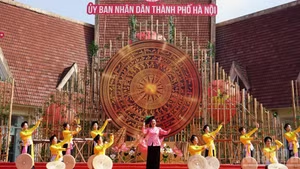
At this year’s event, the Khmer five-tone music heritage and Muong gongs were introduced in a systematic and vivid manner through exhibition spaces, performances, and exchange with artisans. This helped contribute to honouring and spreading the unique cultural values of Viet Nam’s ethnic communities to a large number of domestic and international visitors.