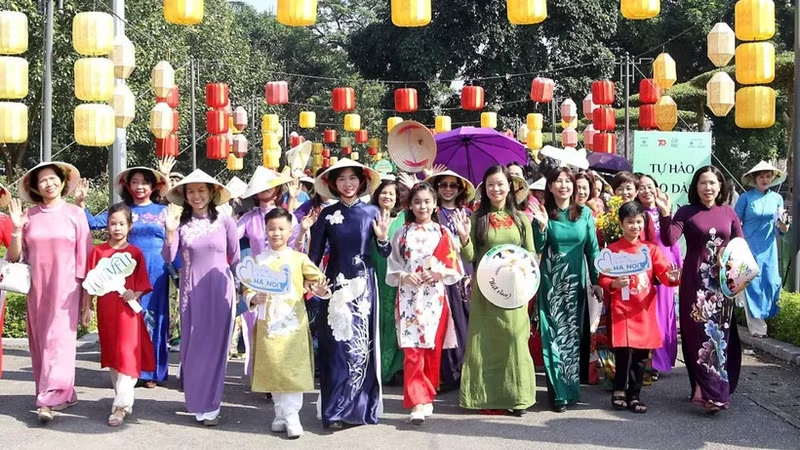
From the very first days of March, it is easy to spot groups of women in graceful ao dai strolling through the streets of Ha Noi, taking photos by lakes, in parks, in front of office buildings, or at pagodas and historical sites. On social media, photographs and stories surrounding the elegant attire are shared more widely than usual. Over time, the vibrant colours of the ao dai have become a familiar “signal” announcing the season dedicated to honouring women.
In 2026, the Viet Nam Women’s Union launched “Ao Dai Week” nationwide from March 1 to 8, marking the 116th anniversary of International Women’s Day (March 8, 1910 – March 8, 2026) and the 1,986th anniversary of the Hai Ba Trung Uprising, while also welcoming the election of deputies to the 16th National Assembly and People’s Councils at all levels for the 2026–2031 term.
In Ha Noi, in response to “Ha Noi Ao Dai Month” initiated by the city’s Women’s Union, numerous agencies, schools and companies have enthusiastically joined activities such as wearing traditional ao dai to work, photo contests and ao dai performance competitions.
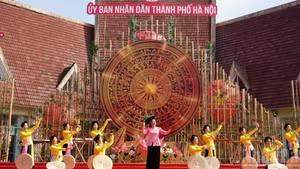
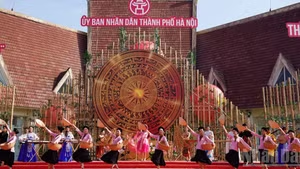
On the morning of Sunday, March 8, around 100,000 female members and residents of the capital are expected to take part simultaneously in folk dance performances at public locations associated with cultural and historical heritage. The main venues will be Yen So Park, Cau Giay Park, and Trang Bung Phung Khac Khoan Flower Garden (Thach That Commune).
Dances performed to music praising the homeland, the nation, the Party and President Ho Chi Minh will not only create a joyful atmosphere but also encourage physical exercise and help enhance the spiritual life of both residents and visitors.
In Ho Chi Minh City, the 12th Ao Dai Festival, themed “Golden threads weaving aspirations”, has added further excitement to the festive mood of March. The festival features 17 activities taking place across the city, from the opening ceremony at the President Ho Chi Minh Monument Park and Nguyen Hue Walking Street on the evening of March 6 to mass performances and parades at tourist attractions, historical sites, and public parks.
This year’s festival brings together 37 designers, 600 performers and models, and 37 ambassadors from various fields. The strong participation of the creative community demonstrates that the ao dai is not merely a symbol of tradition but also a source of inspiration for innovation, meeting increasingly diverse aesthetic tastes.
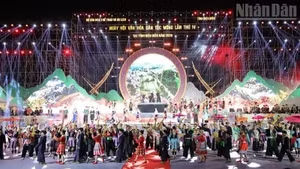
In Dien Bien, “Ao Dai Week” takes place close to the time of the 2026 Hoa Ban Festival. Thousands of women of different ages and professions parade along streets filled with the pristine white blossoms of the hoa ban, creating a highlight that enhances the province’s cultural and tourism space.
In Hue, a city oriented towards building the brand of the “Capital of Ao Dai”, campaigns encouraging women to wear ao dai at workplaces and during community events continue to be maintained.
The programme “Ao Dai of Love” has presented nearly 2,000 sets of ao dai to members facing difficult circumstances in communes and wards, striving to ensure that 100 per cent of members have an ao dai to wear on important occasions, including the upcoming election day. This widespread participation demonstrates that the ao dai continues to hold a firm place in contemporary life.
Although fashion trends change constantly, the ao dai still holds a place of honour in the wardrobes of most Vietnamese women. The custom of wearing ao dai during festivals, Lunar New Year celebrations, engagement ceremonies, weddings, and other significant events has been passed down through generations.
The ao dai also appears as a national symbol, introducing Viet Nam to the world whenever the country is represented at international diplomatic forums or on the stages of artistic and beauty contests across the globe.
Before wearing the garment, women carefully iron and adjust every fold. That small act resembles a quiet ritual, reminding the wearer to present herself with care and dignity, preserving not only her personal image but also the image of the nation’s culture.
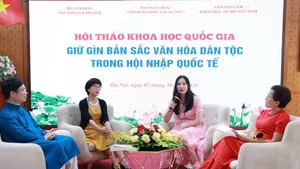
Dr Dang Thi Bich Lien, former Deputy Minister of Culture, Sports and Tourism and Chairwoman of the Viet Nam Ao Dai Cultural Association, has repeatedly affirmed that the ao dai symbolises the character of the Vietnamese people and is a “living heritage” that should be preserved and promoted.
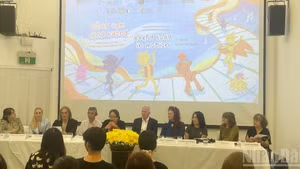
The ao dai is increasingly visible in festivals, community life, education, and tourism. In recent years, the Viet Nam Ao Dai Cultural Association has coordinated numerous parades, exhibitions and mass performances in Ha Noi and Thai Nguyen. It has also implemented the “Ao Dai Connection” programme with the Ministry of Foreign Affairs and established ao dai heritage clubs in Asia and Europe, bringing the image of the garment closer to international audiences.
After many years of implementation, “Ao Dai Week” has become a cultural activity with wide-reaching influence. Each flowing gown worn not only celebrates the graceful elegance of Vietnamese women but also conveys pride in national traditions to the wider public at home and abroad.
More importantly, it represents a practical way for each individual to participate in preserving and promoting heritage values in the context of global integration. It is also a meaningful step towards securing recognition of the ao dai as a National Intangible Cultural Heritage, and ultimately as part of the Intangible Cultural Heritage of Humanity.