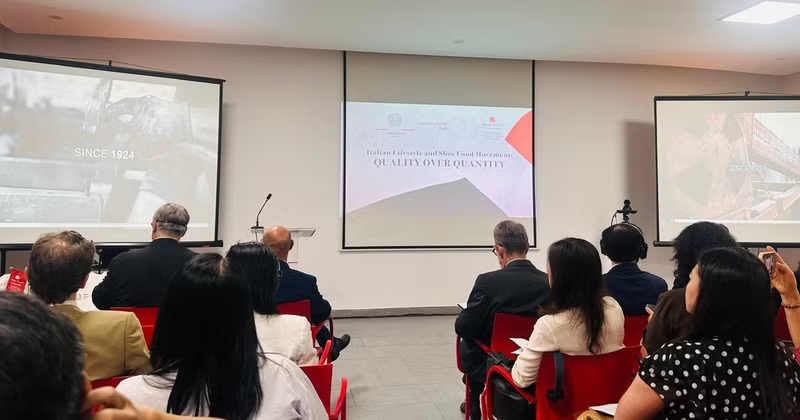
The workshop focused on “Quality over Quantity”, an approach to food and nutrition whose popularity has been steadily increasing in both Italy and Viet Nam.
In his opening remarks, Italian Ambassador to Viet Nam Marco Della Seta affirmed that traceability, quality and responsibility are no longer secondary aspects, but are central to the future of agri-food systems. For both Italy and Viet Nam, this approach is rooted in a long-standing experience where agriculture, industry, culture, and technology work together.
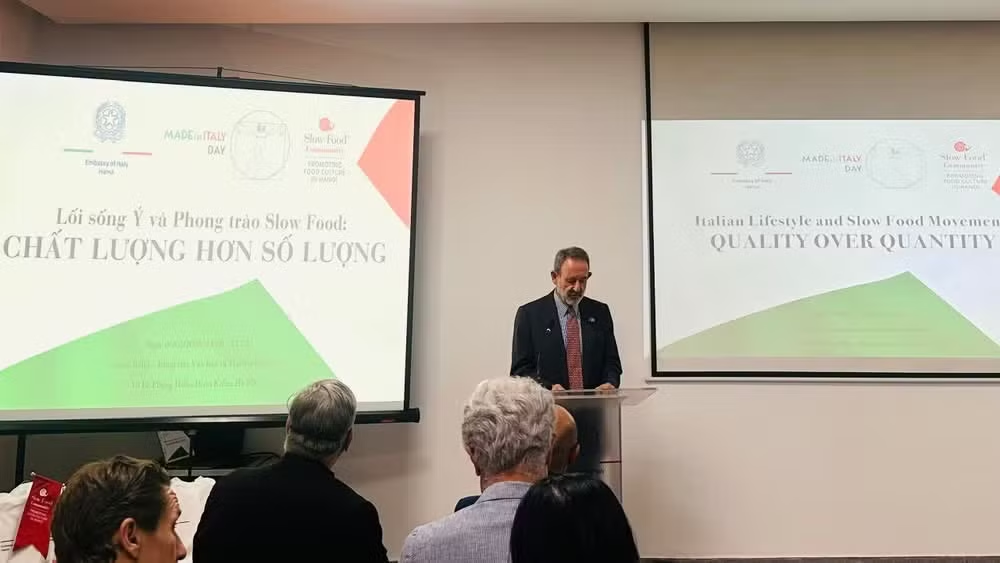
He added that in this context, the concept of Slow Food becomes particularly relevant. Born in Italy, Slow Food promotes a simple but powerful principle: food should be good, clean, and fair — good in quality and taste, clean in its environmental impact, and fair for producers, consumers, and local communities.
According to the Ambassador, this year marks a special milestone, as Italy celebrates 40 years of the Slow Food Movement and it is very meaningful that Slow Food has also taken root in Viet Nam, where it celebrates five years of activity. This demonstrates that this approach is not only Italian but also resonates strongly with Vietnamese values. It responds to a broader global need: to value local products, preserve food traditions, and promote more sustainable models of production and consumption.
He expressed his belief that this discussion can open new opportunities for cooperation between Italy and Viet Nam — among institutions, businesses, farmers, chefs, experts, and, ultimately, communities.
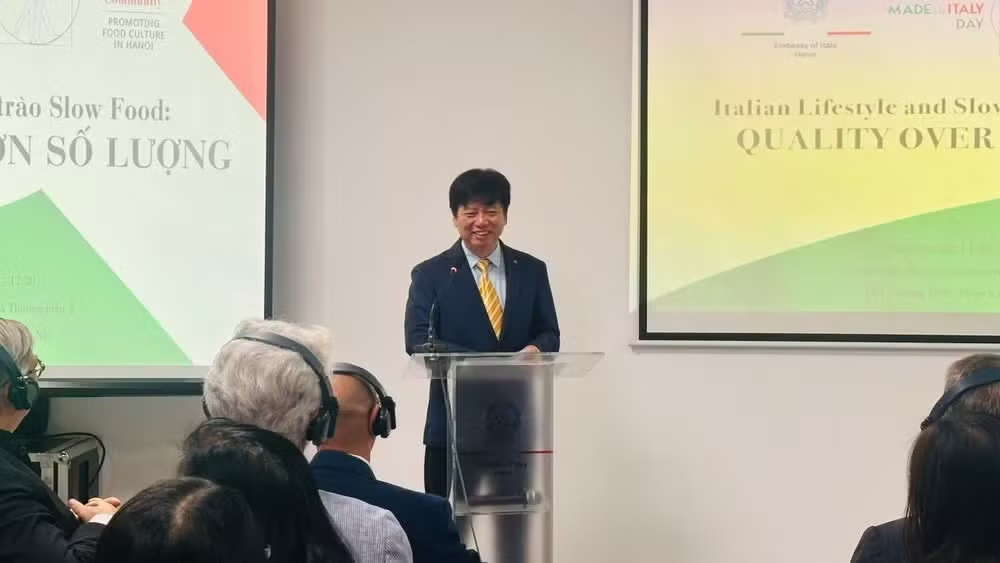
Speaking at the seminar, Dr Pham Ngoc Mau, Deputy Director of the Department of International Cooperation under the Ministry of Agriculture and Environment, stated: “For Viet Nam, the values promoted by the Slow Food Movement resonate deeply, as the country also boasts a long-standing agricultural tradition, a rich system of local products, and numerous production models rooted in indigenous knowledge and community livelihoods.”
Highlighting the positive developments in agricultural cooperation between Viet Nam and Italy in recent years, he expressed confidence that, building on this strong foundation and with the support of the expert and business communities, the two countries would continue to expand collaboration, contributing to the development of more responsible and sustainable food systems.
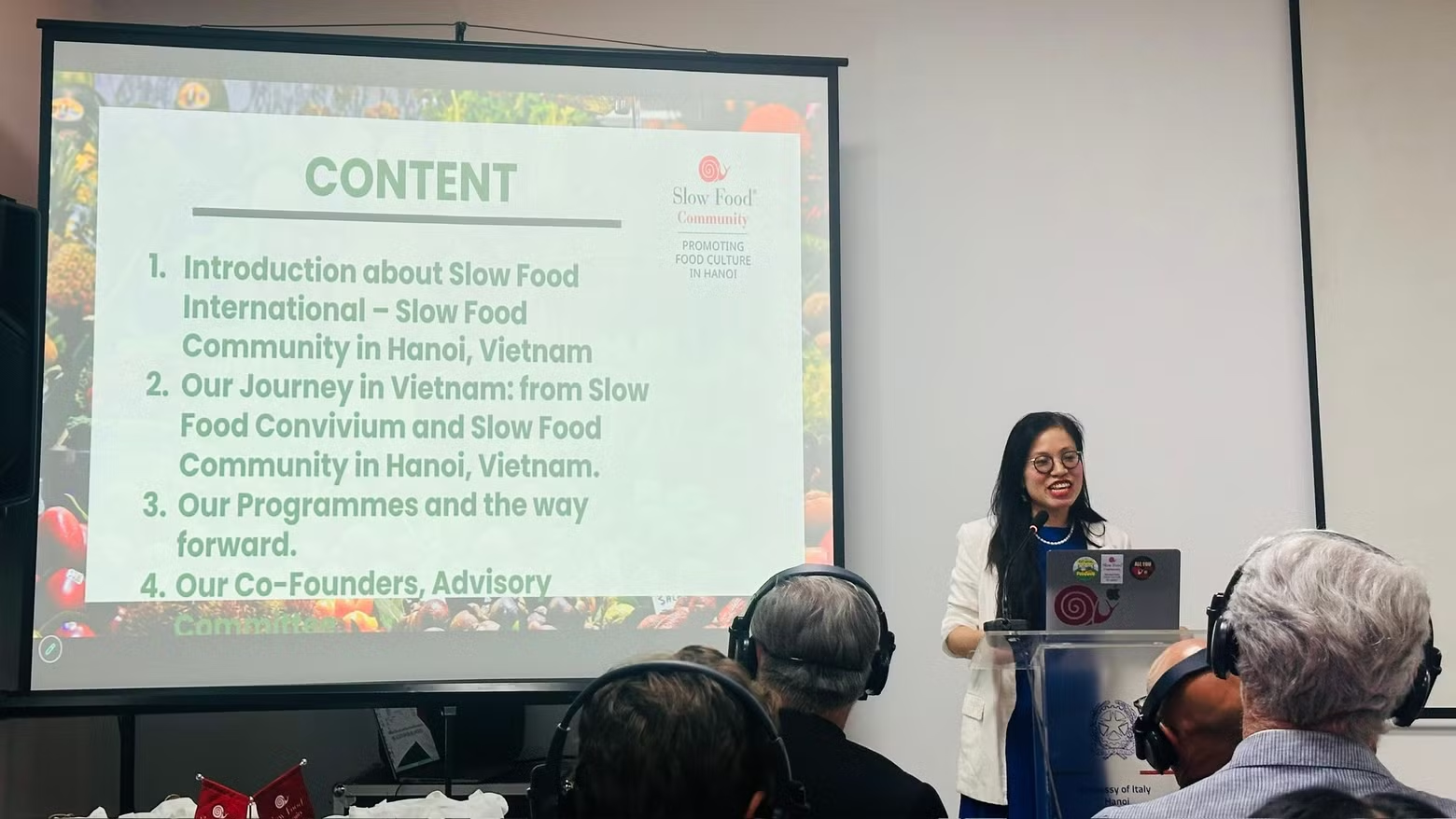
Pham Thi Ngoc Bich, founder of the Slow Food Community in Ha Noi, shared that in 2020, thanks to the active support from the Italian Embassy in Viet Nam, the community was officially launched. Its mission is to promote culinary cultural exchange, preserve traditional cooking methods associated with healthy diets, and support local food systems, based on the philosophy of “good, clean and fair food for all”.
In recent years, the Slow Food Community in Ha Noi has implemented a range of practical initiatives, including collaboration with universities through the “World Disco Soup” programme (raising awareness of food loss, waste and climate change); organising seminars for hundreds of students on organic agriculture, food choices and healthy diets; and assisting around 100 visitors in designing travel itineraries to explore Viet Nam’s regions under the concept of Slow Travel, among others.
At the workshop, representatives of major Italian companies specialising in food processing technology and equipment, such as Unitec S.p.A and CSO Italy, also presented papers on technology and innovation for better food quality, as well as innovation in improving quality in fresh fruit.