Vincent Dunin-Martsinkevich is regarded as the founder of modern Belarusian literature, as well as Belarusian drama and professional theatre.
The works of Vincent Dunin-Martsinkevich represent a brilliant chapter in the history of Belarusian national culture. He established an entire era in the process of the Belarusian national revival. Closely associated with his name is the history of the formation of new Belarusian literature in the 19th century.
As a playwright, poet and enlightener, he had a major influence on the formation and development of Belarusian writing as well as theatrical arts.
Vincent (Vikenty Ivanovich) Dunin-Martsinkevich was born on February 4, 1808, at the Paniushkovichi estate in Bobruisk district, Mogilev province, into an aristocratic family. He was orphaned at an early age and raised by his uncle. After graduating from Bobruisk district school, Vincent studied medicine at Saint Petersburg University (according to some sources, Vilnius University), but was forced to discontinue his studies for health reasons. He later worked as a civil servant at the Minsk Criminal Court and also served as an interpreter for the Minsk Diocese.
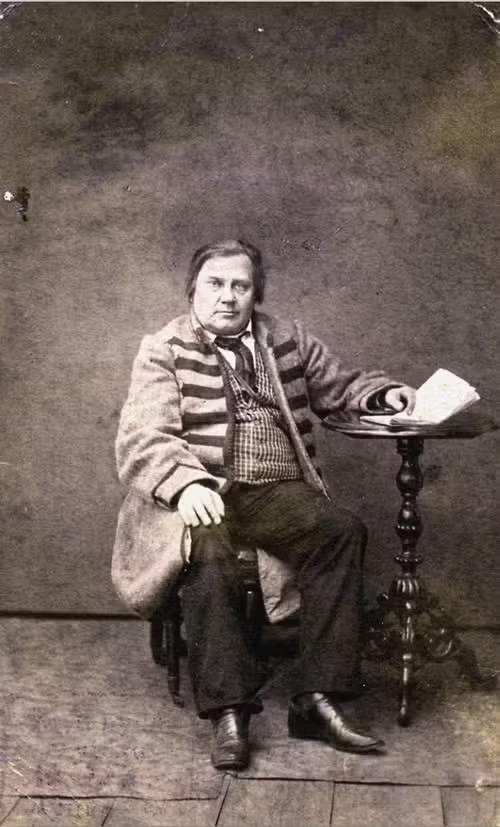
In 1840, Dunin-Martsinkevich left public service and purchased the Liutsinka estate near the town of Ivenets in Volozhin district, which became his permanent residence until the end of his life. It was at this Liutsinka estate that he composed most of his works.
Vincent Dunin-Martsinkevich left a profound mark on Belarusian theatre and art. His passion for theatre came to him very early, when he was still living in Saint Petersburg and Vilnius. From this passion for theatre as an audience member, Marcinkevich gradually became a playwright, director and actor.
Under the influence of performances by Russian and Polish theatre troupes, he conceived the idea of creating his own theatre bearing Belarusian identity. The theatre troupe included members of the writer’s family, neighbours, local school students, friends and even peasants. The theatre mainly performed at the Liutsinka estate. The programme consisted of plays written by the playwright himself. The theatre was multidisciplinary, combining various forms of stage art, including spoken drama, singing-music and dance.
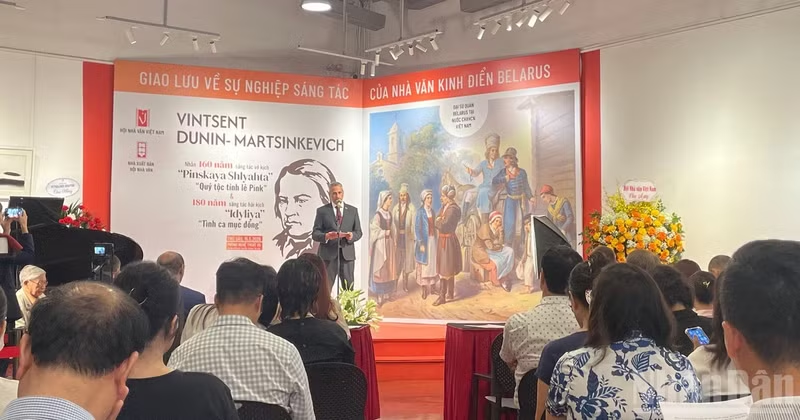
Sharing information about author Vincent Dunin-Martsinkevich, a representative of the Belarusian Embassy said that the famous 19th-century Belarusian playwright, writer, poet and enlightener Vincent Dunin-Martsinkevich, who was closely associated with the birth of the Belarusian literary language, became the founder of modern Belarusian literature, professional dramatic art and theatre. Thanks to his vivid language and rich expression, the Belarusian language gained new vitality. And if Yanka Kupala, whose poetry collection translated into Vietnamese was first published in Ha Noi last year, is the “soul” of the Belarusian nation, then Vincent Dunin-Martsinkevich can certainly be called its “language”.
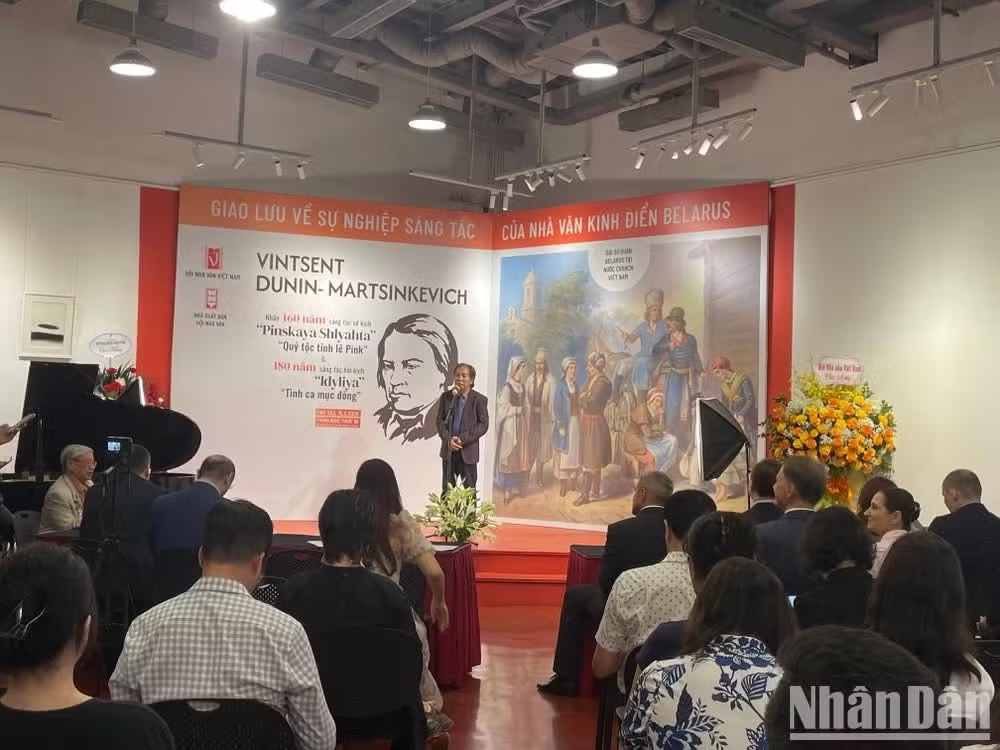
Speaking about the event, poet Nguyen Quang Thieu, Chairman of the Viet Nam Writers’ Association, said that for a long time Russian literature in general and Belarusian literature in particular have held an important position in the cultural and spiritual life of the Vietnamese people.
The Chairman of the Viet Nam Writers’ Association stressed that the organisation of this commemorative event by the Belarusian Embassy, the Viet Nam Writers’ Association and the Viet Nam Writers’ Association Publishing House has opened a door for fruitful cooperation in the future.
“The door of cooperation between us will open for literary works, which never need visas to enter countries. Writers have become messengers, crossing all borders to reach us.
Once again, I would like to thank the presence of the diplomats and thank the Belarusian Embassy. Please come to the Viet Nam Writers’ Association so that together we can open the doors of humanity and peace,” poet Nguyen Quang Thieu said.