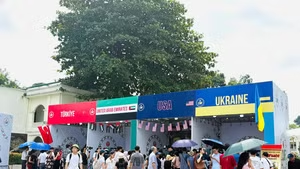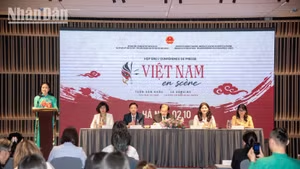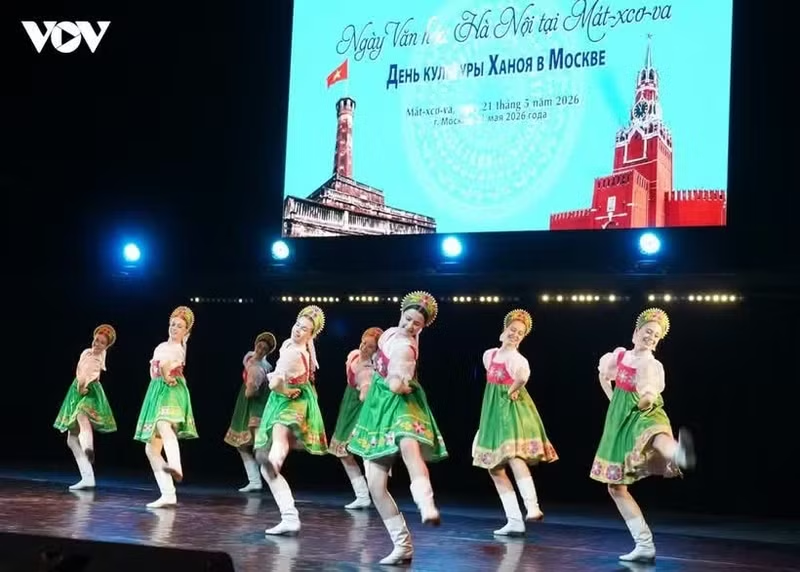
Addressing the event, Phung Thi Hong Ha, Deputy Secretary of the Ha Noi Party Committee and Chairwoman of the Ha Noi People’s Council, said the activities were designed to introduce the timeless yet vibrant identity of Thang Long–Ha Noi to Russian and international audiences.
She expressed confidence that the programme would further reinforce the strategic partnership between Ha Noi and Moscow, as well as between Viet Nam and Russia.
Vyacheslav Manuilov, Acting Minister for External Economic and International Relations of Moscow, welcomed the Ha Noi delegation and highlighted the success of “Moscow Days in Ha Noi 2025.” He described the current programme as a continuation of the growing cooperation and cultural exchange between the two capitals.
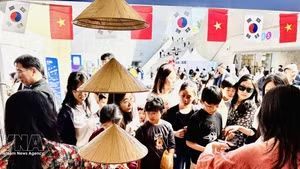
Held at a cultural centre long associated with Ha Noi’s name, the event offers Moscow residents a closer look at the spirit and culture of Viet Nam, he added.
One of the highlights was the exhibition “Quoc Tu Giam – Viet Nam’s first national university (1076–2026),” which showcased the evolution of Viet Nam’s traditional education system and the historical and cultural legacy of Ha Noi. The exhibition also marked the 950th anniversary of Van Mieu–Quoc Tu Giam (Temple of Literature).
Visitors explored images of contemporary Viet Nam through displays of traditional handicrafts, including a replica of the Dong Son bronze drum, while also participating in interactive cultural experiences inspired by Ha Noi’s heritage.
Elena Pyltsina, senior researcher at the Centre for Viet Nam and ASEAN Studies under the Far East Institute of the Russian Academy of Sciences, told Viet Nam News Agency correspondents that the exhibition provided Russian visitors, particularly young people, with valuable insights into Viet Nam’s rich cultural traditions and dynamic creative sectors.
Young Moscow residents Arina and Nastia said they were impressed by the opportunity to experience Vietnamese culture firsthand, describing the activities as both fascinating and enjoyable.
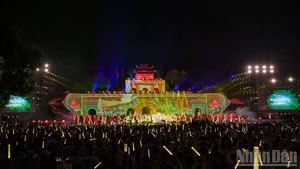
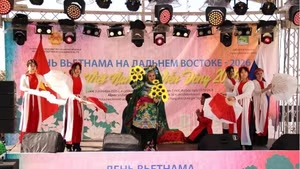
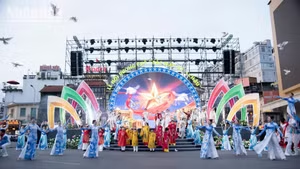
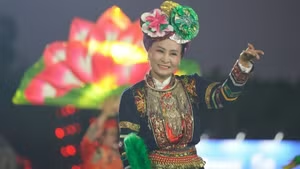
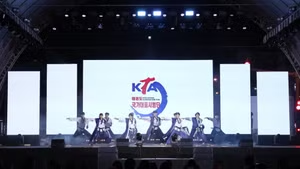
The accompanying art programme, themed “Ha Noi – Echoes of a Thousand Years,” blended traditional and modern elements through performances by leading Ha Noi artists. Audiences enjoyed distinctive Vietnamese art forms such as ca tru ceremonial singing, recognised by UNESCO as an intangible cultural heritage, alongside xam singing, cheo and chau van performances.
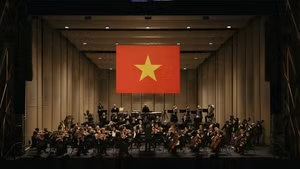
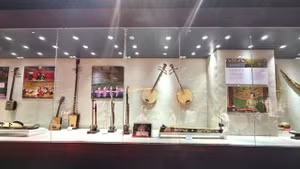
Traditional instruments including the monochord zither (dan bau), bamboo flute and moon lute (dan nguyet) were also featured, alongside contemporary musical pieces reflecting the dynamism and creativity of present-day Ha Noi.
People’s Artist Thu Huyen, Director of the Ha Noi Cheo Theatre, said the programme enabled Ha Noi artists to bring the capital’s thousand-year cultural heritage closer to Moscow audiences while contributing to Viet Nam’s efforts to promote its culture globally under the Politburo’s Resolution No. 80-NQ/TW on the development of Vietnamese culture.
“Ha Noi Culture Days in Moscow 2026” has helped deepen the longstanding friendship between Viet Nam and Russia while creating new opportunities for cooperation in culture, education, tourism and people-to-people exchange, further strengthening ties between the two capitals and nations.