Living heritage in everyday life
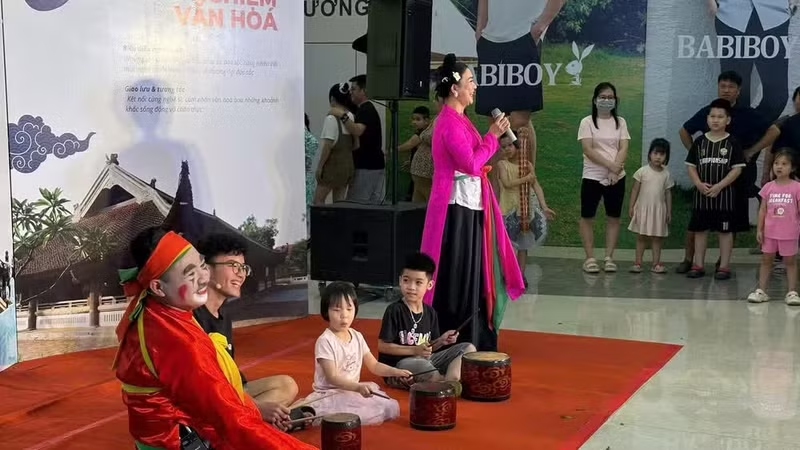
Behind a simple backdrop set up in the middle of a shopping centre hall, cheo artist and Meritorious Teacher Bui Thao Hien adjusted her traditional headscarf before stepping onto the stage. Around her, streams of people continued moving through the bustling weekend atmosphere. Just a few minutes later, the sound of the cheo drum rang out, and the opening melodies from the classic cheo extract “Ly Truong-Me Dop” surprised many passers-by and made them stop to watch.
“What moved me most was that so many young people and children stayed to watch until the end of the programme,” artist Thao Hien, a lecturer at the Faculty of Traditional Theatre, Ha Noi Academy of Theatre and Cinema, shared after the performance night. For her, the appearance of cheo in a modern space such as a shopping centre is not only a way of renewing traditional theatre, but also opens up more opportunities for folk art to come closer to today’s audiences.
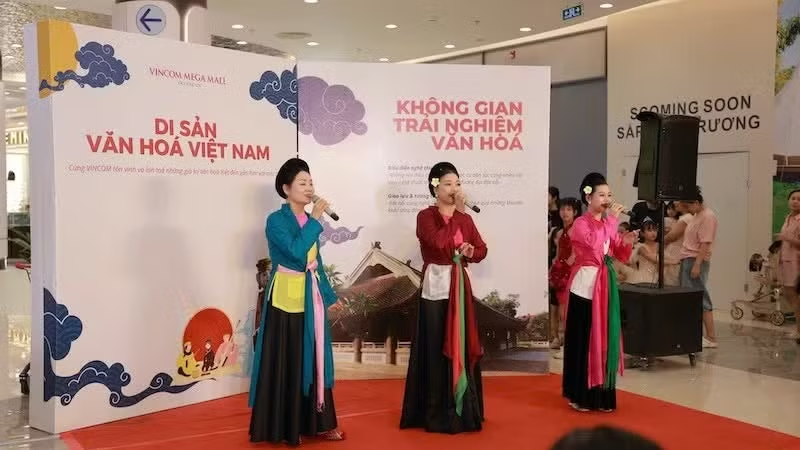
Cheo performance nights are activities within the series “Vietnamese Cultural Heritage Experience Space”, organised regularly and free of charge every Saturday and Sunday at Vincom Mega Mall Ocean City. The programme presents many familiar extracts, along with humorous and lively contemporary cheo comedy performances.
Participating in the performances and audience interactions are experienced artists such as People’s Artist Thuy Ngan and Meritorious Artist Doan Vinh, alongside talented young faces of the next generation such as artists Thanh Huyen, Thao Hien, Thu Thuy and Vu Hoang. The presence of both veteran and young artists demonstrates that the journey of preserving and continuing heritage is still being carried out persistently.
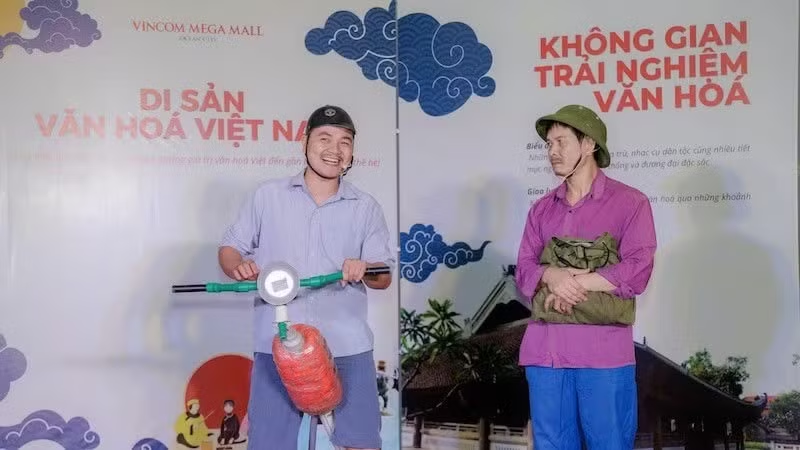
What is noteworthy lies not only in the performances themselves but also in the way the public approaches the art form. The shows are organised free of charge every weekend, and the open space makes it easy for audiences to participate, whether they intentionally come or simply happen to pass by. Viewers can stop at any moment to watch and talk with the artists. During the interaction sessions, many children eagerly volunteered to come on stage and try beating the drums. Some adults attempted to hum a few cheo melodies. Others attentively asked the artists about traditional Northern costumes featuring pink bodices, four-panel dresses and flat palm hats.
Amid the modern space filled with commercial lights, such images evoke a feeling that is both strange and familiar. In one corner of the stage, a few elderly people smiled as the sound of cheo singing brought back memories of old village festivals. Meanwhile, many young people experiencing cheo for the first time also expressed admiration. Audience member Dinh Thi Mai Anh, a second-year student at Academy of Journalism and Communication, shared: “Previously, I thought cheo was rather difficult to understand and only for older people. But after watching it live, I was surprised by the humour, charm and appeal of this art form.”
Developing creative cultural products
Not only cheo, the Vietnamese Cultural Heritage Experience Space previously also attracted attention with the water puppet programme “Thuy Dinh Vong Anh”. A small water pavilion was built in the middle of the shopping centre, where artist Phan Thanh Liem recreated folk tales through traditional water puppetry. Children attentively followed each puppet, while adults had the chance to reminisce and proudly revisit the traditions of their ancestors… all demonstrating the enduring vitality of national art forms when placed in spaces suitable for public access.
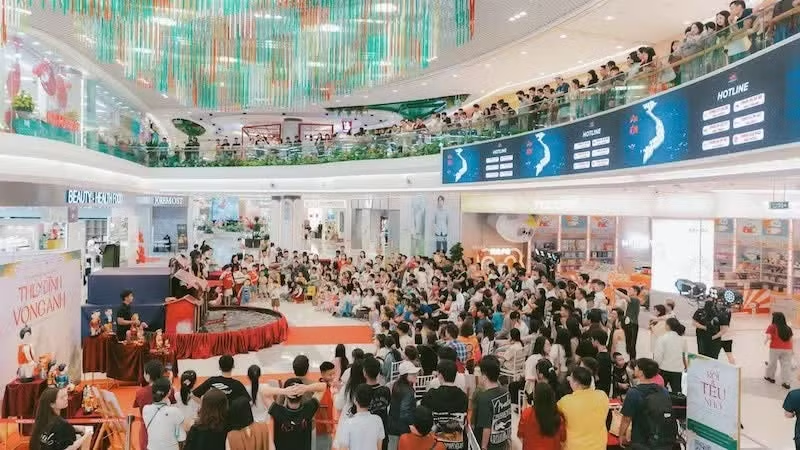
According to the organising committee, the goal of the activity series is to build a community cultural meeting point. Nguyen Thai Huyen, Director of Vincom Mega Mall Ocean City, said the unit hopes the shopping centre will become not only a place for shopping and entertainment but also a space for connecting and spreading Vietnamese cultural values to domestic and international audiences. According to her, amid today’s strong modernisation process, heritage can only truly live when placed within contemporary life and given opportunities to connect with younger generations through familiar and open forms. Therefore, the stages are designed in an interactive direction so audiences not only “watch” but also directly touch traditional culture, listen to the stories behind each melody and performance, and more deeply appreciate the beauty of Viet Nam.
In recent years, alongside the development of cultural industries, not only Ha Noi and Ho Chi Minh City but also many large urban areas have witnessed the increasing emergence of creative cultural spaces. From pedestrian streets and community art spaces to interactive exhibitions and models combining commerce and culture, these new destinations not only meet entertainment demands but also contribute to shaping urban spiritual life.
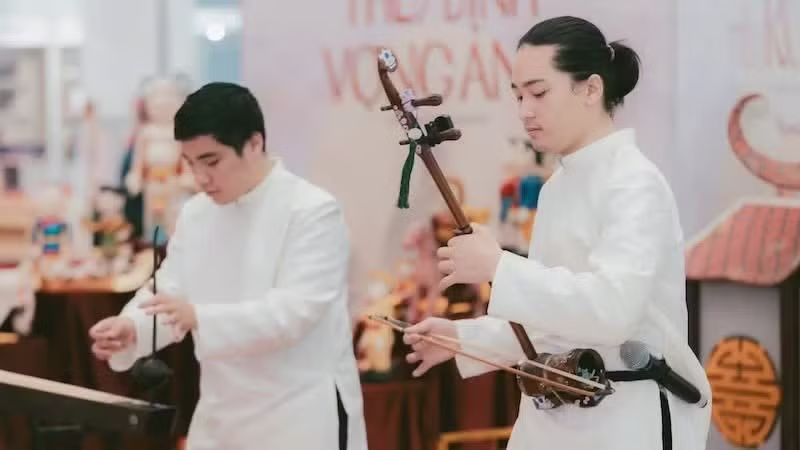
In the trend of bringing folk art beyond familiar frameworks to approach audiences more flexibly, cheo, water puppetry, ca tru and xam singing are no longer confined to theatre stages or festival occasions. Instead of merely displaying or preserving heritage within rigid models, many organisations are striving to bring cultural heritage closer to the public through direct experiences, interaction and everyday emotions.
In the near future, the Vietnamese Cultural Heritage Experience Space series is expected to continue expanding with programmes featuring ca tru, xam singing, dan tranh performances, traditional musical instrument performances and Te Tieu puppetry. The stages will continue to operate every weekend with suitable themes, such as International Children’s Day on June 1… When young people can unexpectedly stop to listen to an ancient cheo melody, or a child eagerly follows a water puppet story in the middle of a shopping centre, heritage is also finding a new path to continue existing in today’s life.