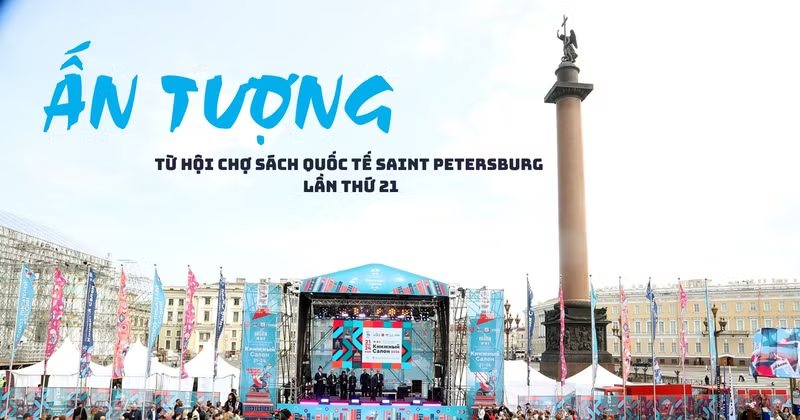
The Saint Petersburg International Book Fair has just concluded, leaving a lasting impression on participating organisations and book lovers alike. Below are some highlights from this year’s event.
For the first time, the International Book Fair was held at Palace Square, a renowned historical site regarded as the heart of Saint Petersburg and one of Russia’s cultural centres.
The fairgrounds were located beside the Alexander Column, a single-piece granite monument weighing around 600 tonnes and crowned with the double-headed eagle, erected in 1832 to commemorate Russia’s victory over Napoleon’s army. Exhibition booths and seminars were held directly in front of the Winter Palace and the Hermitage Museum. Nearby stands the Military Historical Library under the Russian General Staff, home to hundreds of thousands of valuable military historical archives.
It can be said that this is an exceptional cultural and historical hub of the city, as well as the most magnificent public space in Saint Petersburg, regularly attracting large numbers of domestic and international visitors. Last year, the Saint Petersburg International Book Fair welcomed more than half a million visitors. With its new venue and revised format, this figure is expected to rise sharply.
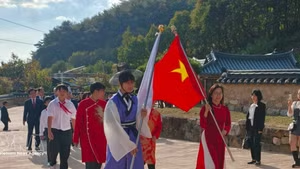
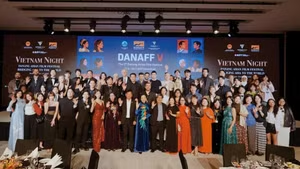
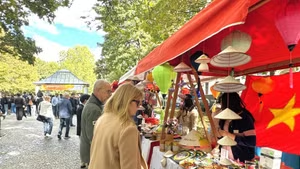
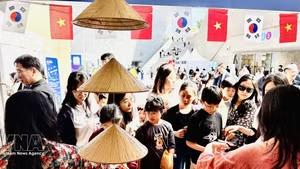
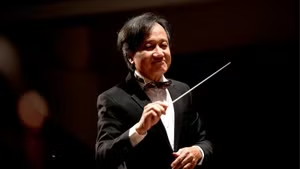
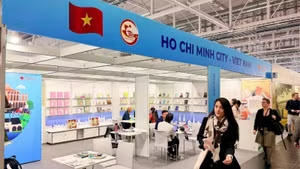
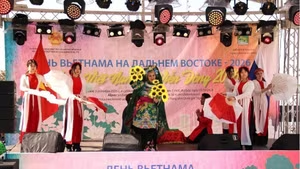
For the first time, Viet Nam participated as a guest partner country at the 21st edition of the fair. This was a particular honour, reflected in the intensive schedule of Vietnamese activities and the regular appearance of Vietnamese artists performing cultural programmes throughout the event.
For the first time, Viet Nam was the only foreign representative invited to speak at the opening ceremony alongside senior leaders of Saint Petersburg and the organisers.
Nguyen Quang Thieu, Chairman of the Viet Nam Writers’ Association, said: “Many Vietnamese people, myself included, grew up spiritually and broadened our souls through books from great and humble Russia. There is nothing safer or more peaceful than living alongside books. Thank you, Saint Petersburg, for giving us the opportunity to bring here books from Viet Nam, books written with our blood, tears and immense aspirations. At this very moment, I can hear the voices of Russians, of books echoing across centuries and sharing with us.” His brief remarks were repeatedly interrupted by rounds of applause from the audience.
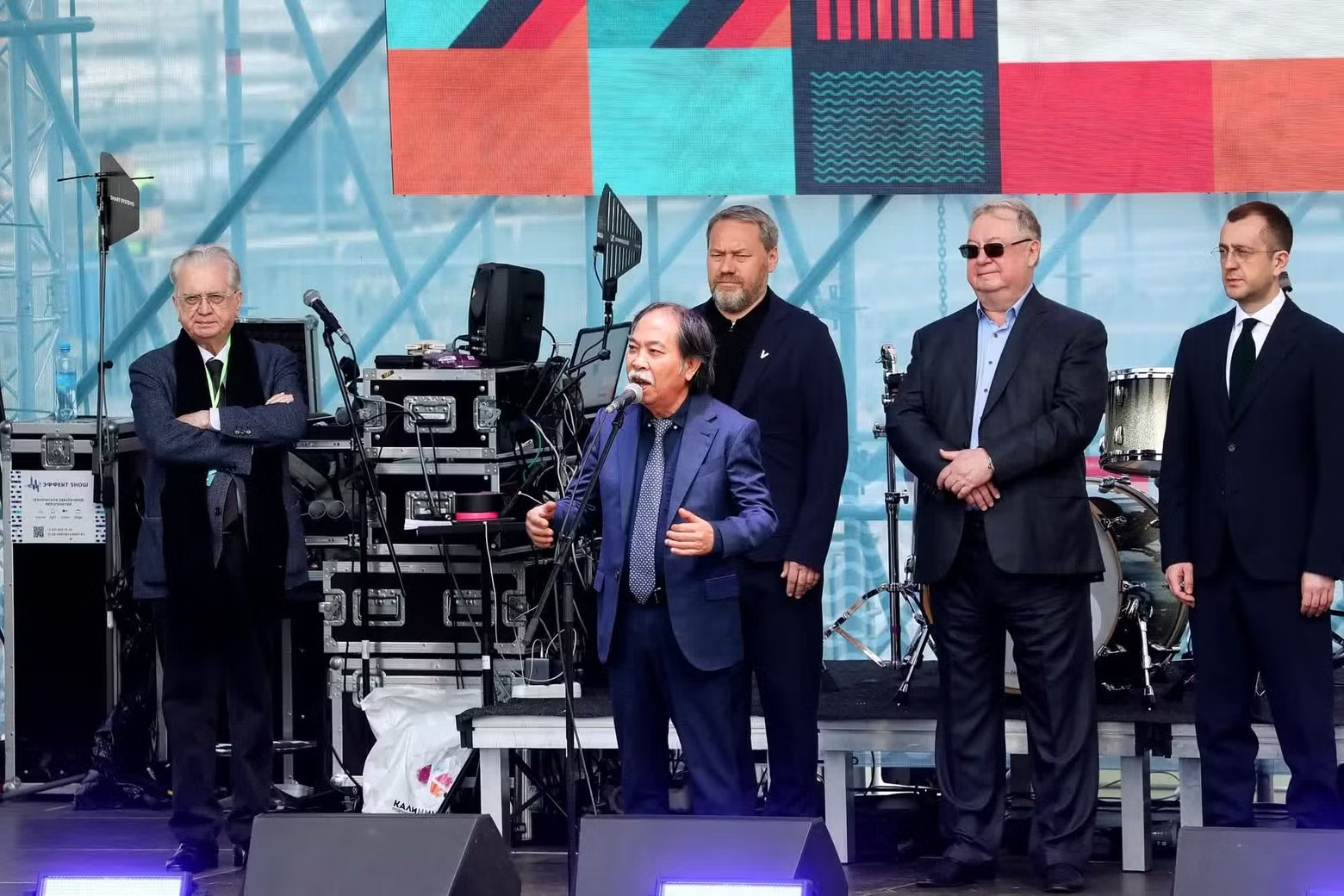
Saint Petersburg Vice Governor Boris Piotrovsky said books are a unique means of communication and connection. People can converse with books, listen to books and learn from them because books equip people with the capacity for deep thought. Books are indispensable in places where the boundary between life and death exists. Soldiers on the battlefield, when unable to access the internet or communicate by telephone, ask for only one thing: books.
“Many Vietnamese people, myself included, grew up spiritually and broadened our souls through books from great and humble Russia. There is nothing safer or more peaceful than living alongside books.”
Nguyen Quang Thieu, Chairman of the Viet Nam Writers’ Association
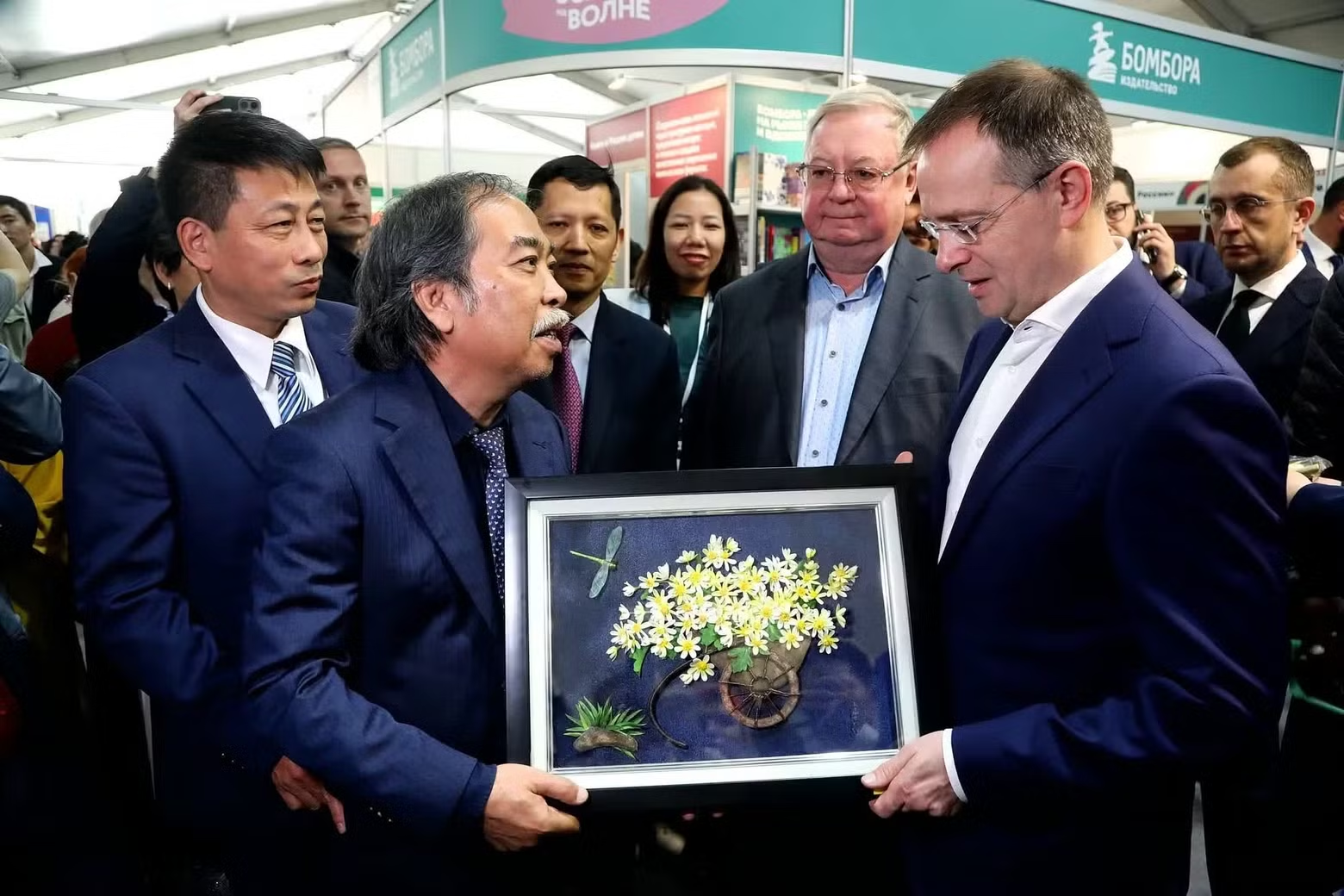
The exhibition booth of the Viet Nam Education Publishing House welcomed several distinguished guests, including former Russian Prime Minister and current President of the Russian Book Union Sergey Stepashin; Saint Petersburg Vice Governor Boris Piotrovsky; and Aide to the President of the Russian Federation, renowned negotiator and Secretary-General of the Russian Writers’ Union Vladimir Medinsky.
The guests spent considerable time exchanging memories of Viet Nam as well as asking questions about Vietnamese books and culture. Upon receiving a gift of a daisy painting crafted from silk fabric by Vietnamese artisans, the head of the Russian Writers’ Union praised the artwork warmly and said he intended to display it in his office.
Seminar on contemporary Vietnamese literature was held. The topic of AI and literature generated lively discussion among Vietnamese and Russian delegates. AI may be capable of producing smoothly written stories, but it can never create the emotional resonance of the human heart or the fear experienced by human beings.
Readers have long been moved by Pushkin’s poetry and the novels of Tolstoy, Dostoevsky and Aitmatov because those works embody the beauty of Russian culture and the Russian people on a universal human level. Writers and readers are not afraid that machines or technology may one day replace creative work itself; rather, they fear that human beauty may disappear if machines come to replace the human heart.
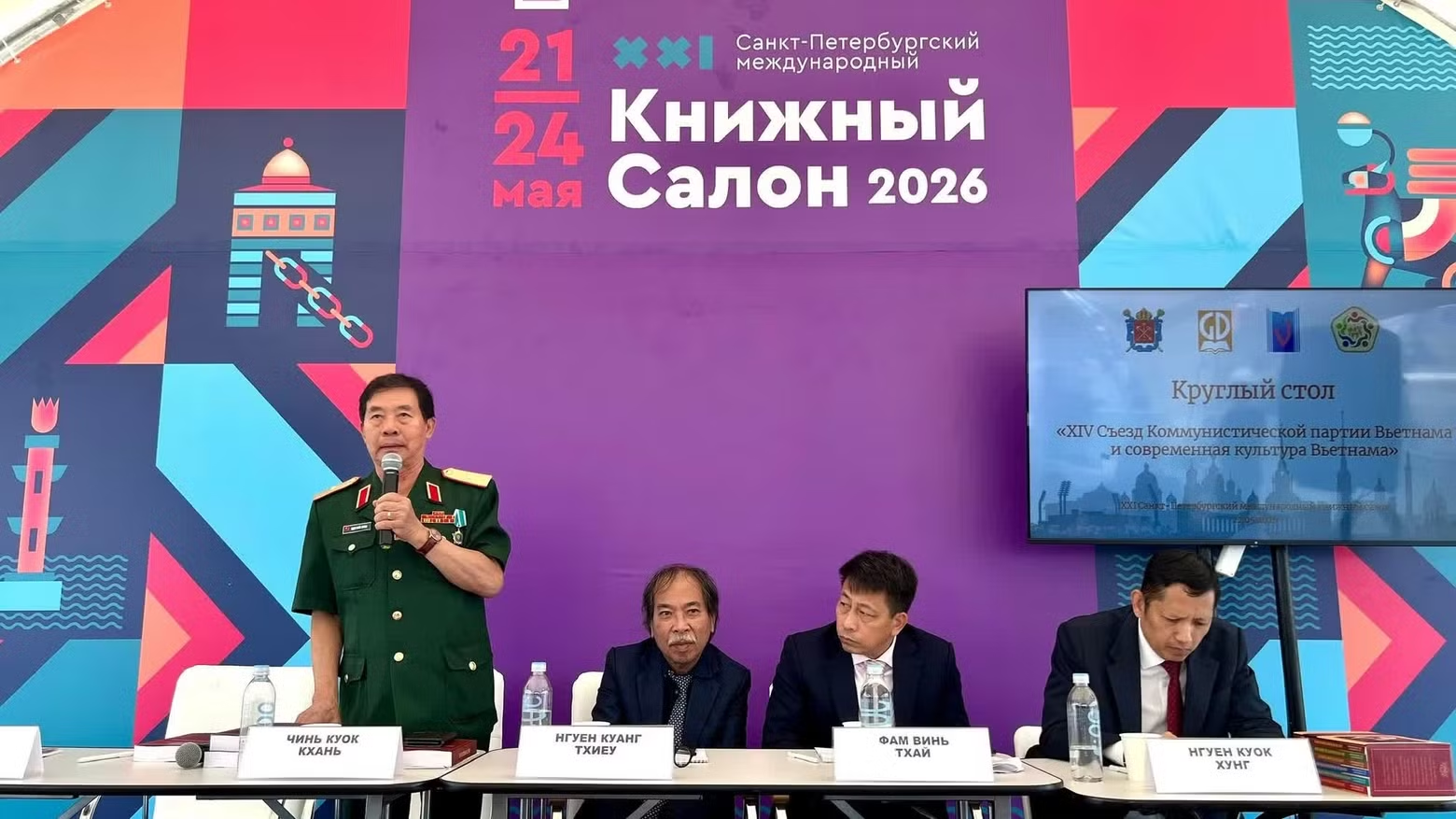
Seminar on the 14th National Congress of the Communist Party of Viet Nam and contemporary Vietnamese culture was also a highlight. Since the conclusion of the 14th National Congress of the Communist Party of Viet Nam, three seminars on the congress have already been organised by Russian partners in Saint Petersburg. The fourth seminar, held during this year’s book fair, reflected the special interest and affection of the Russian people towards the decisions of the Communist Party of Viet Nam as the country enters a new era of development.
Participants included Major General Trinh Quoc Khanh, Standing Vice Chairman of the Viet Nam-Russia Friendship Association; poet Nguyen Quang Thieu; Pham Vinh Thai, Editor-in-Chief of Viet Nam Education Publishing House; and Dr Andrey Vassoevich, Director of the Institute of Oriental Studies of the Herzen State Pedagogical University.
Poet Nguyen Quang Thieu received numerous questions during the discussion in his capacity as a delegate to the 14th Party Congress. He recalled memorable moments from the congress, particularly three important questions: When carrying out any task, Party members must ask themselves whether it benefits the people, whether it strengthens people’s trust in the Party, and whether it improves the lives of the people. “I once wrote in a Vietnamese newspaper that the questions raised at our 14th Party Congress should be hung on the walls of leadership offices not only in Viet Nam, but in many countries around the world.” His remarks received enthusiastic applause from the Russian audience.
Following the Party Congress, Viet Nam’s National Assembly passed a Resolution on the development of Vietnamese culture and designated November 24 each year as Vietnamese Culture Day, underscoring the Communist Party of Viet Nam’s recognition of the special role of culture in national construction and development.
Dr Andrey Vassoevich noted that the outcomes of the 14th National Congress of the Communist Party of Viet Nam have recently been translated and studied at Herzen State Pedagogical University and the Saint Petersburg State University of Economics, where many Russian students are studying Vietnamese. At Herzen University in particular, the congress resolutions are discussed and taught at the Russia-Viet Nam Cultural Centre under the Institute of Oriental Studies.
“One concrete result is the publication of the two-volume Viet Nam Studies series by Herzen State Pedagogical University Publishing House, in which I would particularly highlight Chapter V entitled ‘Viet Nam Towards the Future Through International Relations’. The chapter title itself reflects the spirit of the 14th National Congress of the Communist Party of Viet Nam in expanding international engagement to drive Viet Nam’s development.”