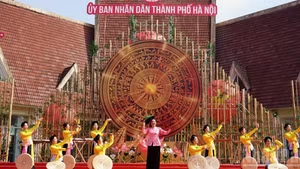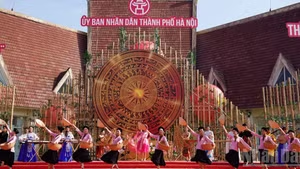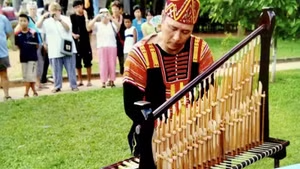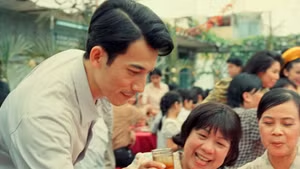
In the new era, Party committees, authorities and the entire political system, together with ethnic communities across the province, continue to uphold the spirit of solidarity, preserving and spreading these cultural values. Particular emphasis is placed on conserving, restoring, digitising and promoting heritage, languages, scripts, festivals and traditional arts of ethnic minorities.
According to Thach Thi Thu Ha, Director of the provincial Department of Ethnic and Religious Affairs, following administrative restructuring, the province now comprises 124 communes and wards, including 30 located in ethnic minority areas. The population exceeds 3.7 million, of whom Khmer people number 415,970 (over 11%), Hoa more than 17,300 (0.45%), alongside smaller groups of other minorities.
The province is home to 12 religions, with 2,797 dignitaries, 6,101 religious officials and 1,130,980 followers, accounting for 33.4% of the total population. There are 1,594 religious establishments, including 96 sites recognised as national or provincial historical and cultural relics.
In recent years, Party committees and authorities at all levels have effectively implemented ethnic and religious policies, contributing to significant poverty reduction in ethnic minority areas. By the end of 2025, the provincial poverty rate had fallen to 1.46%, with the near-poor rate just over 2.7%.
During the 2021–2025 period, the province invested in 279 essential infrastructure projects with total funding exceeding 434 billion VND, improving livelihoods, facilitating trade and contributing to socio-economic development in Khmer-inhabited areas.
Local authorities have also actively coordinated to implement the nationwide emulation movement to eliminate temporary and dilapidated housing launched by the Prime Minister. As a result, 14,738 houses were supported, including 11,604 newly built and 3,134 repaired, with a total budget of more than 894 billion VND.
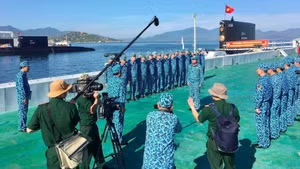
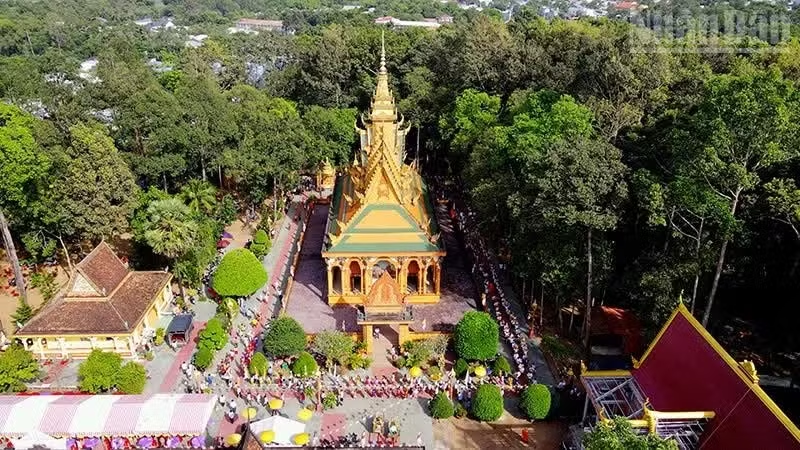
Amid the festive atmosphere of the New Year, the provincial People’s Committee, in coordination with local authorities, organised the 2026 Military–civilian Tet celebrating Chol Chnam Thmay at a Khmer pagoda in Thon Ron Hamlet, Tra Con Commune. The event attracted hundreds of officers and soldiers from provincial armed forces and Military Region 9, along with a large number of residents.
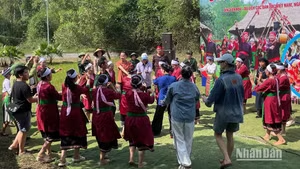
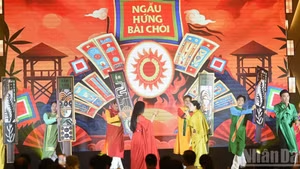
The programme featured a range of cultural exchanges, performances, traditional games, sports competitions, and exhibitions of high-value agricultural and industrial products. Dozens of “great solidarity houses” were handed over to poor and near-poor Khmer households facing housing difficulties. In addition, the provincial Department of Health, in collaboration with medical teams from Military Hospital 121 (Military Region 9), provided free health check-ups and medicines to policy beneficiaries and Khmer residents in the commune.
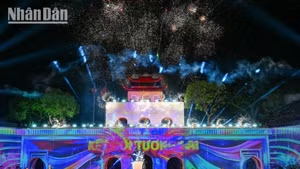
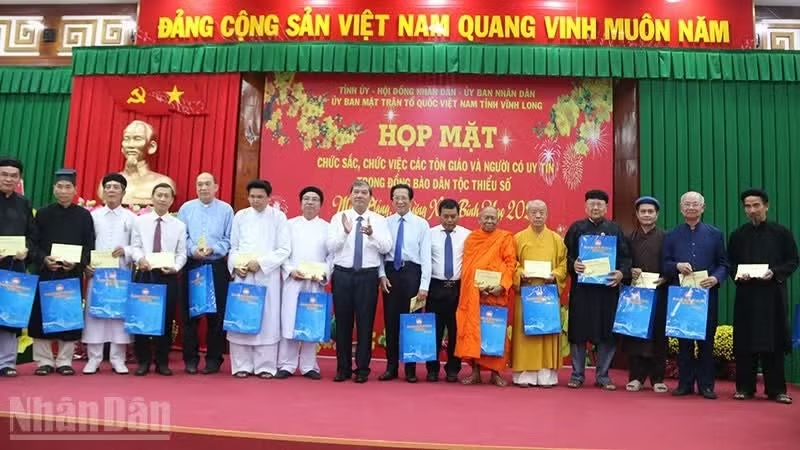
Recently, at the memorial site of Prime Minister Vo Van Kiet in Trung Thanh Commune, Vo Thi Anh Xuan, Politburo member and Vice President, attended the 2026 Vinh Long Ethnic Cultural Festival. On this occasion, she presented 10 solidarity houses and 174 gift packages to ethnic minority households in the province.
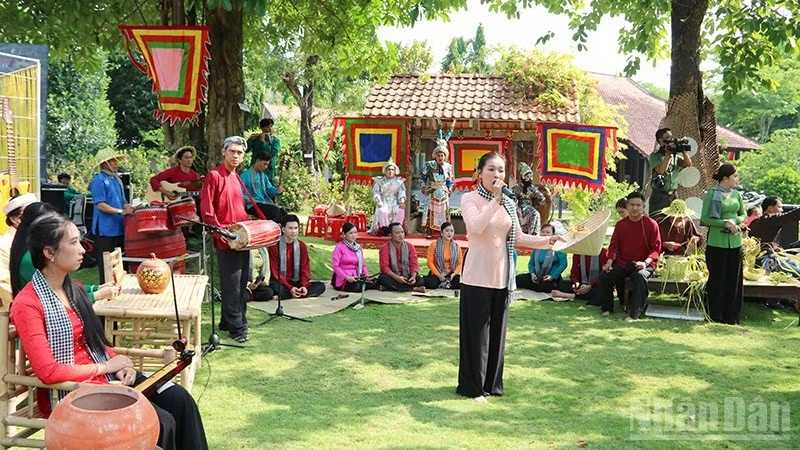
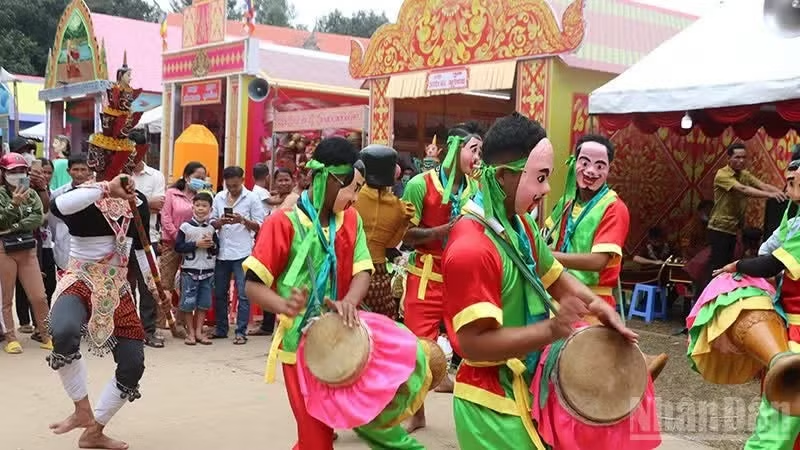
Among the Kinh, Khmer, Hoa, Cham and other communities in the province, the Khmer have left a profound imprint on cultural life through their language, script, folk performing arts, five-tone music, Ro bam and Du ke theatre, as well as the system of Theravada Buddhist pagodas and meaningful festivals such as Chol Chnam Thmay, Sen Dolta and Ok Om Bok.
Notably, the Ok Om Bok Festival has been inscribed by the Ministry of Culture, Sports and Tourism on the national list of intangible cultural heritage. Also known as the “flattened rice offering festival” or the Moon Worship Festival, it takes place on the full moon day of the tenth lunar month each year.
Artisan Son Phuoc Thanh from Nguyet Hoa Ward explained that in Khmer spiritual life, the Moon is revered by every family and community. After the harvest, people hold the Moon Worship ceremony to express gratitude to the deity for protecting crops, regulating the weather and bringing prosperity.
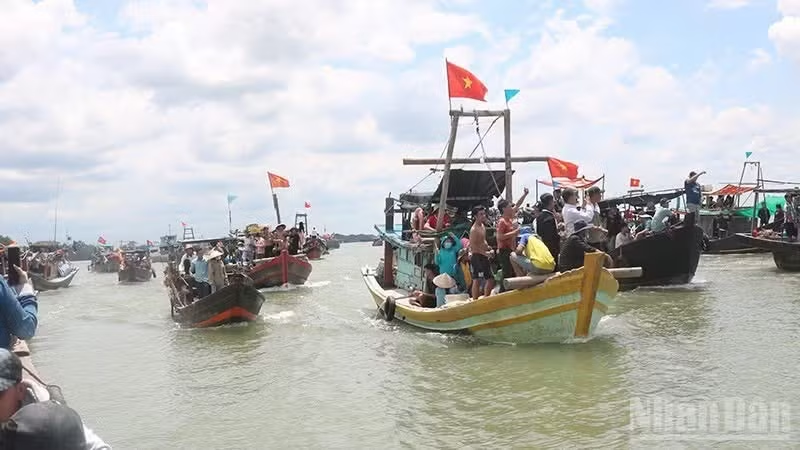
Each year, from the 10th to the 12th days of the fifth lunar month, fishermen in coastal communes such as My Long, Dong Hai and Dai An celebrate the My Long Sea Worship Festival. The festival expresses gratitude to the sea and prayers for favourable weather, abundant catches and prosperous livelihoods.
A key ritual of the festival is the offering to ancestral pioneers, honouring those who reclaimed land. Other important rites include pre-ceremony recitations, offerings to fallen soldiers and the God of Agriculture, the Nghinh Ong (Whale Worship procession), and the ritual of sending off ceremonial boats.
Beyond rituals, the festival is lively and festive, featuring cultural performances, sports and folk games such as tug-of-war, sack jumping, don ca tai tu (southern amateur music), dragon dances and lion dances.
In 2013, the My Long Sea Worship Festival was recognised as a national intangible cultural heritage. The province is planning to elevate it to a regional-level event to promote its traditional cultural values to domestic and international visitors.
The Hoa community has made significant contributions to the development of commerce, services and traditional crafts, enriching both urban and community cultural life. Meanwhile, although small in number, the Cham community continues to preserve its distinct cultural and religious values, adding a unique hue to the province’s diverse cultural landscape.
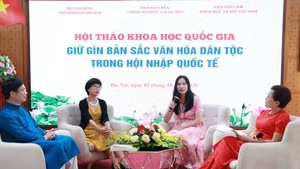
According to Kim Ngoc Thai, Deputy Secretary of the Provincial Party Committee and Chairman of the provincial Viet Nam Fatherland Front Committee, in implementing Politburo Resolution No. 80-NQ/TW dated January 7, 2026, the province will prioritise the preservation, restoration, digitisation and promotion of heritage, languages, scripts, festivals and traditional arts of ethnic communities.
At the same time, the province will continue to effectively implement national target programmes on socio-economic development and sustainable poverty reduction in ethnic minority areas, in tandem with the movement “All people unite to build new-style rural areas and civilised urban centres.”