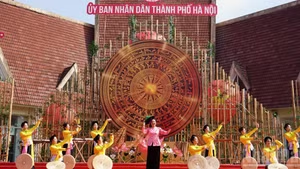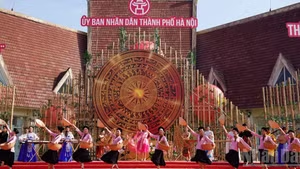
Dang Vuong, 24, posted a short video capturing the festive street atmosphere with the simple caption: “Proud of Viet Nam”. His post attracted considerable attention and sharing. For Vuong, this was a straightforward way to express patriotism in modern life. “That is how I join in the national spirit on these days,” Vuong recounted.
Yet just hours later, in some reposts, an account used Vuong’s video to insert false information about the meaning of the historic date, April 30, 1975, denying the value of the national liberation and reunification struggle. Vuong noticed but initially ignored it.
“I thought it was just a personal opinion. On the internet, everyone says something different; why bother responding?” he explained.
Such silence is not uncommon. In the social media environment, many young people can easily express emotions about a historical event but hesitate when confronted with misinformation. They know they are patriotic and proud of the nation, but they may not yet be fully equipped with the skills to identify, refute, and calmly handle distorting arguments with evidence.
Dam Huy Nam and Dam Hoang Dieu from Hung Yen Province have learnt about the nation’s history from a young age. Stories about the war and the Liberation of the South and National Reunification Day on April 30, 1975 appear not only in books but are also passed down through their grandparents’ and parents’ tales, as well as visits to museums and historical sites.
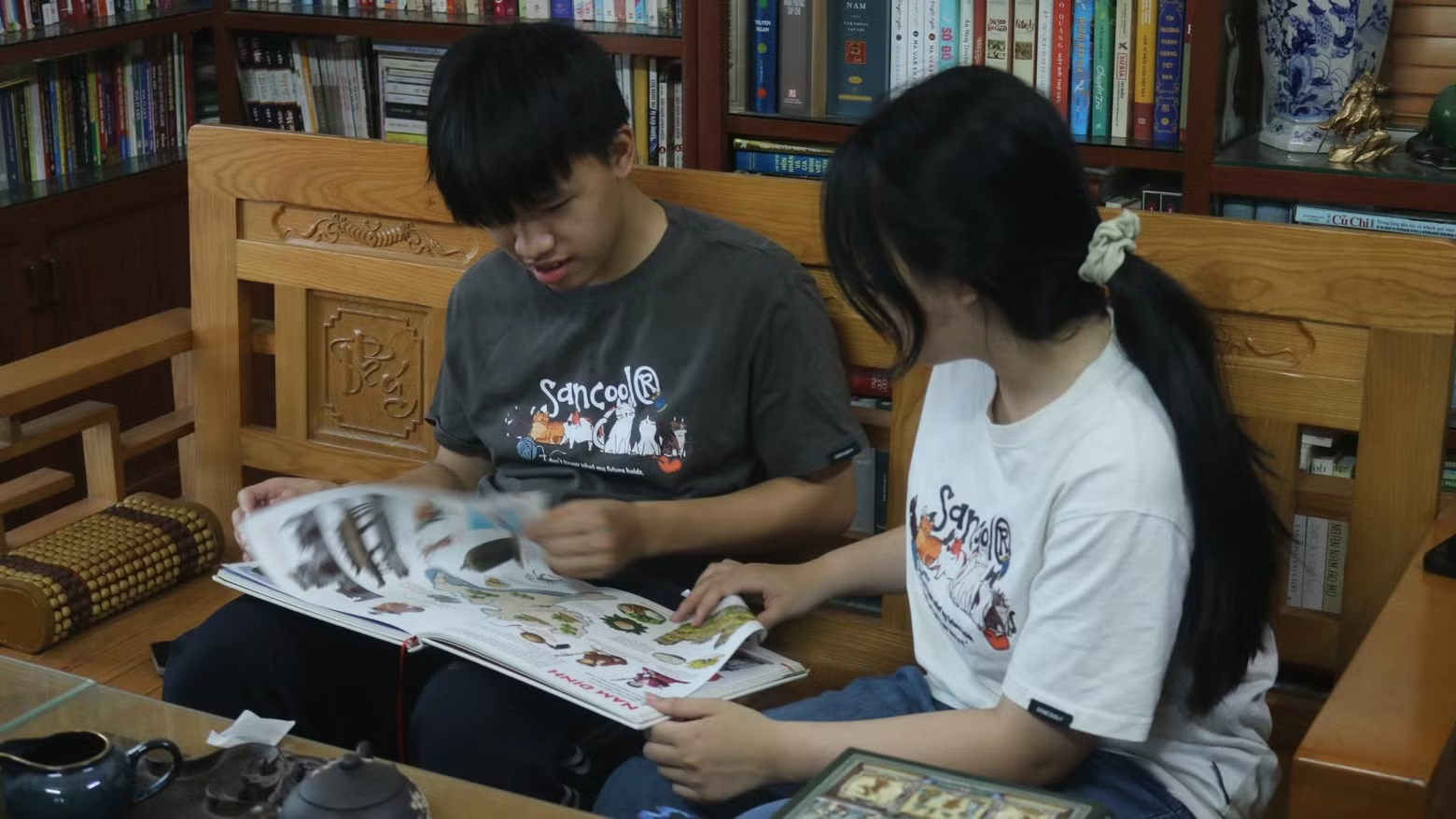
This foundation helps the children form an information “filter” early on. When faced with content showing signs of distortion online, Nam and Dieu do not react emotionally but instead verify sources, cross-check data, and seek opinions from teachers and family.
“Some content looks very convincing at first glance, but if you pay close attention, you will see the information is spliced or the sources are unclear. If we do not verify, it is very easy to misunderstand and form misguided thoughts,” Nam shared.
Meanwhile, Dieu believes that in today’s information landscape, understanding history correctly is not just a learning requirement but also a form of “self-protection skill”. “When we have foundational knowledge, we will not be easily swayed by distorted arguments, no matter how sophisticated their presentation,” Dieu said.
Beyond individual awareness, Nam and Dieu’s approach reflects a positive trend: young people can become a proactive force in filtering and directing information online if equipped with sufficient knowledge and skills.
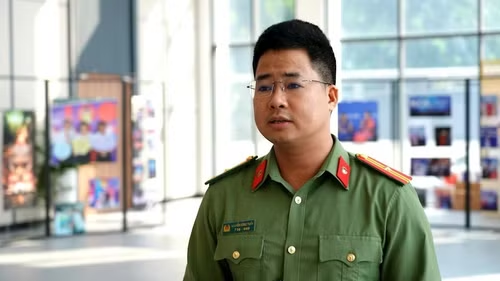
Discussing this issue, Major Nguyen Cong Tuan from the Department of Cybersecurity and High-Tech Crime Prevention under the Ministry of Public Security emphasised that, in the context of rapidly developing cyberspace, every citizen must raise awareness and responsibility in accessing and sharing information.
According to Tuan, social media users must absolutely refrain from sharing, commenting on, or spreading content that distorts or falsifies the truth, as such actions may unwittingly aid illegal activities. “Each individual needs to be aware of the potential legal responsibilities. Spreading false information not only affects public perception but can also result in administrative fines or even criminal prosecution under the law,” he stated.
It is evident that forming correct historical awareness and the ability to discern information is not innate but requires education and nurturing from family, school, and society. This is also the key factor for young people not only to nurture patriotism but also to build resilience in protecting historical truth in an increasingly complex digital space.
Returning to Dang Vuong’s story, he realised that patriotism cannot exist without responsibility in receiving and spreading accurate information. Vuong began seeking official sources, rereading historical milestones, watching documentaries on the resistance war against the US, the nation-saving effort, and the Great Spring Victory of 1975. He also consulted history teachers, veterans, and local journalists to better understand approaches to historical issues online.
Forming correct historical awareness and the ability to discern information is not innate but requires education and nurturing from family, school, and society. This is also the key factor for young people not only to nurture patriotism but also to build resilience in protecting historical truth in an increasingly complex digital space.
It is clear that, from someone who once stayed silent before distortions, Vuong is learning to become a responsible storyteller.
Cyberspace today has become a special “frontline”. There are no gunshots, but there is a fierce clash between truth and falsehood, between authentic historical memory and efforts to distort and deny. Each seemingly simple action such as “like”, “share”, or “comment” can influence public perception. An unverified share can unwittingly amplify misinformation; conversely, a responsible response based on reliable sources can help protect the common foundation of understanding.
The spirit of the Liberation of the South and National Reunification Day on April 30, 1975 thus does not remain solely in the memory of historical witnesses but continues to be nurtured in the awareness and actions of today’s generation. This is how history lives in the present – correctly, profoundly, and responsibly.