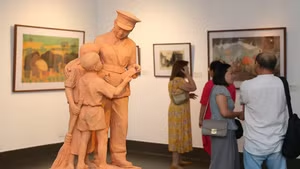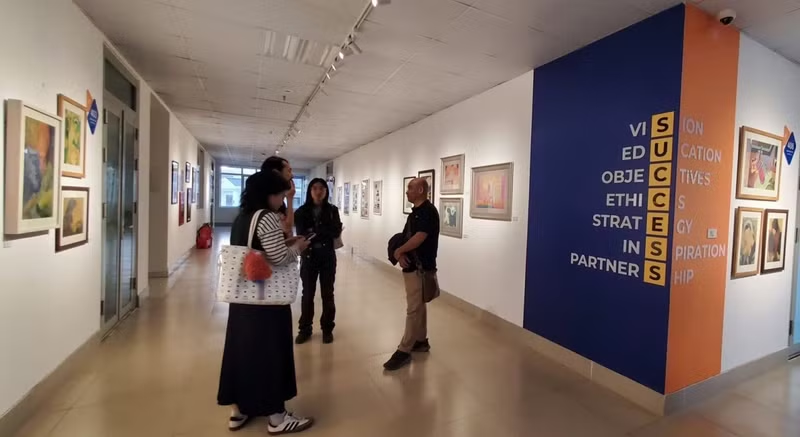
What was once a familiar hallway in the lecture hall is gradually being transformed into a small exhibition space, where students’ works are continuously added and developed after each course.
This model has recently been introduced at the School of Interdisciplinary Sciences and Arts, part of Viet Nam National University in Ha Noi (VNU SIS). The art lobby is located on the fourth floor of the Nghia Do lecture hall.
The opening of this special art space marks a step in VNU SIS’s strategy of building an art education environment closely linked with practice. Rather than remaining confined to classrooms or studios, students’ projects are brought into shared spaces, creating an open academic exhibition and exchange hub for the learner community.
In its initial phase, the art corridor showcases outcomes from several visual arts disciplines, including silk‑based creation, advanced drawing and analogue photography.
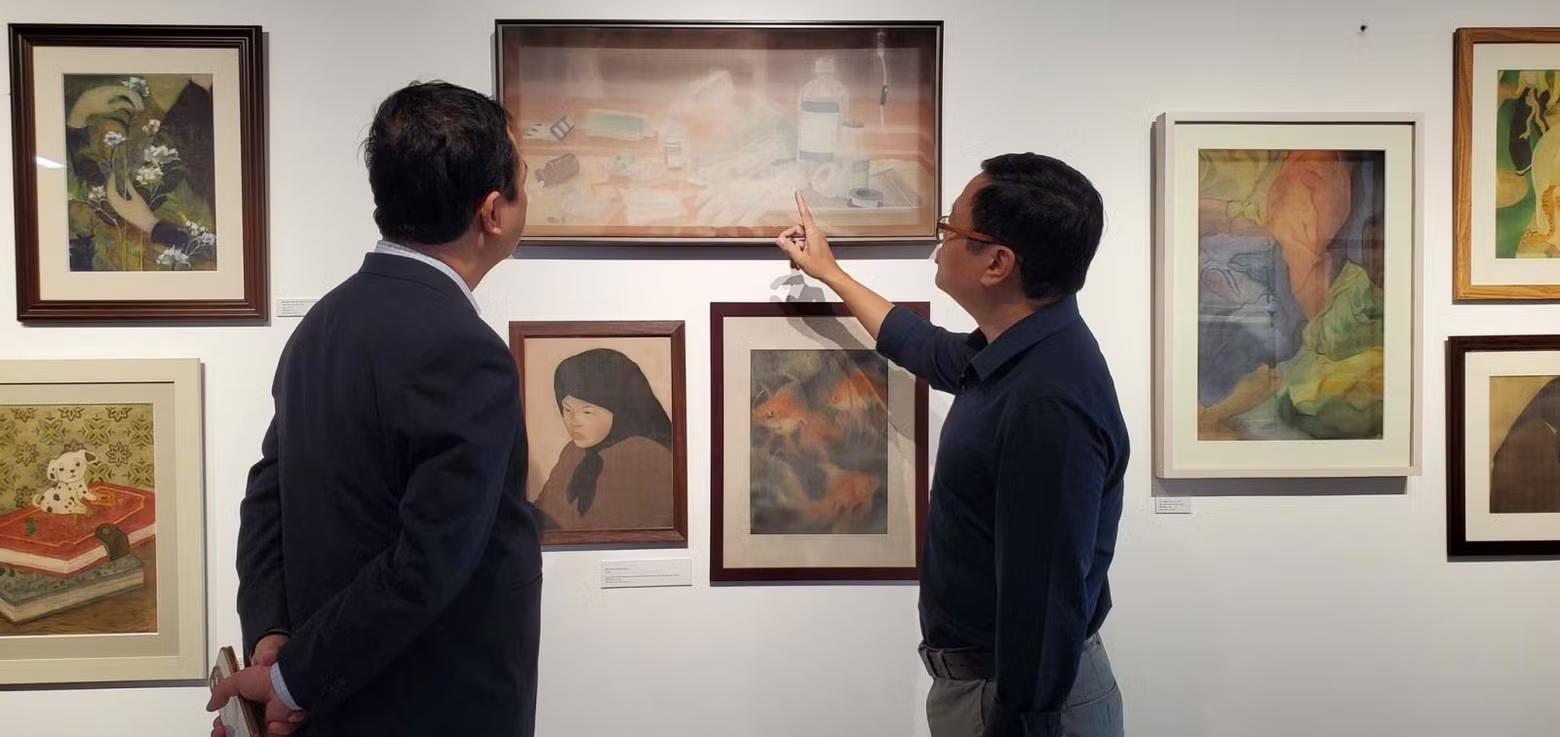
The works on display reflect students’ processes of exploration, experimentation and skill‑building, ranging from personal silk compositions and intensive drawing exercises to emotive analogue frames.
Nguyen Van Vang, a student of Digital Graphic Design, said he was proud to see his own projects and those of his classmates leave the studio and appear in this communal space. He praised the model as an invaluable practical opportunity, helping students gain experience in organising exhibitions and interacting with real audiences.
The art lobby also preserves traces of open studio sessions from the silk creation course, during which students present their creative processes and exchange ideas with lecturers and peers, thereby forming a highly interactive learning ecosystem within the school.
The introduction of the art corridor model is not only of exhibition value but also serves to broaden spaces for learning and creative practice. At the same time, it encourages students to share ideas, engage in academic discussions and diffuse an innovative spirit throughout the training environment.
“Since the art lobby opened in mid‑March, I have noticed a clear change in the academic rhythm of students. The project has broken down the boundaries of the conventional classroom and opened up a fascinating cross‑disciplinary interactive environment,” Vang said.
For students passionate about creation, he added, this space is a special privilege and a great opportunity to share their artistic personalities with the wider community.
The introduction of the art corridor model is not only of exhibition value but also serves to broaden spaces for learning and creative practice. At the same time, it encourages students to share ideas, engage in academic discussions and diffuse an innovative spirit throughout the training environment.