Museums are gradually becoming vibrant spaces for activities that connect people of the present with the past, where the sediments of time seem to tell many meaningful stories to each visitor.
Renewing the way artefacts tell stories
Since early February 2026, Ha Noi Museum has officially opened its permanent exhibition space to the public. It is the newest museum attraction in the capital, Ha Noi.
The selection of exhibition content and the methods used to present artefacts at Ha Noi Museum have been carefully invested in and systematically prepared, drawing lessons from many modern museum display models around the world.
Nature, trees, wildlife and various types of soil forms the starting point of the journey to explore the history of the capital, Ha Noi. The representative points reflecting research processes, including images and animal specimens transformed into display artefacts, are derived from several well-known locations: the primeval forests of Ba Vi, the stretches of land along the Red River, and the streets of Ha Noi.
Not only the area displaying models of forest animals, many species of birds and even typical insects—such as sam cam (Eurasian coot) and cicadas, familiar in poetry about Ha Noi—but also jars containing samples of soil used for local farming and cultivation have become remarkably vivid and appealing to visitors of all ages. They see in them familiarity and vitality: tender rice shoots stretching upward from the jars of soil displayed as artefacts, shimmering with authenticity drawn from everyday life somewhere beyond the museum walls.
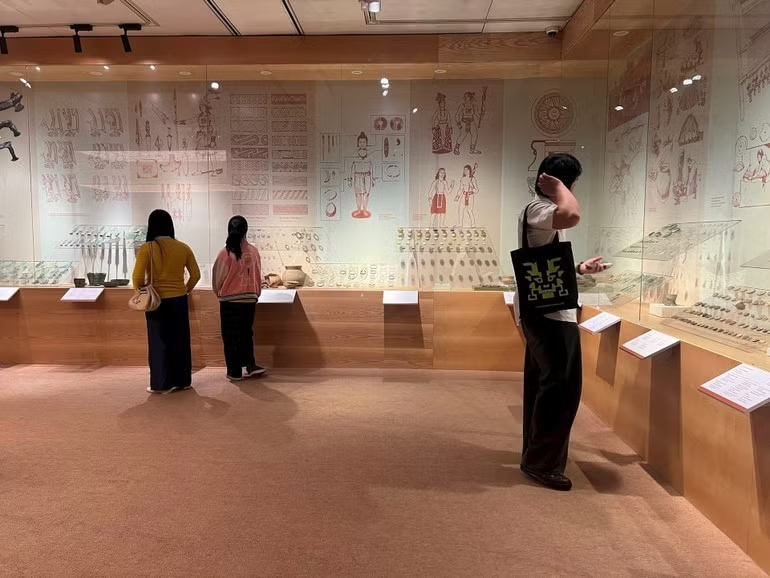
From nature and geology to the presence of people through different dynasties, followed by the shifts and development of urbanisation, the period of resistance wars to defend national independence, and visions for future development, each exhibition section at Ha Noi Museum presents diverse ways of telling stories through artefacts.
The museum makes effective use of wall spaces as display anchors, allowing artefacts room to “breathe”, making it easier for the public to move around, observe, connect with the exhibits and listen more closely to the stories the museum seeks to share.
The Viet Nam Fine Arts Museum is currently piloting the Museum Night Project (from October 2025 to the end of March 2026), introducing many innovations in how artefacts are presented to the public.
For the first time, the museum’s research staff directly participate in evening art experience activities with visitors through an in-depth introduction to a selected artwork serving as the programme’s focal point, lasting about 20 minutes. Prior to this, visitors are given about one hour to independently explore the displayed artefacts, or combine their exploration with information provided via the audio guide service (automated narration through an audio device).
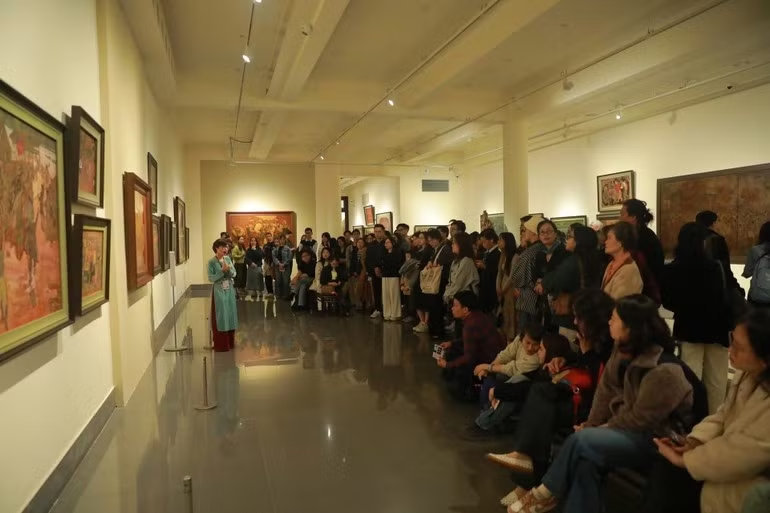
According to Vu Thi Hang, Deputy Head of the Research and Collection Department at the museum, who directly participates in the project, research staff may not possess storytelling skills as smooth as those of professional guides, but they will try to share more detailed data with viewers, selecting information from basic to advanced levels. The aim is to bring artistic stories to a wide audience—from children to adults, from ordinary visitors to professionals working in the fine arts sector.
“The main principle of the activity is still to provide viewers with the best possible artistic experience, making artworks familiar and gradually turning them into a poetic part of everyday life. Therefore, improving the quality of artistic experience remains the most highly valued factor. Proactively changing themes, refreshing content and creating distinctive impressions for visitors each time they come to the museum are also part of that objective,” Vu Thi Hang emphasised.
Expanding interactive spaces
The Viet Nam Museum of Ethnology was one of the earliest museums to implement a strategy of broad connection with all segments of the public, both domestic and international, through a model applied from the very first day of its establishment: Friends of the Museum. By participating in this model, members of the public can voluntarily contribute financially to the museum’s activities in exchange for a membership card with various levels of benefits.
Over time, the model has been adjusted to better suit practical conditions. Today, the museum offers one of the richest arrays of on-site experiential activities, attracting large numbers of visitors, especially school pupils and international tourists. It also collaborates with many organisations at home and abroad to implement specialised exhibitions and activities, thereby strengthening both local and international connections in professional work while further expanding and spreading the museum’s influence to increasingly diverse audiences.
Many other general museums, from local institutions such as the Ho Chi Minh City Museum of History, the Southern Women’s Museum, and the Bac Ninh Museum, to national-level institutions such as the National Museum of History, have also been proactively expanding interactive spaces for the public.
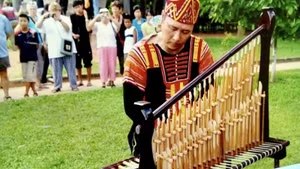
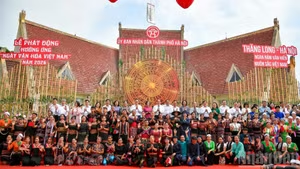
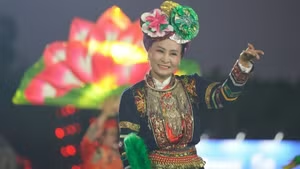
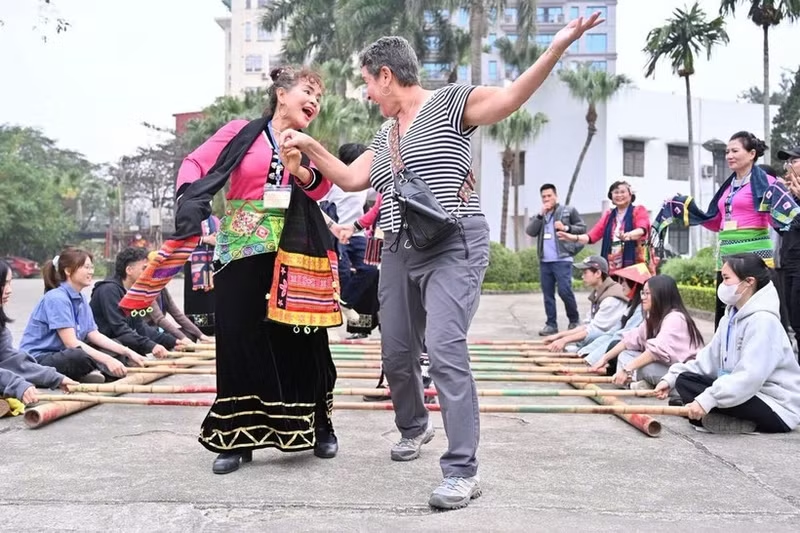
This might be a tree where visitors can send their wishes during a museum visit at the beginning of the Lunar New Year. It might be a precious opportunity to meet female folk artisans from the Central Highlands region and listen to their stories about weaving brocade textiles. It might be a chance to play traditional folk games or to hear the melodies of quan ho (love duet) singing…. All share a common purpose: enabling people to “touch” heritage in the most accessible and familiar ways.
Attracting large numbers of visitors to tour, appreciate, study and conduct research—thereby maximising the value of a museum’s artefacts—always requires a sustained process with steady and practical steps. The proactive renewal of museum activities now taking place demonstrates the strong adaptability of this field, contributing increasingly effectively to the country’s cultural development journey.