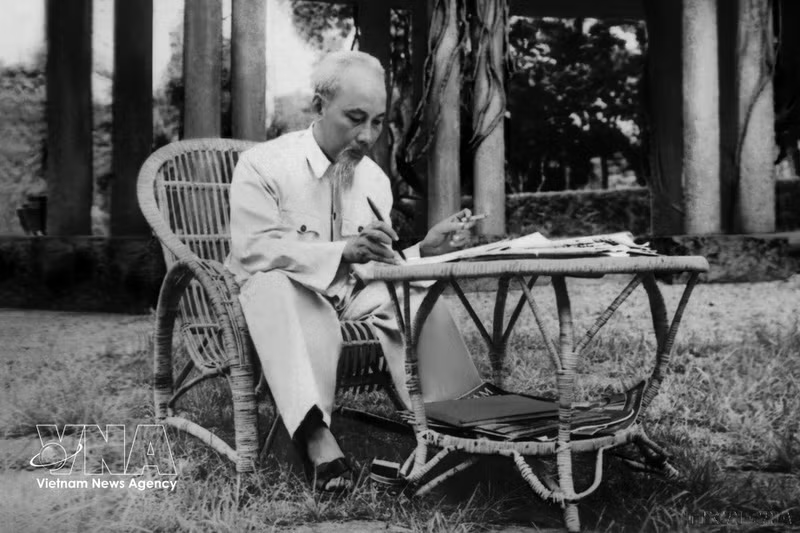
General Secretary of the Communist Party of Viet Nam Central Committee and State President To Lam has expressed his confidence that under the light of Ho Chi Minh Thought, the entire Party, people and army will successfully implement the Resolution of the 14th National Party Congress, achieve the two strategic centennial goals, and realise the aspiration of building a prosperous and powerful nation.
In an article written on the occasion of President Ho Chi Minh’s 136th birth anniversary (May 19, 1890 – 2026), the leader affirmed that “Ho Chi Minh Thought serves as a guiding light along our development path.”
The following is a translation of his article.
HO CHI MINH’S LIGHT GUIDES OUR PATH
To Lam
General Secretary of the Communist Party of Viet Nam Central Committee
President of the Socialist Republic of Viet Nam
On May 19, 2026, our Party, people and army will commemorate the 136th birth anniversary of great President Ho Chi Minh at a particularly significant moment. The 14th National Party Congress concluded successfully, setting strategic directions to usher the country into a new era and build a peaceful, independent, democratic, strong, prosperous, civilised and happy Viet Nam steadily advancing toward socialism. The elections of deputies to the 16th National Assembly and People’s Councils at all levels for the 2026–2031 term have also opened a new chapter marked by high demands for renewed thinking, higher-quality institutions, more effective governance and enhanced public service capacity. The political system is gradually operating under a new, leaner and more streamlined organisational model, requiring greater efficiency, effectiveness and performance, closer ties with the People and a stronger ability to meet the country’s development requirements in the new period.
Amid this major transition, we have become even more deeply aware of the enduring value of Ho Chi Minh Thought as the spiritual foundation, guiding torch and lodestar behind every victory of Viet Nam’s revolution and the nation. While the documents of the 14th National Party Congress define the country’s new development path, Ho Chi Minh Thought serves as the light guiding us along that path with steadfast resolve, sound goals, a scientific approach and deep trust in the People.
President Ho Chi Minh was not only the one who found the path to national salvation and liberation, but also the one who laid the ideological foundation for building, safeguarding and developing Viet Nam in the modern era. For him, national independence was inseparable from the People’s freedom and happiness, and from socialism. National liberation was only the starting point of a broader journey: building a peaceful, unified and independent Viet Nam where the People are the masters, enjoy prosperity, freedom and happiness, have access to education, achieve comprehensive development and benefit from the achievements of the revolution.
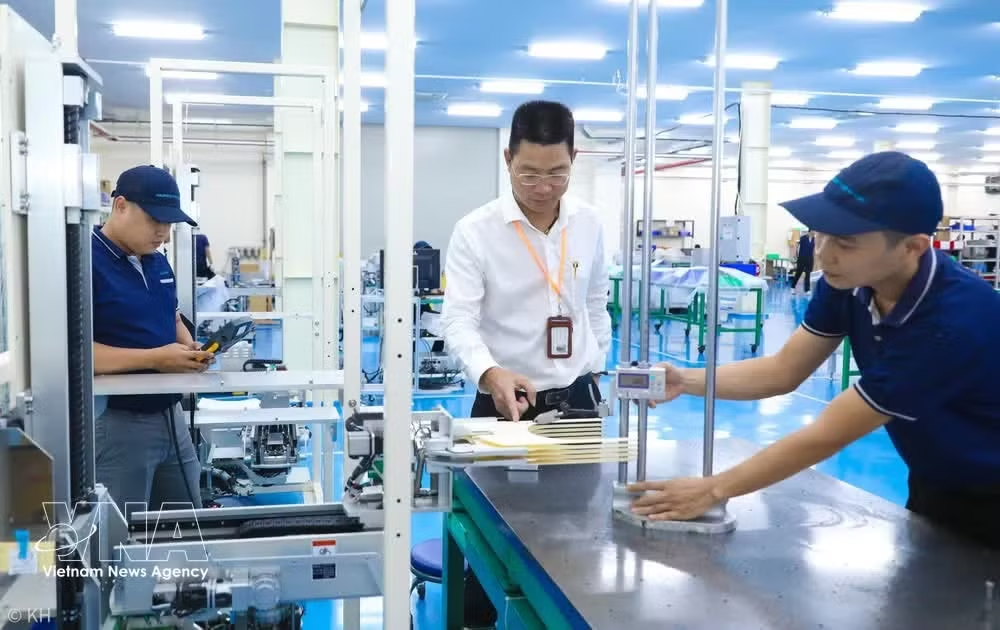
That is the humanistic depth, enduring value and lasting vitality of Ho Chi Minh Thought. It not only illuminated the path toward independence and national reunification in the 20th century, but continues to guide efforts to safeguard sovereignty and territorial integrity, pursue renewal and reform, and achieve rapid and sustainable development in the 21st century. In this new era, as the country faces the imperative of stronger advancement, greater strategic autonomy and keeping pace with global development trends, Ho Chi Minh Thought has become an even more important spiritual anchor, intellectual foundation and decisive guide for action.
The 14th National Party Congress marked a highly important milestone in the country’s development journey. The congress not only reviewed the development path and reflected on the immense, historically significant achievements recorded after 40 years of renewal, but also established the methodology, vision and strategic decisions for the next stage of development. These include pursuing rapid and sustainable growth; building a clean and strong Party and political system operating with greater efficiency, effectiveness and performance; developing a socialist rule-of-law State of the People, by the People and for the People; advancing the country through science, technology, innovation and digital transformation; promoting Vietnamese culture and people as a foundation, endogenous resource and key driving force; building an independent and self-reliant economy while proactively pursuing deep international integration; and strengthening national defence and security.
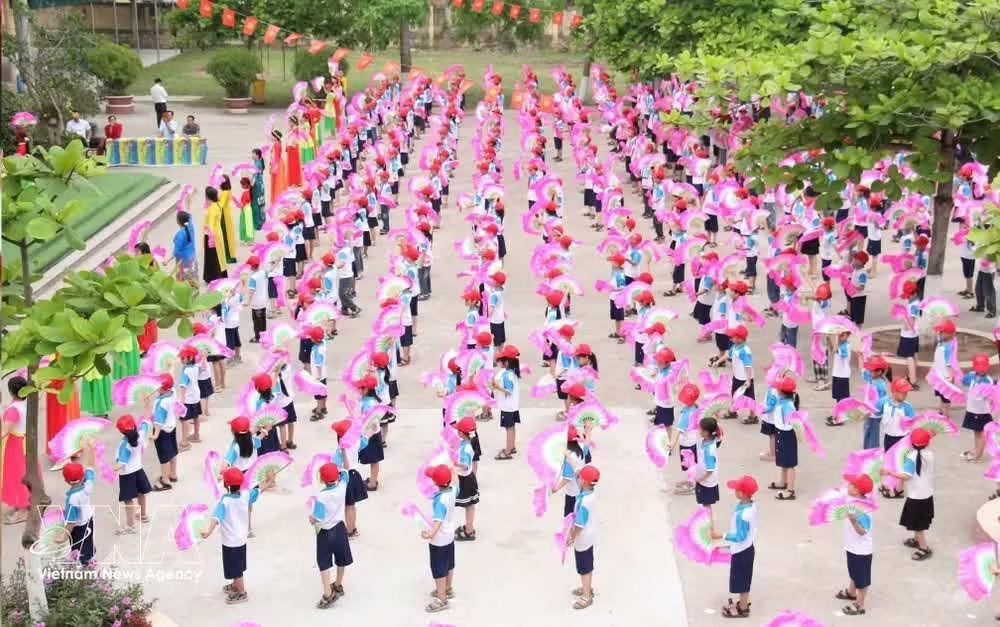
At a deeper level, those strategic orientations represent the inheritance, application and creative development of Ho Chi Minh Thought under new historical conditions. Ho Chi Minh Thought is not a set of rigid, closed doctrines, but a dynamic system of ideas closely tied to reality, taking practical conditions as its starting point, the interests of the nation and the People’s happiness as its highest objective, and autonomy, democracy, renewal, innovation and action as the means to realise revolutionary ideals.
First and foremost, President Ho Chi Minh’s principle that “the people are the root” remains the guiding thread running through all guidelines and policies in the current period. In his thinking, the People are the subject of history, the endless source of strength for the revolution and the highest objective served by the Party and the State. All benefits are for the people. All power belongs to the people. Authorities from the central to local levels are servants of the people. Cadres and Party members must stay close to the people, understand them, trust them, respect them, learn from them, serve them and remain accountable to them.
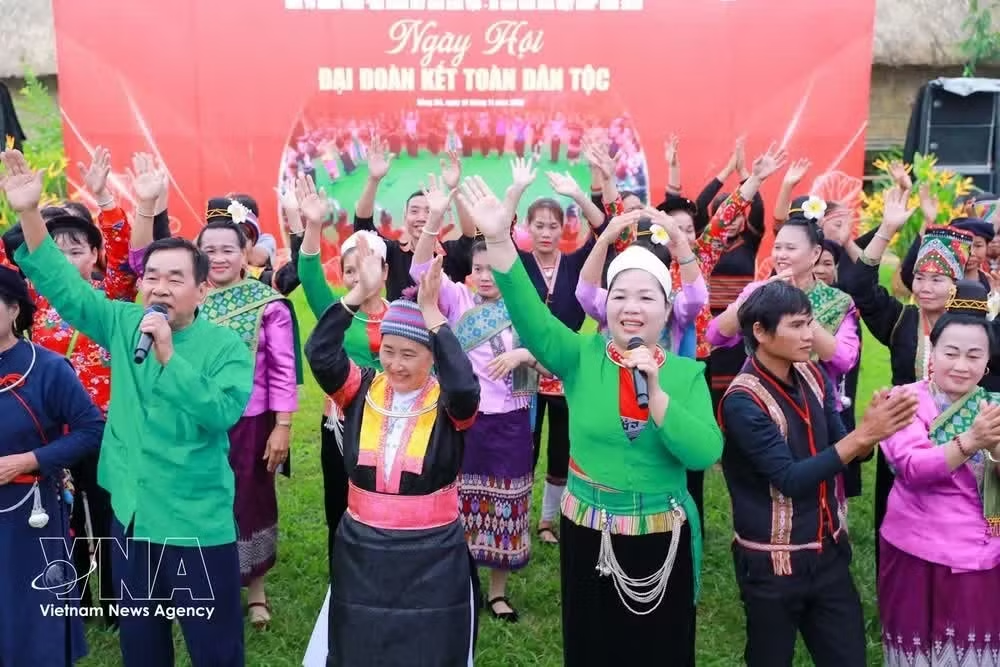
That principle sets out a clear requirement for the current renewal process: all reforms must place the People at the centre, aim to better serve them, and use their satisfaction, trust and happiness as the benchmark for evaluation. Streamlining the apparatus is not merely about reducing administrative units, layers and costs, but more fundamentally about bringing the system closer to the people and grassroots level, handling work more quickly and improving services for citizens and businesses. Decentralisation and delegation of authority are intended to clarify responsibilities and duties while promoting proactiveness, creativity and accountability at every level, sector and locality. Digital transformation is aimed at modernising governance tools and creating a more transparent, convenient, equitable, responsive and efficient system of administration.
Second, President Ho Chi Minh’s thinking on independence, self-reliance and resilience continues to illuminate the country’s development path amid strategic competition, supply chain shifts, the Fourth Industrial Revolution and profound global changes. During his lifetime, he consistently stressed that national independence must go hand in hand with self-reliance and resilience; that the country must primarily rely on its own strength while also securing international support and cooperation; and that national strength must be combined with that of the times.
Today, that thinking is reflected in the push to build an independent and self-reliant economy with high resilience and international competitiveness, one that proactively pursues deep integration without becoming dependent; to strongly develop science, technology, innovation and digital transformation; to master strategic technologies; and to form new productive forces and new modes of production. The aspiration “to stand shoulder to shoulder with the world’s major powers,” which Ho Chi Minh entrusted to future Vietnamese generations, has now become a practical development imperative, requiring the entire Party, people and army to renew their thinking boldly, act decisively, overcome complacency and avoid the risk of falling behind, particularly in technology, productivity and development quality.

Third, Ho Chi Minh Thought on Party building continues to serve as a particularly important foundation for Party and political system building and rectification in the new period. President Ho Chi Minh noted that our Party is the ruling Party; and that every cadre and Party member must fully embrace revolutionary morality, embody diligence, thrift, integrity, uprightness and selflessness, preserve the Party’s purity and prove worthy both as a leader and as a truly loyal servant of the People. He regarded morality as the root of a revolutionary, and the close bond between the Party and the People as both a source of strength and a condition for the Party’s survival and development.
Under current conditions, those requirements have become even more vital. A country seeking rapid and sustainable development must have a Party that is truly clean and strong, with sufficient mettle, intellect, morality, credibility and leadership capacity. A streamlined political system can only operate effectively with a contingent of officials possessing the necessary qualities, capabilities and sense of responsibility, and who dare to think, act and take responsibility for the common good. A modern governance system can only succeed when built on discipline, integrity, transparency and accountability.
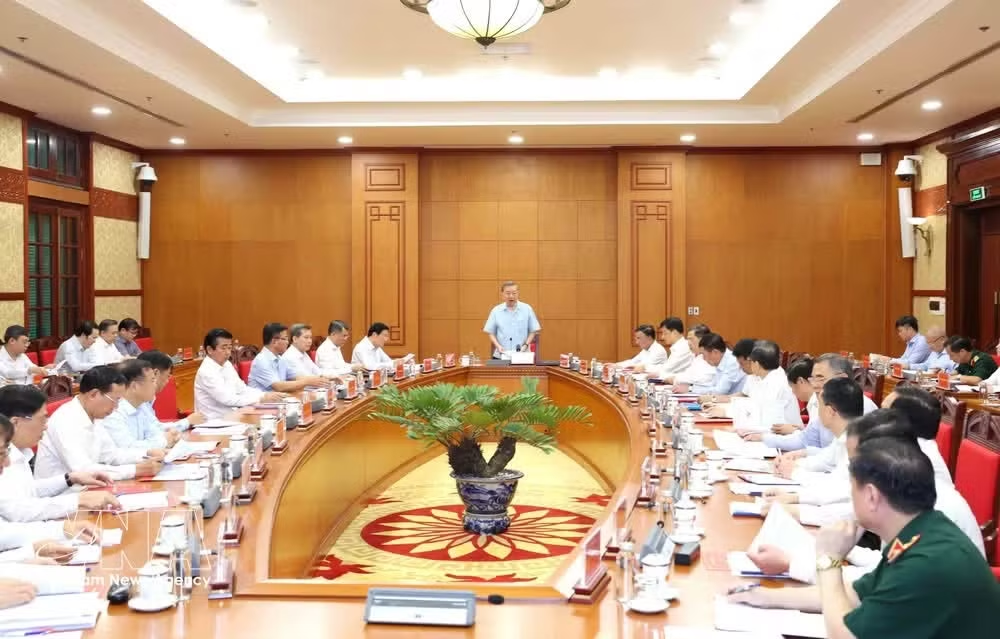
Therefore, the fight against corruption, wastefulness, negative phenomena and bureaucracy is not only a Party-building task, but also a development imperative. Combating corruption is aimed at making the apparatus clean, strengthening public trust, safeguarding national resources and creating a healthy environment for development. Combating wastefulness is to unleash resources and ensure the efficient use of public assets, public time and the country’s development opportunities. Combating negative phenomena helps preserve discipline, prevent the abuse of power and create a fair and civilised foundation for sustainable national development. Combating bureaucracy is intended to ensure the apparatus remains close to the people, policies stay grounded in reality and officials do not become indifferent to the lives of the People.
Fourth, Ho Chi Minh Thought on great national unity continues to serve as a source of strategic strength in the new era. He affirmed that unity is an extremely valuable tradition of our nation and a decisive factor behind the revolution’s victories. Unity within the Party, unity among the people, national unity and international solidarity; unity among classes, social groups, ethnic communities, religions, people at home and abroad — these were both the means of rallying forces and the art of building national strength championed by great President Ho Chi Minh.
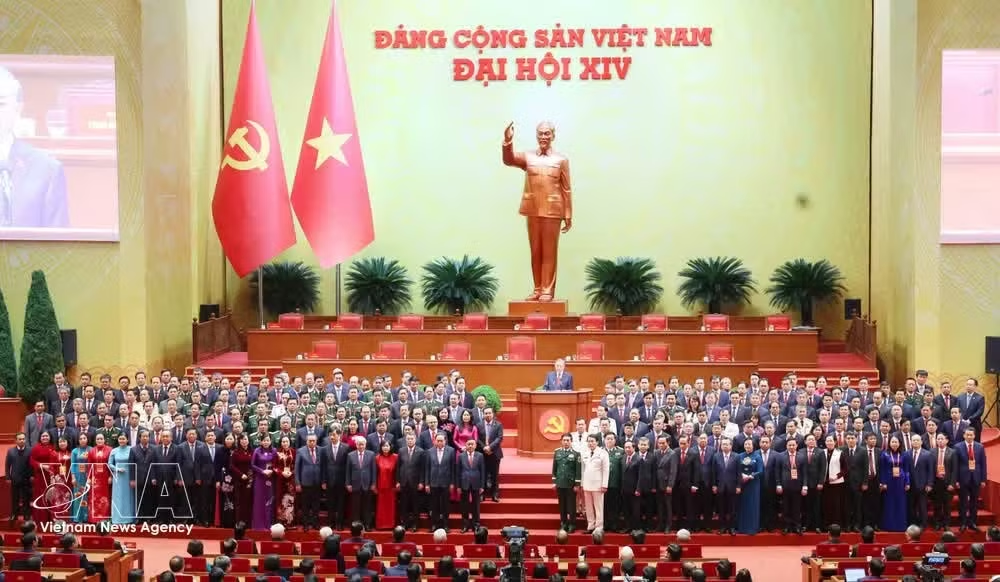
In the current period, great national unity is not only a political requirement but also a source of development strength. For the country to advance, it must fully unlock and promote the intellect, mettle, aspirations, creativity and spirit of dedication of all Vietnamese people. Workers, farmers, intellectuals, entrepreneurs, artists, young people, women, veterans, ethnic groups, religious communities and overseas Vietnamese are all important forces in the cause of national construction and defence. National development in the new era cannot rely solely on state resources, but must mobilise, unleash and connect all social resources and the creative potential of the People.
Fifth, Ho Chi Minh Thought on culture and people continues to illuminate the country’s sustainable development requirements. For him, culture does not stand apart from politics, economy or society, but served to guide the nation forward. People are both the objective and the driving force of the revolution. National development is not only about economic growth, but also about raising intellectual standards, nurturing character, building morality, advancing culture and improving the material and spiritual lives of the People.
In the new era, rapid development must go hand in hand with sustainable development; economic growth must be accompanied by social progress and equity; technological innovation must go together with human development; and international integration must be pursued alongside the preservation of national cultural identity. A nation can only become truly strong and prosperous when it possesses a robust economy, modern institutions, solid national defence and security, a rich cultural identity, a population with all-round development, and a humane, compassionate, disciplined and innovative society.
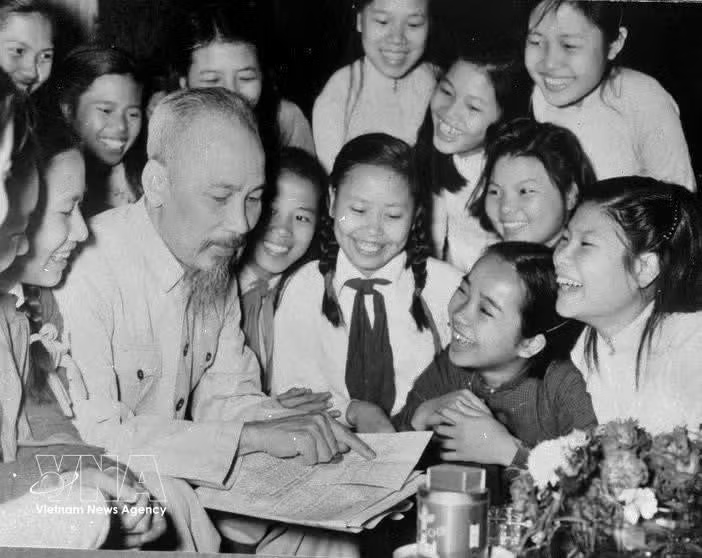
This shows that recent reform decisions — from streamlining the political system’s organisational structure, restructuring administrative units and operating the two-tier local administration model; reforming institutions and consolidating the legal framework; accelerating decentralisation, delegation of authority, administrative reform and digital transformation; promoting science, technology and innovation; fostering the private sector, improving the efficiency of the state sector and building an independent, self-reliant economy; advancing culture and human development, raising education quality, public healthcare and social welfare; to proactively advancing international integration, strengthening national defence and security, and combating corruption, wastefulness and negative phenomena — all need to be viewed through the lens of Ho Chi Minh Thought.
Reflection is to stay on the right course toward the set objectives. Reflection is to choose the right methods. Reflection is to ensure that every reform does not drift away from the People, every development effort does not lose its identity, and every reform does not become detached from the ideals of national independence and socialism. Therefore, commemorating the 136th birth anniversary of President Ho Chi Minh in the current context is not only an occasion to remember and express gratitude for his immense contributions. It is also an opportunity for the entire Party, people and army to reflect on themselves in light of his ideology, morality and lifestyle; reinforce confidence in the chosen path; strengthen responsibility towards the nation and the People; and turn Ho Chi Minh Thought into concrete revolutionary action in every agency and locality, and among every official, Party member and citizen.
Studying and following President Ho Chi Minh’s ideology, morality and lifestyle today should not stop at correct words, slogans or symbolic movements. More importantly, it must be translated into public service ethics, discipline in implementation, a culture of integrity, a spirit of innovation and creativity, responsibility in serving the People, organisational and execution capabilities, and tangible outcomes in daily life. Every sound guideline must be put into practice. Every policy must reach the public. Every official must take the People's satisfaction, trust and happiness as the measure of their work.
The era of the nation’s rise places very high demands on the entire political system. We must remain steadfast without being conservative; pursue innovation without losing direction; achieve rapid growth while ensuring sustainability; deepen international integration while maintaining independence and self-reliance; build a streamlined apparatus while ensuring better service to the People; and promote strong economic development while safeguarding social progress and equity and the People’s happiness. This also reflects the spirit of President Ho Chi Minh in the new context: remaining steadfast in objectives, being creative in methods, practical in action, humane in purpose, placing the people at the centre, and treating national interests as the highest priority.
The greater the historical turning point, the more firmly we must uphold Ho Chi Minh Thought. The further we advance on the path of modernisation, the more deeply we must return to the fundamental values he left behind: independence and freedom; the people as the root; solidarity; self-reliance and resilience; diligence, thrift, integrity and righteousness; a clean Party; a people-serving State; and development for the People and for their happiness. Under the light of Ho Chi Minh Thought, with Viet Nam’s mettle, intellect, will, and aspirations, the entire Party, people and army will undoubtedly successfully implement the Resolution of the 14th National Party Congress, achieve the two strategic centennial goals, and realise the aspiration of building a prosperous and powerful nation standing shoulder to shoulder with world powers, as dearly beloved President Ho Chi Minh always wished.