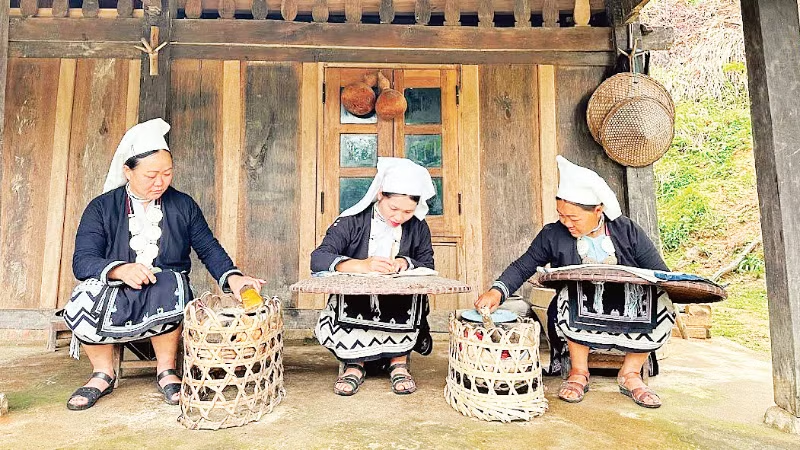
As tourism needs increasingly diversify, the trend towards nature, highlands, and indigenous cultural spaces is becoming more pronounced. Travellers increasingly seek to experience local life, explore cultural depth, and immerse themselves in pristine landscapes. Indigenous tourism has thus emerged as a market segment attracting significant attention, offering communities a path out of poverty without sacrificing identity.
Yet in many localities, homestays lack distinctiveness, copying one another; traditional wooden stilt houses integral to community life are replaced by concrete structures resembling mass-market resorts; tours are organised in rushed, high-volume formats; and cultural festivals are commercialised for “check-in” purposes. Abrupt changes in social structures, lifestyles, and community activities risk eroding the traditional cultural values that form the “soul” of indigenous tourism.
More worryingly, uncontrolled tourism growth also places heavy pressure on the natural environment and local communities. Overexploitation of resources and ecosystem degradation undermine the foundation for long-term development.
Meanwhile, uneven service quality and unprofessional attitudes in some destinations damage the industry’s image. When tourism is treated merely as a quick-profit venture, without responsibility towards resources and communities, a decline in tourist trust is inevitable.
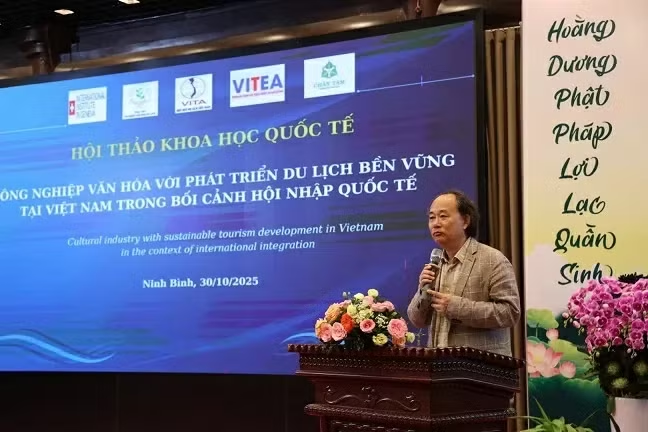
Speaking at the international seminar entitled 'Cultural Industry with Sustainable Tourism Development in Viet Nam in the Context of International Integration', held in Ninh Binh in late October 2025, Professor Kim Si-bum of Gyeongbuk National University, Republic of Korea, warned that short-term growth goals leading to depletion or destruction of indigenous cultural values would strip tourism of its foundation, leaving visitors with no reason to return.
Domestic experts echoed this view, stressing that preserving and promoting identity must remain an immutable principle in indigenous tourism development.
In this context, sustainable tourism is being increasingly recognised as an inevitable requirement. It meets current tourist needs while safeguarding the ability to meet future demands, balancing the three pillars of economy, society, and environment.
This requires a shift in mindset from “exploitation” to “preservation”, from chasing quantity to emphasising quality, and from sprawling expansion to selective development that respects destination capacity.
Sustainable tourism is being increasingly recognised as an inevitable requirement. It meets current tourist needs while safeguarding the ability to meet future demands, balancing the three pillars of economy, society, and environment.
This perspective was reaffirmed at the conference summarising the operation in 2025 and setting tasks for 2026, organised by the Ministry of Culture, Sports and Tourism at the start of 2026. The ministry’s leaders emphasised the need to pursue sustainable tourism, prioritising diversity, appeal, and longevity in products, with particular focus on indigenous tourism, community tourism, and tourism linked to cultural preservation.
This shows that developing new, more suitable models has become urgent. One promising direction is slow tourism, combined with in-depth experiential discovery. Slow tourism deliberately organises experiences that allow visitors to engage deeply in community life; learn about history, customs, and local knowledge; and form stronger bonds with the places they visit.
To realise this approach widely, local authorities play a crucial role. Tourism planning must be grounded in thorough research into resources, culture, environmental capacity, and community needs. At the same time, mechanisms should encourage models linked to preservation and creativity based on traditional values, rather than prioritising large-scale projects lacking identity.
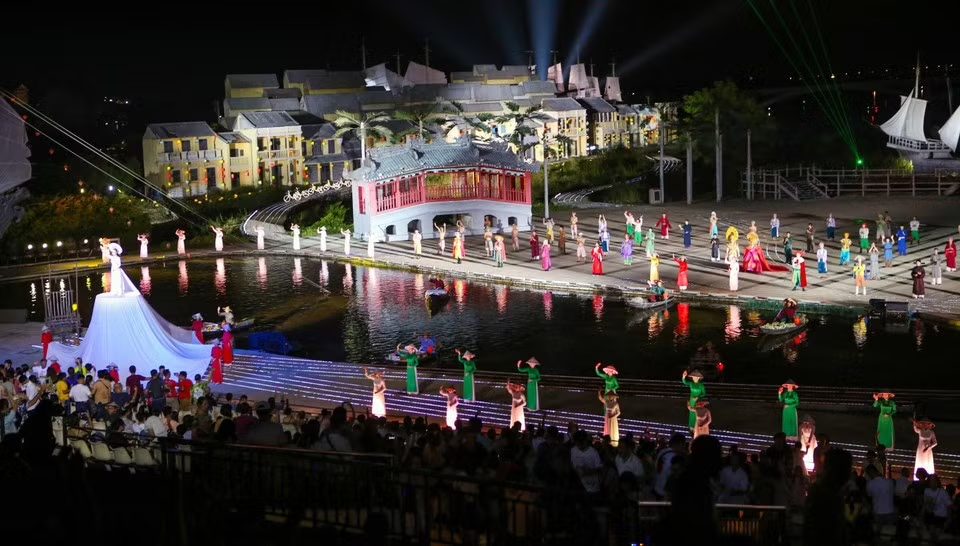
Local communities must be placed at the centre of development. Residents are not merely beneficiaries but active participants in building tourism products, preserving traditions, and telling their own cultural stories. Experiences in Ninh Binh, Da Nang, and Quang Tri show that when indigenous tourism is integrated into broader strategies linked to resource and cultural preservation, green and creative tourism models can emerge, creating sustainable appeal for domestic and international visitors.
In addition, developing human resources for indigenous tourism is also indispensable. Communities need training in history, culture, tourism management, service skills, and foreign languages.
When residents are confident in presenting local values, tourism becomes a tool for cultural dissemination, reinforcing pride and heritage awareness. Reasonable pricing reflects the true value of experiences, filters suitable customer segments, and generates resources for reinvestment in preservation and service quality.
In 2026, Viet Nam’s tourism stands at a breakthrough moment. The country welcomed nearly 4.7 million international visitors in the first two months of the year, up 18.1% year on year, according to the Viet Nam National Authority of Tourism (VNAT).
As the industry recovers and restructures, choosing the path of sustainable development for indigenous tourism is both an immediate necessity and a long-term strategy. It is the path that preserves natural and cultural treasures, enhances visitor experiences, and strengthens Viet Nam’s position on the global tourism map.