Heritage as a cornerstone of sustainable tourism
Deputy Director of the National Tourism Administration, Ha Van Sieu, stressed that heritage is an invaluable resource, embodying history and cultural depth. He noted that this unique asset gives Viet Nam’s destinations their distinctive appeal in international competition. Accordingly, all tourism activities must respect heritage authenticity, ensuring that innovation does not compromise original values.
Sieu explained that heritage tourism must be built upon the living interaction between local people and cultural spaces. When cultural values are preserved and residents secure stable livelihoods from tourism, they become guardians and promoters of heritage. This creates a sustainable cycle in which development drives conservation, and conservation underpins development.
Heritage tourism must be built upon the living interaction between local people and cultural spaces. When cultural values are preserved and residents secure stable livelihoods from tourism, they become guardians and promoters of heritage.
Deputy Director of the National Tourism Administration Ha Van Sieu
Technology, he added, plays a vital role in bridging tangible and intangible values, tradition and modernity. It enhances management efficiency while creating engaging, emotionally rich visitor experiences. He also highlighted the importance of investing in heritage interpretation—from museums to artistic performances—to deepen cultural richness and strengthen destination appeal.
Ninh Bình’s model for balancing heritage preservation and green tourism
Ninh Binh has emerged as a leading example of effectively leveraging heritage for sustainable tourism. Home to the Trang An Scenic Landscape Complex, a UNESCO World Heritage Site recognised under both Cultural and Natural criteria, the province has developed a management model that preserves ecological and cultural values while promoting green tourism growth.
Bui Van Manh, Director of the Ninh Binh Provincial Department of Tourism, described Trang An as a priceless national and global asset. Eleven years after UNESCO recognition, the site has been acknowledged by UNESCO leadership as a model for balancing nature conservation, cultural preservation, and livelihood development. This recognition affirms the province’s efforts and strengthens its heritage-centred tourism strategy.
Manh explained that Ninh Binh’s approach is based on ecosystem-oriented governance combined with comprehensive spatial planning. Following administrative reform, the province aims to unify plans across its diverse ecological landscape of limestone mountains, plains, and coastal areas.
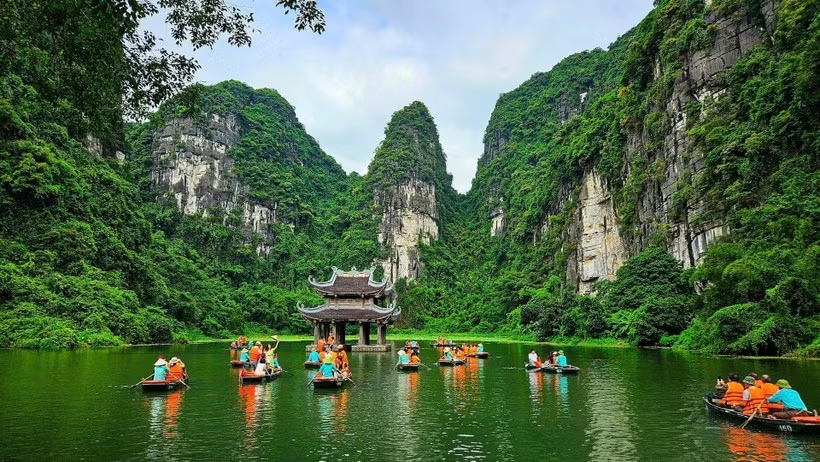
Conservation is regarded as the foundation, development as the driver, and local people as the beneficiaries. Tourism activities in core and buffer zones are strictly controlled, with cave and boat pier capacities monitored by technology to prevent overload.
Looking ahead, Ninh Binh defines green, sustainable tourism as its pillar, promoting ecotourism, agricultural tourism, and cultural experiences under the principle of “low impact, high value.” The province collaborates with businesses to develop eco-friendly transport, reduce plastic waste, and prioritise clean energy. Enterprises are encouraged to regenerate resources, restore ecosystems, and contribute to cultural preservation.
Human resource development is also prioritised, with regular training in professional and digital skills, languages, and cultural etiquette. This enables locals to participate fully in the tourism service chain—from boat rowing and guiding to accommodation and performance arts—fostering livelihoods and long-term commitment to heritage protection.
Digital transformation further strengthens tourism management. Smart systems track visitor numbers in real time, monitor route capacities, and minimise landscape impacts. Visitor services such as automated audio guides, digital maps, and online feedback are synchronised.
Public-private partnerships are maximised to attract investment in landscape management, infrastructure, heritage promotion, and cultural tourism events. Programmes such as Tam Coc – Trang An Tourism Week and the Trang An – Bai Dinh Festival have drawn significant public interest, enhancing Ninh Binh’s tourism profile.
Legal frameworks and community engagement for sustainable heritage management
Associate Professor Dr Le Thi Thu Hien, Director of the Cultural Heritage Department, emphasised that newly promulgated documents—including the Cultural Heritage Law No. 45/2024/QH15 dated November 23, 2024; Government Decree No. 208/2025/ND-CP dated July 17, 2025; and Decree No. 215/2025/ND-CP dated August 4, 2025—mark a major step forward in strengthening the legal foundation for heritage protection and promotion.
When properly managed and when local communities benefit directly, heritage becomes a resource that generates new value and elevates Viet Nam’s tourism profile in the years ahead
These documents establish clear principles for preserving heritage authenticity, prohibiting distortion or appropriation, and respecting spiritual values and practice spaces. They also define the rights of cultural knowledge holders to determine what is protected and how practices are conducted.
The Heritage Department is working closely with relevant agencies to issue legal documents that remove obstacles and facilitate conservation and utilisation. New provisions pave the way for attracting investment and social funding to improve infrastructure at world heritage sites, historic relics, and scenic areas.
The Department also promotes dissemination of legal documents and enhances professional training for provincial and municipal management staff, reducing shortcomings in restoration projects and strengthening capacity. Localities are guided in preparing scientific dossiers for outstanding monuments and landscapes to seek UNESCO recognition.
Collaboration with the tourism sector is encouraged to develop cultural tourism products based on artistic performance and heritage practice, linking localities with shared values to form regional tourism routes.
Heritage and sustainable tourism are inseparably linked. When properly managed and when local communities benefit directly, heritage becomes a resource that generates new value and elevates Viet Nam’s tourism profile in the years ahead.