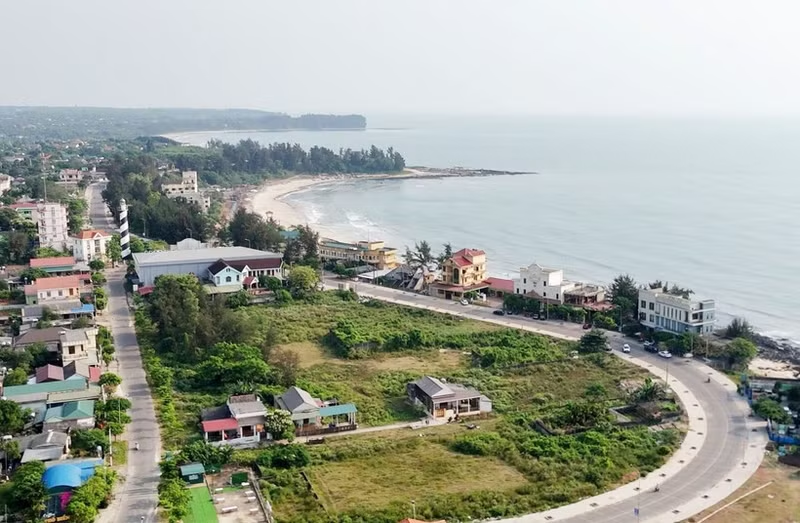
Beautiful and vibrant natural beaches
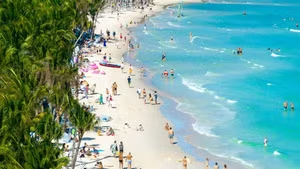
Cua Tung Beach lies about 35 kilometres north of Dong Ha City. In the early 20th century, it was one of the leading seaside resorts in central Viet Nam. The French described Cua Tung as the “queen of beaches”, thanks to its long, gently sloping stretch of fine white sand and its pristine landscape. At the time, the high-end seaside resort featured holiday villas scattered across the hills facing the sea, along with guesthouses and coastal pathways.
Celebrated Vietnamese writer Nguyen Tuan once described Cua Tung as one of the most beautiful beaches in Viet Nam, where the colour of the sea changes with the sunlight, from green and blue to pink, shifting rapidly and vividly. The sky and the waves blend together here, creating a vibrant natural beauty.
About 15 kilometres south of Cua Tung lies Cua Viet Beach at the mouth of the Thach Han River. The meeting of the river and sea waves forms a distinctive stretch of fine white sand. It was not until the 1990s, when Quang Tri began focusing on developing its marine economy, that Cua Viet Beach was properly planned and started receiving tourists.
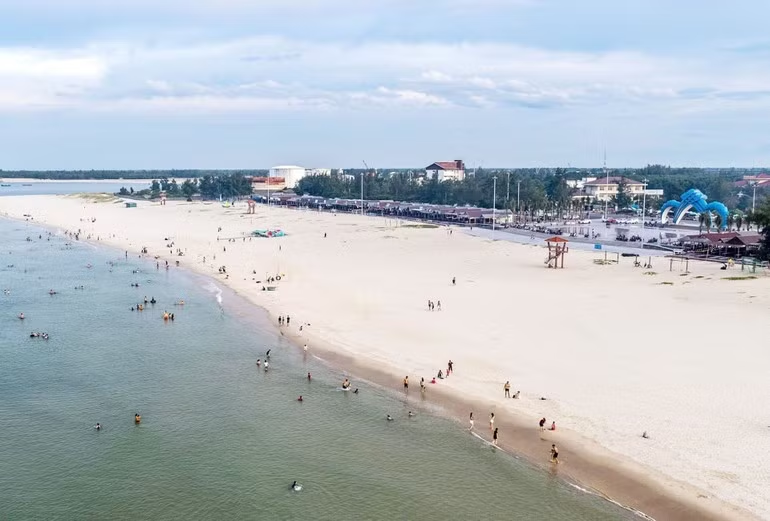
The distance from Dong Ha City to Cua Viet Beach is about 15 kilometres, making access very convenient. The beach lies at the Vietnamese starting point of the East-West Economic Corridor (EWEC). The development of the trans-Asian route has turned Cua Viet into an important location, driving strong investment in tourism infrastructure.
The beach still retains its unspoilt charm with rows of casuarina trees acting as natural sand barriers. Visiting in summer, tourists experience an interesting contrast between the scorching heat brought by the south-western foehn winds and the cool seawater, which provides an immediate sense of relief.
However, since 2003 the province has built several structures in the Ben Hai river mouth area, including a system of breakwaters and the Cua Tung fishing port. These works have altered the natural water flow, causing coastal erosion at Cua Tung Beach. Sand has gradually been washed away and the beach has lost much of its former beauty.
In response, the province has organised numerous workshops and invited scientists and experts to study and propose solutions to restore Cua Tung Beach, but a feasible plan to revive it has yet to be found.
On Con Co Island, tourism has been identified as the leading economic sector, accounting for more than 70% of its economic structure. Con Co consistently strives to conserve biodiversity, protect the marine environment and pursue sustainable development.
At present, Quang Tri Airport, located between the Cua Tung and Cua Viet tourism areas and lying just over 30 kilometres from Con Co, is under construction. The airport is expected to begin operations in 2026, making Quang Tri more accessible to visitors.
Strategic vision needed
Despite the impacts it has faced, Cua Tung Beach still retains its distinctive character. James Smith, a British tourism researcher and traveller, shared: “I enjoy swimming at Cua Tung more than at any other beach I have visited. The sand underfoot is always soft, the salinity is moderate, and it remains very comfortable even after swimming all day.”
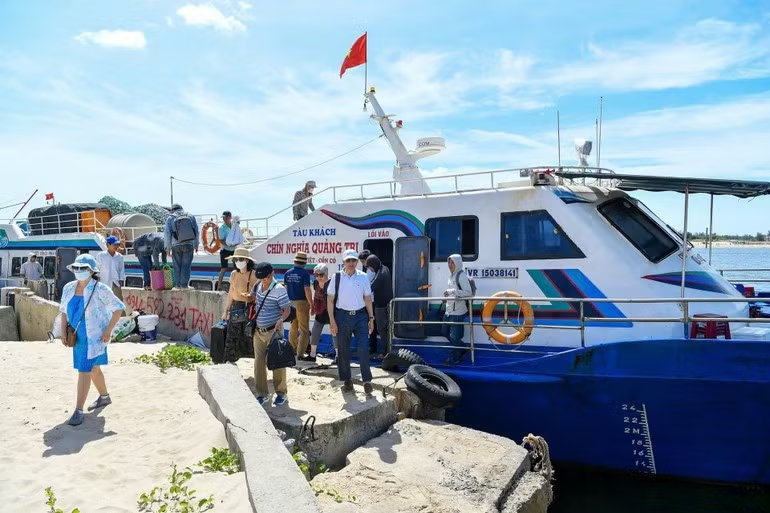
According to Le Minh Tuan, Director of the Quang Tri Department of Culture, Sports and Tourism, the province has identified Cua Tung, Cua Viet and Con Co as three key coastal tourism hubs. To transform the Cua Tung-Cua Viet-Con Co tourism triangle into refined, peaceful high-end resort destinations, a new strategy is needed to attract visitors seeking privacy. The key strength of Cua Tung, Cua Viet and Con Co lies precisely in their unspoilt and tranquil beauty.
Tourism researchers note that development planning for these destinations should prioritise low density and green architecture to maintain quiet surroundings and well-spaced environments. Instead of high-rise hotels, preference should be given to villas and bungalows nestled among casuarina groves or following the contours of hillside terrain.
Transport infrastructure also needs to be integrated in a refined manner. Within resort areas and on Con Co Island, only electric vehicles, bicycles or walking should be encouraged in order to eliminate engine noise. The road linking Cua Tung and Cua Viet should be upgraded into a scenic coastal route rather than the mixed-traffic corridor it currently is.
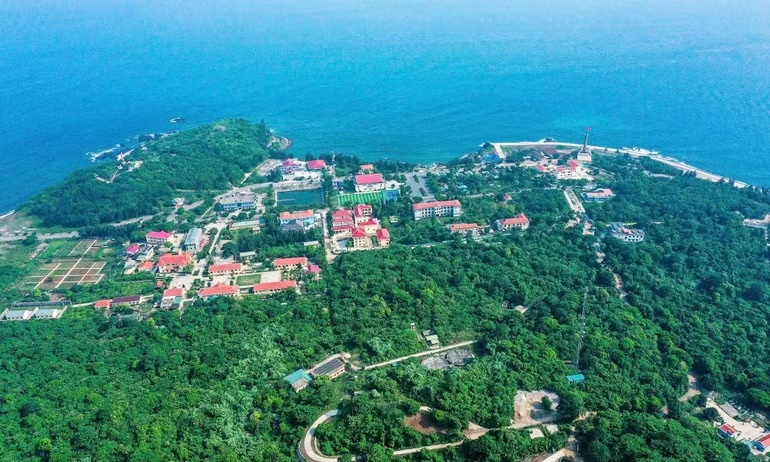
In addition, tourism products need to be clearly positioned to attract visitors. Rather than noisy entertainment activities, the focus should be on high-end services such as natural therapy. The clean seawater and fresh air could be utilised for spa centres, outdoor yoga and meditation. Fresh seafood should be prepared according to five-star standards. Controlled coral-diving experiences, sea turtle observation and the protection of primary forests could attract nature-loving visitors with strong conservation awareness. Once adequate infrastructure is in place, professional beach management and operation units will also be essential.
Finally, historical and spiritual values should be incorporated. Quang Tri possesses a uniquely rich historical legacy, and its sophistication also lies in cultural depth. Skilled guides should be able to tell the stories of Cua Tung, Vinh Moc, the 17th Parallel, Cua Viet and Con Co in an engaging manner through artistic exhibition spaces within resorts, transforming the tranquillity of this land, once a fierce battlefield, into a place of remembrance and peace.

![[In Pictures] Nui Chua Rock Park: A million-year-old outdoor museum of landforms on the Khanh Hoa coast](https://en-cdn.nhandan.vn/images/nyM650OGFWrOVWc-xajqNz57td8idIAL_VG9puyG2UZEKOnmq1DVlT1--ZclbO3z2WBaWZhbt6O3e8kjPZqJMWkfEz7RO9qhcwg8o8LQFK8/ndo-br-cao-nguyen-da-moi.jpg.avif)