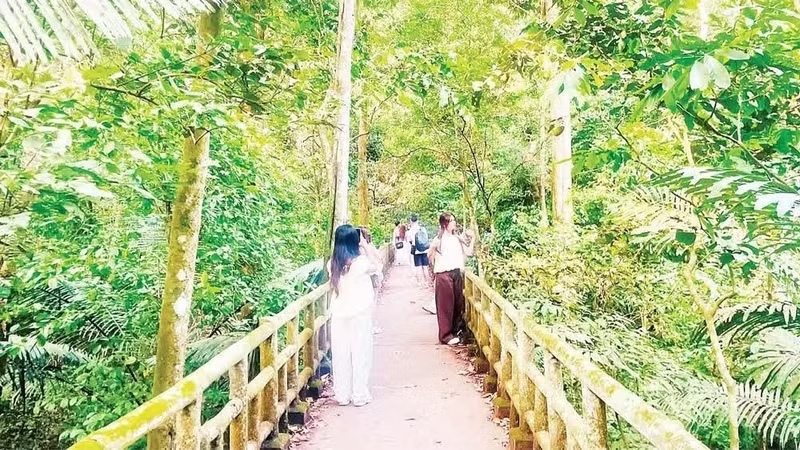
Rather than focusing on “checking in” at as many places as possible, slow travel gives travellers the opportunity to spend more time at a destination, immerse themselves in the daily life of local people, leisurely explore a highland market, learn to cook a traditional dish, cycle through a coastal fishing village, or simply watch the peaceful rhythm of life unfold in a rural area.
Instead of speed, slow travel places emphasis on experience. Slowing down a little to regain balance is precisely the value that makes slow travel worthwhile.
Based on 25 international travel reports, CNBC has forecast global travel trends for 2026, with the focus shifting away from the number of destinations towards experience, sustainability, and a higher level of personalisation.
The report said travellers are increasingly interested in secondary destinations, meaning places that are not major tourism hubs but can offer in-depth experiences. This shows that slow travel is becoming a deliberate choice among global travellers, as tourism shifts from consumption-oriented travel to experience-based travel.
Notably, in a list of Asia’s top slow travel destinations recently announced by Agoda, Hoi An in Viet Nam ranked first. The ancient town stands out for its charming compact streets, which are ideal for walking or cycling journeys that allow visitors to enjoy a sense of nostalgia and immerse themselves in diverse local experiences. Travellers can join cooking classes, visit tailor shops, or wander through lush green rice fields.
Earlier, based on an analysis of travellers’ search data, Agoda also named Nha Trang, Da Nang, and Ho Chi Minh City as ideal slow travel destinations. This recognition not only further affirms the appeal of Vietnamese tourism in the eyes of international friends but also highlights the country’s great potential for developing slow travel.
It is easy to see that in recent years, the slow travel trend has become increasingly visible in Viet Nam. This is reflected in the growth of models that encourage visitors to travel less but feel more, such as homestays, farmstays, resort and wellness tourism, community-based tourism, trekking tours, walking tours, and train travel.
Alongside destinations recognised by Agoda, many other localities such as Ha Noi, Hue, Ninh Binh, Thanh Hoa, Lam Dong, and Can Tho, which boast natural landscapes and cultural depth, are demonstrating clear advantages in developing slow travel. Beyond helping visitors recharge, slow travel also helps extend their length of stay, increase spending at destinations, and create motivation for local communities to preserve their cultural identity.
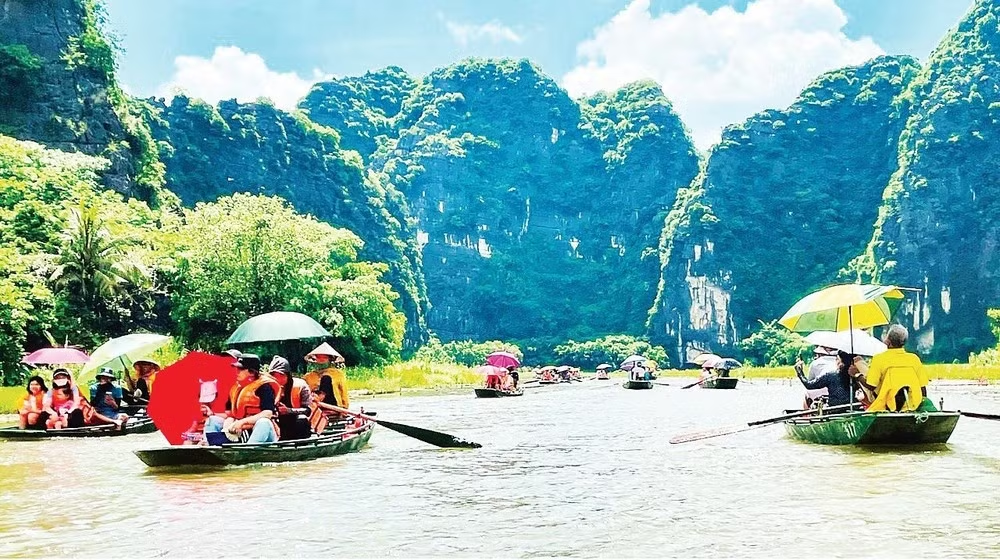
Slow travel also helps distribute visitor flows more evenly, reducing the risk of large crowds gathering over short periods and putting pressure on tourism infrastructure, resources, and the environment. These values are in line with Viet Nam’s orientation towards green and sustainable tourism development linked with the preservation of cultural identity, as highlighted in many resolutions and strategies, including Resolution No. 08-NQ/TW on developing tourism into a spearhead economic sector. Resolution No. 80-NQ/TW dated January 7, 2026, of the Politburo on the development of Vietnamese culture also emphasises the need to develop tourism products rich in cultural identity and experience, while promoting green tourism and reducing emissions.
These are important foundations that create favourable conditions for slow travel to develop in the long term. According to experts, slow travel in Viet Nam has made positive progress but remains in its early stages and needs synchronous investment to unlock existing bottlenecks. The biggest issue is the need to change a tourism development mindset that remains overly focused on quantity.
For a long time, many localities have used visitor numbers as a measure of tourism effectiveness, while paying insufficient attention to creating depth of experience to retain travellers. As a result, destinations often face overcrowding during peak seasons, receive large numbers of visitors who leave quickly, and risk commercialisation and the erosion of local cultural identity.
Pham Ha, Chairman and CEO of LuxGroup, said that in the context of global competition, the advantage of low prices will gradually fade. Instead, destinations that are able to tell stories, create experiences and preserve cultural and natural values will be the ones capable of generating lasting appeal among travellers.
The question is no longer how many visitors a destination can attract, but what value each visitor can bring. Therefore, Vietnamese tourism needs to shift from mass tourism to selective tourism, and from competing on price to competing through experience, identity, and storytelling.
It should be made clear that slow travel does not simply mean staying longer or moving at a slower pace. The core issue is creating profound experiences through connections with nature and local culture.
According to Pham Van Bay, Director of Vietravel’s Northern Retail Customer Centre, to keep pace with travellers’ needs, Vietravel has proactively developed a “new-generation” product portfolio integrating the dual criteria of ESG and LEI, with typical tours including Ben Tre – Net Zero Passport, Green Living with the Mekong, and domestic community-based tourism routes.
While ESG helps ensure responsible tourism towards the environment and community, LEI focuses on experiential value and emotional depth throughout the journey. This is considered a trend that will lead the market in the coming period.
To pave the way for slow travel, special attention should be paid to destination management in order to create green, attractive spaces for visitors; detailed planning is needed to avoid mechanical imitation and duplication of models; and local communities should be encouraged to participate directly in supplying the tourism value chain, thereby deepening cultural identity. Only then can slow travel help shape Viet Nam into a destination worth visiting and returning to.
![[Video] Viet Nam among Top three Asian destinations for return visitors](https://en-cdn.nhandan.vn/images/nyM650OGFWrOVWc-xajqN-rTZ68Rlmc1fiGJOhBRYHErj-E25MBpvJqrpphXazfrpe9t-fYCGuQU4CN0yXo3Rg/du-lich-vietnam.jpg.avif)









![[In Pictures] Nui Chua Rock Park: A million-year-old outdoor museum of landforms on the Khanh Hoa coast](https://en-cdn.nhandan.vn/images/nyM650OGFWrOVWc-xajqNz57td8idIAL_VG9puyG2UZEKOnmq1DVlT1--ZclbO3z2WBaWZhbt6O3e8kjPZqJMWkfEz7RO9qhcwg8o8LQFK8/ndo-br-cao-nguyen-da-moi.jpg.avif)