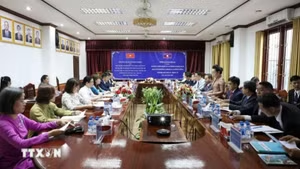
The issue was at the focus of a seminar on potential and measures to enhance Viet Nam – Russia tourism cooperation, held in Moscow by the Vietnamese Embassy in Russia on May 29.
The hybrid seminar brought together representatives from Vietnamese tourism authorities and localities, including Lao Cai, Da Nang, Hue and Quang Ninh, as well as Russian officials, tourism agencies, airlines and hospitality businesses from both countries.
Viet Nam welcomed more than 500,000 Russian visitors in the first four months of 2026, considerably surpassing the same period in previous years and signalling a boom in bilateral tourism.
Vietnamese Ambassador Dang Minh Khoi noted that over 600,000 Russian tourists came to the Southeast Asian country in 2025, nearly reaching the record level seen before the COVID-19 pandemic. The momentum has continued to accelerate in 2026, reflecting growing demand among Russian travellers for destinations in Viet Nam.
Nikita Kondratiev, Director of the Department for Multilateral Economic Cooperation and Special Projects under Russia’s Ministry of Economic Development, said that 25 Russian localities now have direct flights to Viet Nam’s large tourist destinations – the highest number recorded to date and still counting.
He also highlighted Viet Nam’s favourable visa policy for Russian citizens as a major competitive advantage compared with other destinations in Southeast Asia.
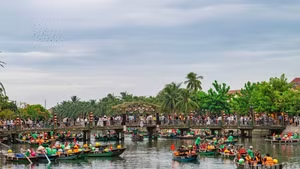
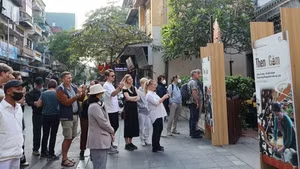
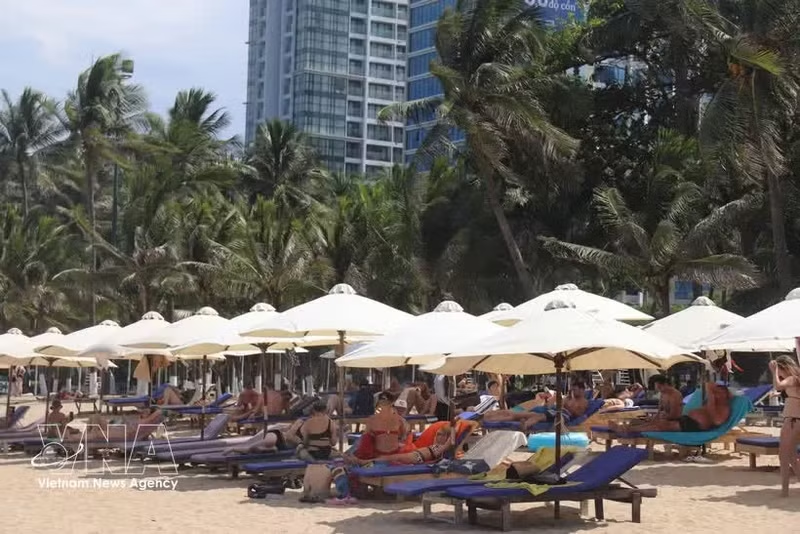
Khoi emphasised that Viet Nam is a magnet for Russian travellers thanks to its warm and beautiful beaches, favourable climate, impressive natural landscapes, diverse cuisine and rich cultural heritage. He added that the long-standing friendship between the two peoples, built on decades of cooperation since the Soviet Union era, remains an important factor in fostering hospitality and mutual affinity.
Deputy Director of the Viet Nam National Authority of Tourism Nguyen Thi Hoa Mai said destinations such as Ha Long, Nha Trang, Mui Ne, Phu Quoc, Hue and Da Nang are well positioned to welcome Russian tourists throughout the year, including both summer and winter holiday seasons.
Despite the positive outlook, participants acknowledged several challenges accompanying the tourism boom. Khoi pointed out the shortage of Russian-speaking tour guides as an issue requiring both short-term and long-term solutions, including expanded language training in key tourist destinations.
Payment connectivity was also identified as a pressing concern. The ambassador called for stronger cooperation between banks in the two countries to facilitate QR-code payments to make it easier for holidaymakers to book rooms and tours to Viet Nam right in Russia.
It is also necessary to organise more cultural events and tourism forums in each country, and launch more direct air routes connecting Russia's major airports with Viet Nam's major tourism destinations, he added.
Echoing the view, Mai proposed expanding direct air links through charter flights between Russia's remote regions and Viet Nam’s coastal localities, or further simplifying visa procedures.
Other participants suggested increasing market information sharing between tourism authorities and businesses. They also called on both sides' authorities to enhance coordination to deal with institutional bottlenecks in a timely manner.









![[In Pictures] Nui Chua Rock Park: A million-year-old outdoor museum of landforms on the Khanh Hoa coast](https://en-cdn.nhandan.vn/images/nyM650OGFWrOVWc-xajqNz57td8idIAL_VG9puyG2UZEKOnmq1DVlT1--ZclbO3z2WBaWZhbt6O3e8kjPZqJMWkfEz7RO9qhcwg8o8LQFK8/ndo-br-cao-nguyen-da-moi.jpg.avif)