hrough measures ranging from standardising green accommodation criteria to optimising resource use, the city is gradually turning environmental standards into a competitive advantage, with the aim of becoming an international destination.
The city at the forefront of the green transition
Following the merger, Da Nang has gained a vast development space with abundant resources, ranging from urban areas, beaches and cultural heritage sites to craft villages and mountainous ecosystems. This provides the city with an advantage in connecting its distinctive cultural, economic and tourism assets to develop highly competitive products. However, it also places increasingly greater demands on resource and environmental protection and sustainable development.
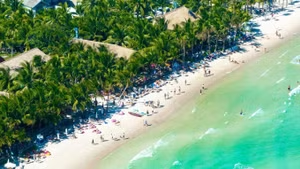
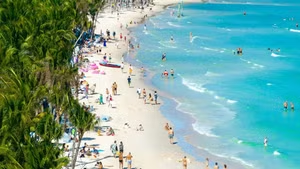
The Department of Culture, Sports and Tourism has coordinated with relevant sectors to implement a range of measures to protect the tourism environment, from waste separation at source at service establishments to waste collection at “hotspots” such as Son Tra Peninsula, Cu Lao Cham and the beaches. Community initiatives such as “Clean Up Son Tra”, “Clean Up Da Nang”, underwater clean-ups to remove rubbish and protect coral reefs, and “Exchange Waste for Green Plants” have also helped raise businesses’ and residents’ awareness of and responsibility for environmental protection. Notably, in August 2026, the city announced the Da Nang Green Stay Criteria for Green Tourist Accommodation Establishments, providing guidance for accommodation providers on energy efficiency, resource management and waste reduction, and gradually building green and sustainable business models.
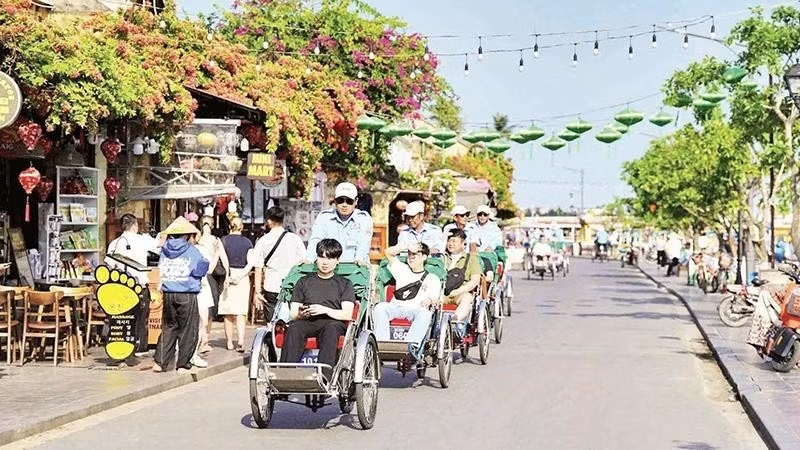
In the experiential tourism sector, Aphrodite cruise, An Di speedboat and Son Tra Marina have developed activities connected with nature, the sea and mountainous forests. Excursions to explore Da Nang’s waters promote “green tourism” and emphasise authentic experiences. Meanwhile, Go Green Da Nang offers a fresh perspective on the green transition through environmentally friendly transport solutions, contributing to the development of a sustainable urban lifestyle.
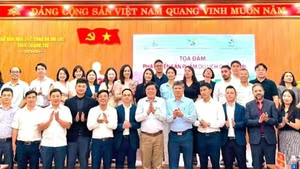
According to Nguyen Thanh Tam, General Director of Viet An Group Joint Stock Company, businesses cannot focus solely on revenue growth but must also build their own distinct identity and create positive value for the community. The economy and culture are inseparable. When businesses know how to preserve their identity and invest in human experiences, they also lay the foundations for sustainable development.
Sharing solutions for the green transition, Nguyen Thi Hoai An, Deputy Director of the Department of Culture, Sports and Tourism, said that businesses could start with practical measures suited to their financial capacity, such as saving electricity and water and reducing plastic waste, rather than making large investments from the outset. With more than 2,400 accommodation establishments and 67,000 rooms, this sector still has considerable scope to use resources more efficiently, improve service quality and enhance Da Nang’s tourism competitiveness. According to her, these measures are not only solutions for the accommodation sector but also provide a foundation for promoting the green transition throughout the entire tourism service chain.
Building on its green accommodation establishments, the city is strengthening links among travel businesses, transport providers, ecological destinations and local communities, while incorporating OCOP products, local specialities and indigenous culture into tourism itineraries. Through these efforts, the city is expanding connectivity and developing tourism in Tam Ky, Phu Ninh, coastal areas and island communes, while promoting community-based tourism, ecotourism and local cuisine.
Towards the goal of sustainable development
Resolution No. 26-NQ/TW dated August 22, 2026, issued by the Politburo, sets out the goal of developing Vietnamese tourism into a key economic sector in the new era, with an emphasis on high quality, smart and green development, innovation, rich cultural identity and high added value.
Identified as one of the country’s three tourism growth poles, Da Nang is making use of its special mechanisms and policies to strengthen its leading role in regional tourism. Key priorities include developing green products and services in line with standardised criteria; prioritising resources for upgrading waste and wastewater treatment infrastructure; reducing plastic waste; conserving heritage sites and landscapes; and researching the development of blue carbon credits at key tourist destinations, coastal areas and islands. These orientations need to be translated into practical programmes and measures.
In line with the national strategy and the city’s policy of renewing its growth model, Da Nang’s tourism sector has identified the green transition as a central and breakthrough task.
Statistics show that, in the first nine months of 2026, the city’s total retail sales of goods and consumer service revenue reached 235.91 trillion VND, up 25%, with growth of 35.7% recorded in September alone. Accommodation establishments served 15.86 million visitors, an increase of 26.4%, including 7.73 million international visitors, up 28.7%. Revenue from accommodation, food and beverage services, and travel services reached 56.973 trillion VND, an increase of 25.42%. Within the overall structure of socio-economic development, Da Nang continues to regard tourism and services as key sectors. Under the recently revised scenario, the city’s GRDP is projected to grow by 11–11.22% for the whole of 2026, meaning growth of 12.8–13.6% will be required in the final three months of the year. Services remain the mainstay of Da Nang’s current economic structure, accounting for more than 55%.
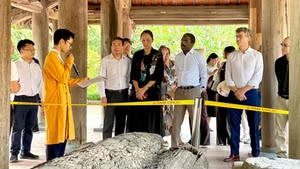
According to Vu Quang Dung, Deputy Director General of the Viet Nam National Authority of Tourism, as one of the leading tourism hubs and the “heart” of tourism in central Viet Nam, Da Nang needs to proactively make full use of the policy framework available for implementation. He proposed several groups of measures for Da Nang to incorporate into its roadmap for green and sustainable tourism development. Accordingly, Da Nang needs to assess and strictly control the “carrying capacity of destinations”. The city must not sacrifice the quality of its tourism environment in pursuit of purely quantitative growth in visitor numbers. It should establish quantitative indicators to control visitor numbers in ecologically sensitive areas such as Son Tra Peninsula and Cu Lao Cham, as well as internationally recognised cultural heritage sites such as Hoi An and My Son, in order to protect their distinctive values and ensure sustainable development.
Da Nang needs to restructure its tourism development space to achieve a better east–west balance, with a particular focus on expanding westwards through models such as community-based ecotourism villages and green rural tourism, bringing clean agricultural produce from farms into high-end service supply chains. As a pioneer in the “dual transition” - combining digitalisation with greening - the city needs to accelerate the application of digital data in green management and pilot energy audits and automated waste treatment at major hotel complexes along the coast and the Han River. At the same time, it should complete a comprehensive set of green tourism criteria for the remaining service sectors, accompanied by recognition mechanisms and appropriate budget-funded rewards for businesses that take the lead in committing to Net Zero.
Building on its position as one of the country’s three tourism growth poles under Politburo Resolution No. 26-NQ/TW, Da Nang continues to translate its sustainable development strategies into concrete action, aiming to become a comprehensive green tourism destination — from governance and operations to visitor experiences — and to elevate its brand on the international tourism map.