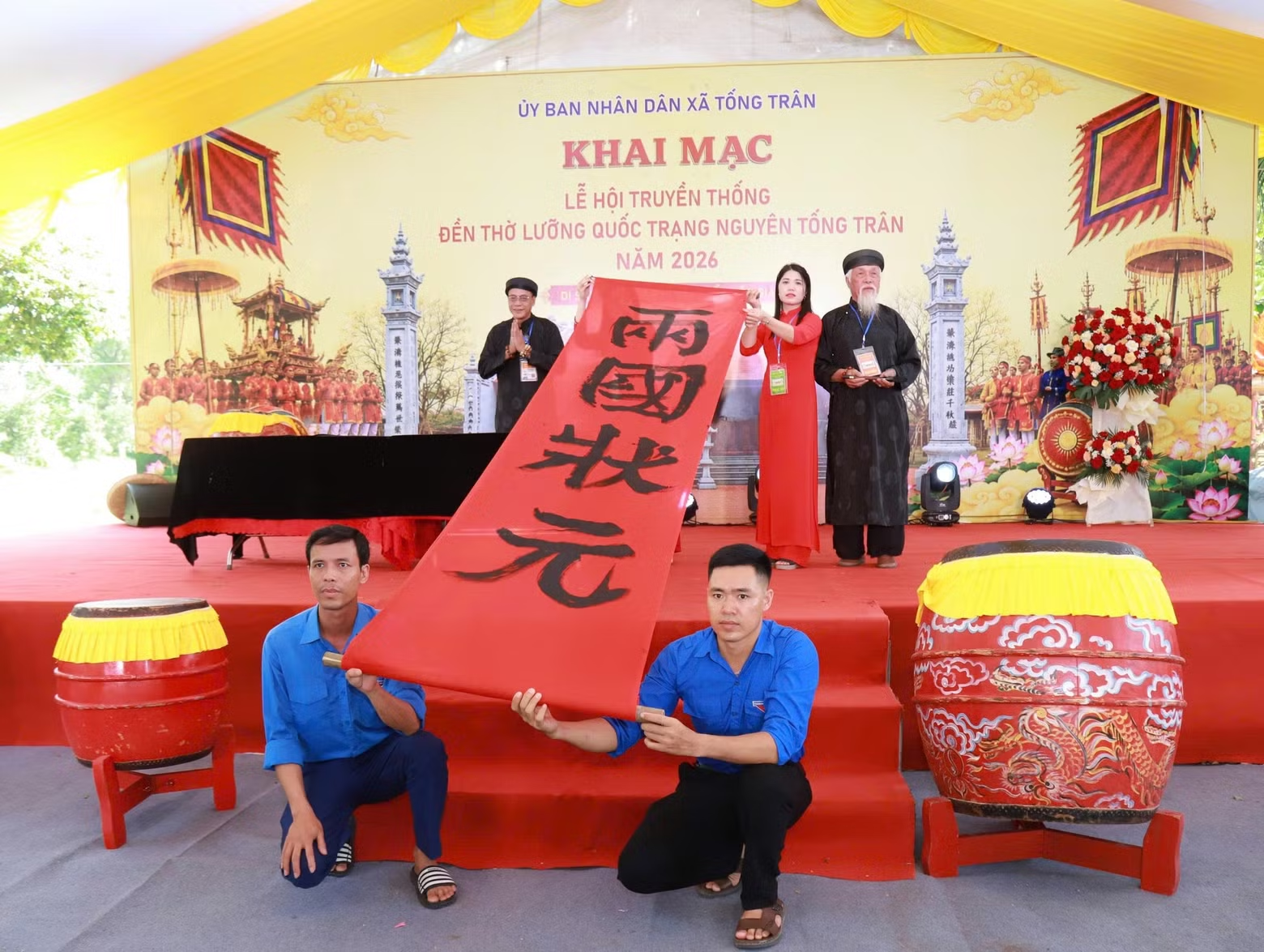
Every year, from the eighth to the 16th day of the fourth lunar month, the Tong Tran Festival is solemnly organised by the authorities and residents of Tong Tran Commune, Hung Yen Province. Its ceremonies include a water procession and a procession of inkstones and writing brushes, among others. These are the festival’s most distinctive features, setting it apart from other traditional festivals.
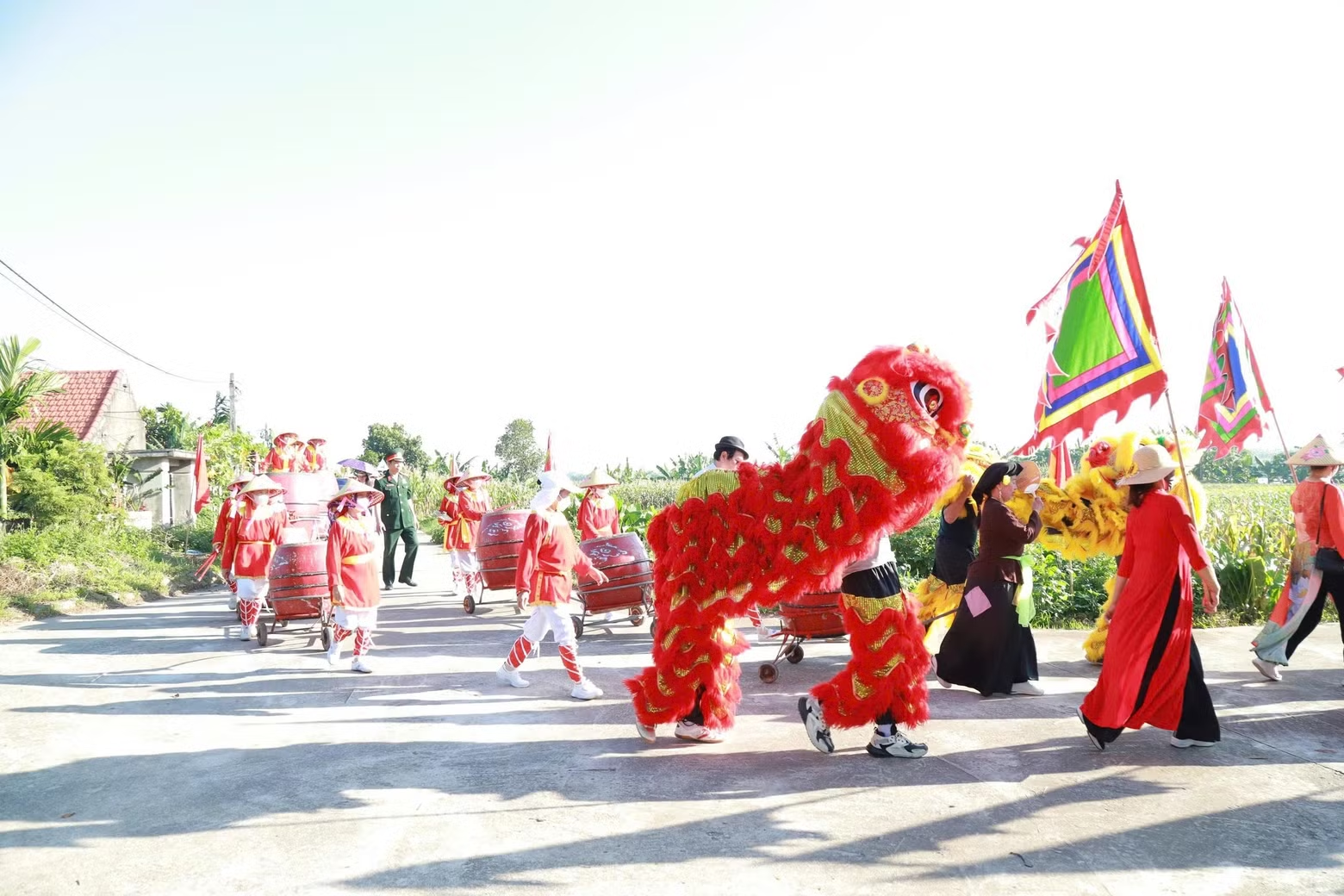
Early on the morning of the tenth day of the fourth lunar month, the procession sets off. Leading the procession is a flag-bearing group carrying the national flag and ceremonial flags, followed by ritual objects symbolising the prestige and sacred status of Tong Tran, the First-Rank Scholar of Two Kingdoms.
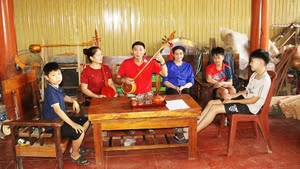
Behind the ceremonial objects comes a traditional eight-instrument ensemble, featuring a large drum, gong, cymbals, horn, string instruments, flute, wooden percussion instrument and wooden clappers. These are followed by an incense altar, a palanquin carrying a water jar with books and writing brushes placed above it, a red horse effigy and Tong Tran’s palanquin. Elderly men and women, villagers and visitors from near and far follow in the water procession.
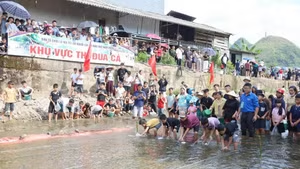
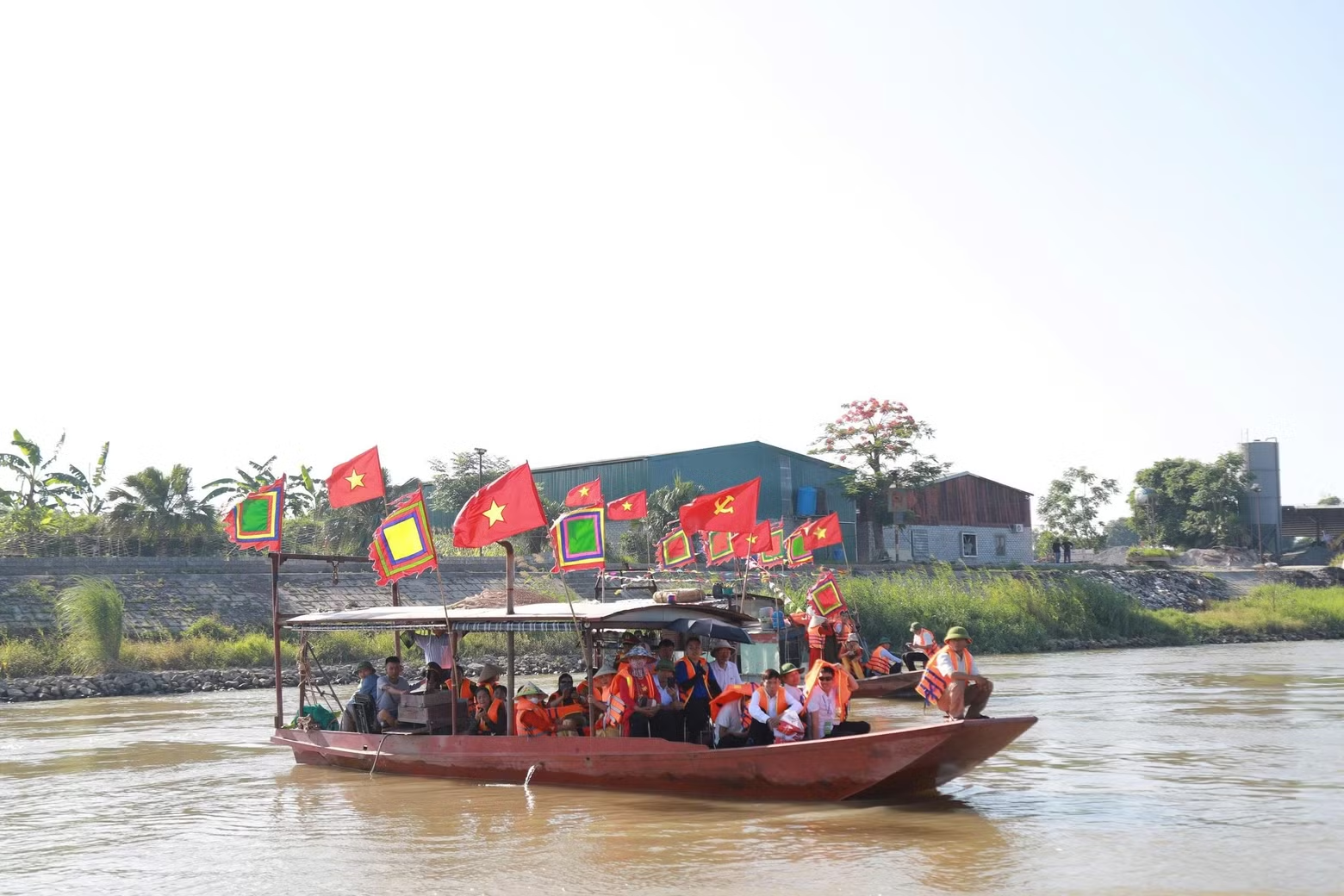
Upon reaching Gam Pagoda, the procession stops to rest, adjust ceremonial costumes and reorganise its formation before proceeding to the riverbank for the water-fetching ritual. At the Luoc River, the ceremonial objects and Tong Tran’s palanquin remain on the bank, while only the water-jar palanquin, the eight precious ceremonial objects and the flag-bearing group board the boats.
A large boat and five smaller boats are prepared on the river to serve the procession. The first boat carries a Buddhist monk, the palanquin containing the water jar, village elders and offerings to the water deity. The remaining boats carry participants in the procession. Upon reaching the Nong River junction, the boats stop for a ceremony honouring the water deity. Offerings include votive paper, incense, betel, wine, rice, salt and fruit.
After the ritual honouring the water deity and the recitation of prayers seeking permission to collect water, votive offerings and fruit are released into the river, followed by the water-fetching ceremony. Once the water has been collected, the procession returns along the same route to Tong Tran Temple for the ritual cleansing of sacred objects.
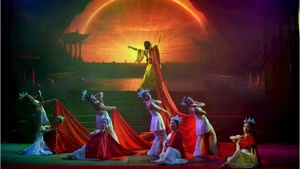
Alongside these distinctive ceremonies, the festival features traditional folk activities such as cockfighting, football, volleyball and rice-cooking competitions. In the evenings, villagers from different hamlets take part in antiphonal trong quan folk singing, while traditional cheo performances recreate the story of Tong Tran and Cuc Hoa.
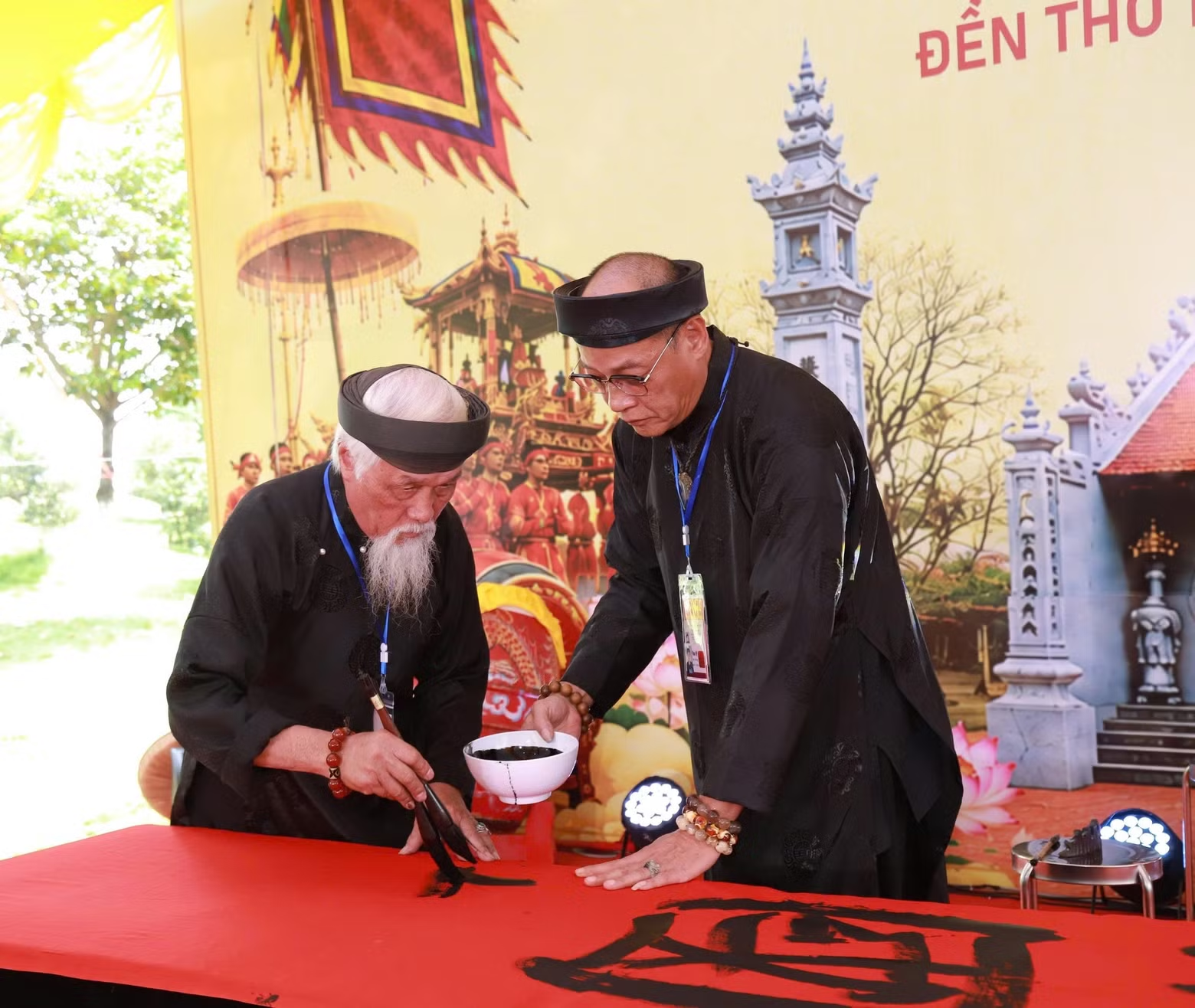
At the festival, Nguyen Thi Lan, a resident of Tong Tran Commune, shared that Tong Tran Temple is spacious, green, clean, beautiful and particularly peaceful. Above all, it honours Tong Tran, the First-Rank Scholar of Two Kingdoms, who was renowned for his intelligence, virtue, filial devotion and faithfulness.
“To encourage our descendants to follow his example, my family visits Tong Tran Temple every Lunar New Year to request calligraphy and pray for good health, happiness and academic success for our children. During examination periods in particular, parents in our extended family bring their children to the temple to offer incense and pray that they will pass their examinations and achieve success in life,” she said.
According to legend, Tong Tran, the First-Rank Scholar of Two Kingdoms, was an exceptionally talented Vietnamese scholar whose extraordinary intellect and noble character earned him a place in the country’s historical records and poetry.
Gifted with remarkable intelligence and a strong desire to learn from an early age, he travelled to the royal capital to sit the imperial examinations and achieved the highest scholarly distinction of Trang Nguyen, or First-Rank Scholar.
Beyond his literary achievements, he was also celebrated for his exceptional diplomatic abilities. During ten years serving as an envoy to the northern imperial court, he faced numerous challenges but consistently demonstrated eloquence and diplomatic skill, affirming his outstanding talent. Impressed by his abilities, the northern court bestowed upon him the title of "First-Rank Scholar of Two Kingdoms".
Tong Tran was also known as a devoted son and a faithful husband. The story of his enduring love for Cuc Hoa, his kind-hearted and hardworking wife, has become legendary. After resigning from his official position and returning to his hometown, he sought neither power nor privilege, instead opening a school that provided free education. Admiring his talent and virtue, local people honoured him as a model of moral character.
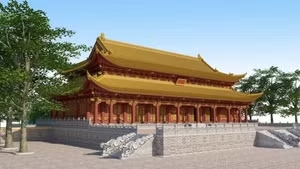
Today, Tong Tran Temple stands on elevated, open ground overlooking the Luoc River. Its formal name is Tien Can Linh Tu, while it is commonly known as Quan Trang Temple.
In recognition of its preserved cultural values, on February 3, 2021, the Minister of Culture, Sports and Tourism issued Decision No. 65/QD-BVHTT, adding the traditional Tong Tran Festival in Tong Tran Commune, Hung Yen Province, to the National List of Intangible Cultural Heritage.
To further preserve and promote these valuable traditions, Nguyen Minh Tien, Chairman of the Tong Tran Commune People’s Committee, said that Tong Tran Temple and its festival have become meaningful destinations for educating younger generations about the tradition of learning, patriotism, filial piety, gratitude and faithfulness.
He noted that the local authorities and residents have always been conscious of preserving national cultural identity. They have repeatedly invested in restoring and conserving Tong Tran Temple, maintaining its pleasant, clean and attractive surroundings, while stepping up communication and promotional activities through various mass media channels to welcome residents and visitors for sightseeing and worship.
In particular, with its natural scenery and local natural hot mineral springs, Tong Tran Temple and its festival are expected to become a major attraction in the development of cultural and spiritual tourism combined with ecotourism in Hung Yen Province.