The Government's Strategy for the Development of Viet Nam's Cultural Industries to 2030, with a vision to 2045, recognises heritages as an important resource for economic development. The challenge is no longer simply how to preserve the heritages, but how to transform them into economic assets without compromising their unique and authentic values.
Transforming cultural values to unlock cultural capital
A festival, a brocade pattern, a piece of silk or a ceramic vase is far more than a traditional handicraft product. Behind each lies a wealth of resources, including indigenous knowledge, craftsmanship, collective memories, stories about local places and people, and cultural symbols. Together, these constitute a form of capital accumulated by communities over generations.
According to Dr Nguyen Thi Xuan Nga from the Institute of Social Sciences of the Central and Central Highlands Region, transforming cultural heritage into an economic asset is essentially a process of capital conversion. More specifically, it involves turning cultural capital, shaped by a community's history and creativity, into social capital, brand value and economic capital.
This process can be understood as a virtuous cycle: heritage creates identity; identity generates distinctiveness; distinctiveness creates market value; market value generates income and employment; income provides incentives for preservation; and preservation, in turn, enables heritage to continue generating new value.
To build an economic ecosystem around cultural heritage, many localities, craft villages and businesses have changed their approaches and practices, creating livelihoods for local residents while generating substantial economic benefits.
Transforming cultural heritage into an economic asset is essentially a process of capital conversion. More specifically, it involves turning cultural capital, shaped by a community's history and creativity, into social capital, brand value and economic capital.
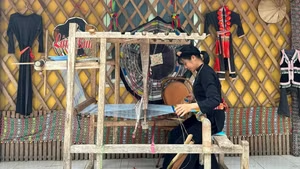
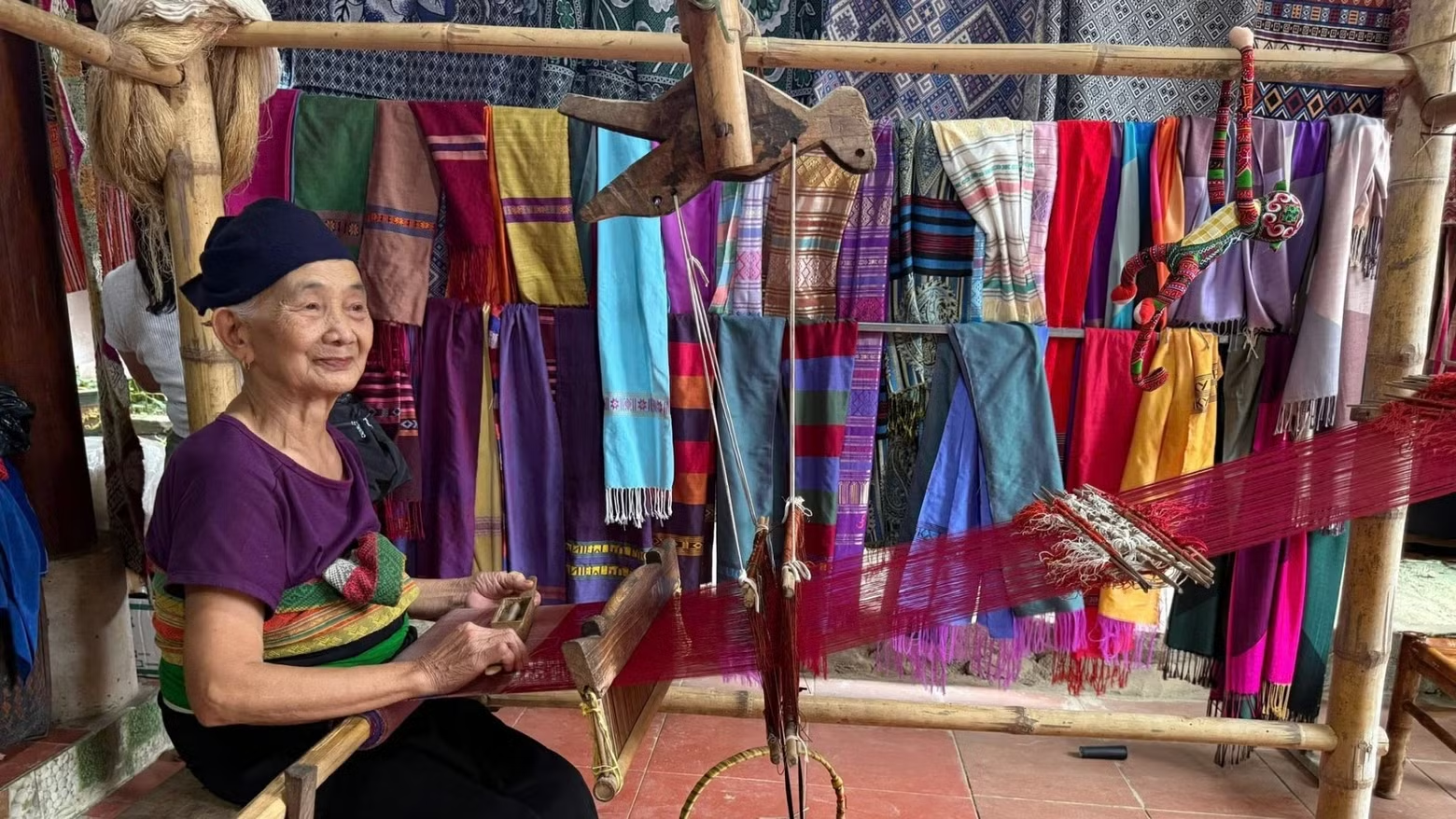
One example is My Nghiep brocade weaving village in Khanh Hoa Province, renowned for its traditional weaving craft. The village's cultural capital lies not only in its textiles but also in its distinctive patterns, colours, weaving techniques and traditional knowledge associated with Cham culture. These highly recognisable characteristics are difficult for industrially manufactured textiles to replicate.
Recognising this advantage, many local businesses have begun designing products tailored to market demand. Traditional woven fabrics have been transformed into scarves, handbags, wallets, tablecloths, blankets, rugs and fashionable clothing, all of which have proved popular with customers.
By preserving Cham cultural identity while adapting the functions, designs and marketing approaches of their products, local producers have expanded their markets. Several products from My Nghiep village have now received One Commune One Product (OCOP) recognition and are available on e-commerce platforms.
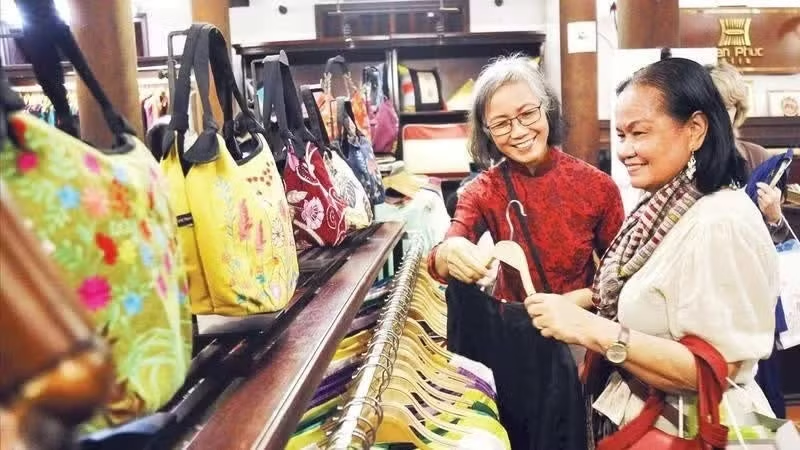
In recent years, Van Phuc silk village in Ha Noi has stepped up the application of technology to transform cultural values into greater economic value. By developing an ecosystem linking traditional crafts with tourism, commerce and design, Van Phuc attracts tens of thousands of international visitors each year.
Tourists visit Van Phuc not only to shop but also to discover engaging stories brought to life through vivid demonstrations of artisans at work and their traditional weaving techniques.
A Creative Design Centre has also been established in the village to connect traditional craftsmanship with contemporary designs, showcasing products to visitors while introducing them to domestic and international business partners.
In a traditional craft village, when handicrafts are sold only on a small scale, their economic value is largely confined to the products themselves. However, by incorporating modern designs, investing in branding, creating experiential spaces, developing tourism and e-commerce, and expanding into international markets, the economic value generated from heritage can increase many times over.
Creating added value from heritage does not necessarily mean producing more. Sometimes, it means gaining a deeper understanding of heritage and organising the value chain surrounding it more effectively.
In other words, it is essential to tell the stories behind heritage so that consumers understand that the products they use are made using centuries-old techniques, handcrafted by individual artisans and imbued with the distinctive characteristics of a particular cultural region.
How do local communities benefit from heritage?
The growing economic value of cultural heritage is truly meaningful only when it delivers fair benefits to those who sustain it, including artisans, craftspeople and workers involved in the value chain. They create heritage, possess traditional skills, preserve crafts, safeguard indigenous knowledge and pass them on to future generations.
An evident shortcoming is that while some heritage sites have become tourist destinations and traditional local cultural products have inspired creative and commercial ventures, the economic benefits do not always reach the original creators and custodians of that heritage.
When communities merely supply the "cultural raw materials" without sharing in the benefits, the commercialisation of heritage essentially amounts to cultural exploitation rather than cultural development.
According to Dr Tran Kim Ba of the Viet Nam Academy of Social Sciences, communities that create and sustain heritage must be recognised as economic stakeholders in heritage development. The most direct benefit is income. Artisans can earn money from selling products and teaching traditional techniques, while households can develop accommodation, catering and product transportation services. Young people within these communities can find employment in design, communications, tourism management, e-commerce and creative industries.
Turning heritage into an economic resource must begin with retaining those who practise traditional crafts and providing incentives for them to remain committed to preserving and developing their local culture. At the community level, benefits can also be generated through investment in infrastructure, education, cultural spaces and public services.
Craft Link is a non-profit social enterprise operating on fair-trade principles, supporting traditional craft villages in cultural revitalisation, handicraft development and improving community incomes.
The organisation assists ethnic minority artisan groups with product development, design, marketing and market expansion, while seeking to improve producers' livelihoods.
Its projects in Lung Tam craft village in Tuyen Quang Province, Hoa Tien in Nghe An Province and Pa Co in Phu Tho Province, among others, are helping local residents revive and preserve traditional weaving and embroidery techniques, earn a sustainable living and continue creating new cultural values.
For cultural resources to become genuine economic assets without losing the essence of heritage, local communities must have a secure position within the value chain.
Heritage should not be treated as a source of cheap raw materials for designers or businesses to exploit. Instead, local people must be involved in activities such as research, design and product testing.
Communities that create and sustain heritage must be recognised as economic stakeholders in heritage development. The most direct benefit is income. Turning heritage into an economic resource must begin with retaining those who practise traditional crafts and providing incentives for them to remain committed to preserving and developing their local culture. At the community level, benefits can also be generated through investment in infrastructure, education, cultural spaces and public services.
According to Y Duh Eung, who runs a traditional products business in Jun Hamlet, Lien Son Lak Commune, Dak Lak Province, community voices must be respected in decisions concerning the use of cultural symbols, with clear agreements on copyright and profit-sharing.
Transparency throughout the value chain requires the disclosure of product selling prices, production costs, payments to artisans and the proportion of revenue reinvested in the community.
In branding and intellectual property protection, heritage products need distinctive identifiers, clearly defined quality standards and traceability codes. For traditional products, patterns, weaving techniques and artisans' knowledge represent the most valuable and distinctive assets that must be protected.
When a traditional craft gains market value, the skills of local people should be reassessed and properly valued. A traditional technique can become a capability for creating high-value products.
Artisans can move beyond simply preserving traditional crafts to become creators in their own right, earning decent incomes and gaining greater social recognition. They can also serve as role models who inspire younger generations to learn traditional crafts and remain connected to their heritage, rather than leaving their communities in search of other employment.