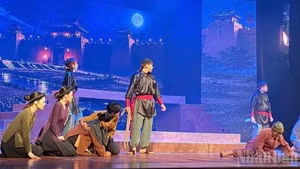
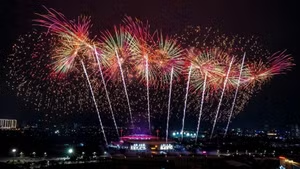
According to the Ministry of Culture, Sports and Tourism, a total of 406 programmes and activities have been prepared nationwide, most of them focusing on culture and the arts. All 34 provinces and cities have issued implementation plans. Authorities at all levels have moved swiftly, determined to make a lasting impression in the inaugural year.
The overarching objective is to encourage people to actively participate in, create and enjoy cultural activities, while identifying and replicating successful models and effective practices that contribute to strengthening national soft power.
At a nationwide online conference on October 12, Secretary of the Party Central Committee and Deputy Prime Minister Pham Thi Thanh Tra stressed that activities should not simply be organised for people to watch, but should enable them to participate directly and help shape the celebrations themselves.
This requirement is particularly significant as the new two-tier local administration system has been in operation for more than a year. Following administrative restructuring, many communes and wards now cover larger areas and serve bigger populations, bringing together communities with different customs and ways of life.
A culinary competition among villages formerly belonging to different communes, or an exchange featuring gong performances, Then singing or Don ca tai tu (southern amateur music) among residential communities, can provide natural opportunities for people to understand one another and strengthen their sense of belonging to their newly formed communities.
Such gatherings also give commune-level authorities opportunities to listen to residents and reinforce public trust in local government.
To ensure that the celebrations have a lasting impact on society, the Prime Minister's Directive No. 35/CT-TTg, dated September 30, 2026, requires provincial and commune-level authorities to review and select at least one representative cultural product, activity, story or space for promotion, linking these initiatives with tourism stimulation and the development of cultural industries.
In particular, each commune and ward must identify at least one suitable activity or model to maintain and develop beyond Viet Nam Culture Day.
This is a crucial point. When folk singing clubs meet regularly, or traditional dishes are presented through compelling stories that encourage visitors to stay longer, they demonstrate that culture remains alive within communities and is beginning to generate tangible value.
However, for such models to be sustainable, their selection must be based on the needs and consensus of local residents themselves.
Regarding the right to enjoy culture, National Assembly Resolution No. 28/2026/QH16 stipulates that employees are entitled to a fully paid day off on November 24. It also allows free or reduced admission to public cultural and sports facilities on that day.
More than 80 events nationwide will offer free admission or discounted tickets, while mobile film screenings will bring cinema to remote and disadvantaged areas, border regions and islands.
Meanwhile, the Viet Nam Digital Culture Map platform (cmap.vn), launched on November 1, enables people to search for cultural, sporting and tourism events in their localities.
Beyond checking event schedules, users can also introduce activities organised by their own clubs, submit suggestions and provide feedback after attending events.
Such feedback helps management agencies identify which activities are well received and which remain largely ceremonial.
At the same time, community digital technology teams should proactively assist older people and those unfamiliar with smartphones, ensuring that no one is excluded from the celebrations simply because they lack digital skills.
Eighty years ago, at the first National Cultural Conference on November 24, 1946, President Ho Chi Minh affirmed that culture must light the way for the nation.
To fulfil that role, culture must first be present in people's everyday lives.
The achievements of this inaugural year will help shape how people embrace, practise and enjoy culture in the years ahead.
When November 24 becomes an occasion that people look forward to each year, actively participate in and feel a genuine part of, culture's intrinsic strength will be nurtured within communities themselves, becoming an enduring resource for the country's development.