Maintaining high economic growth
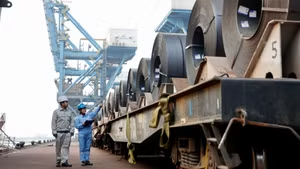
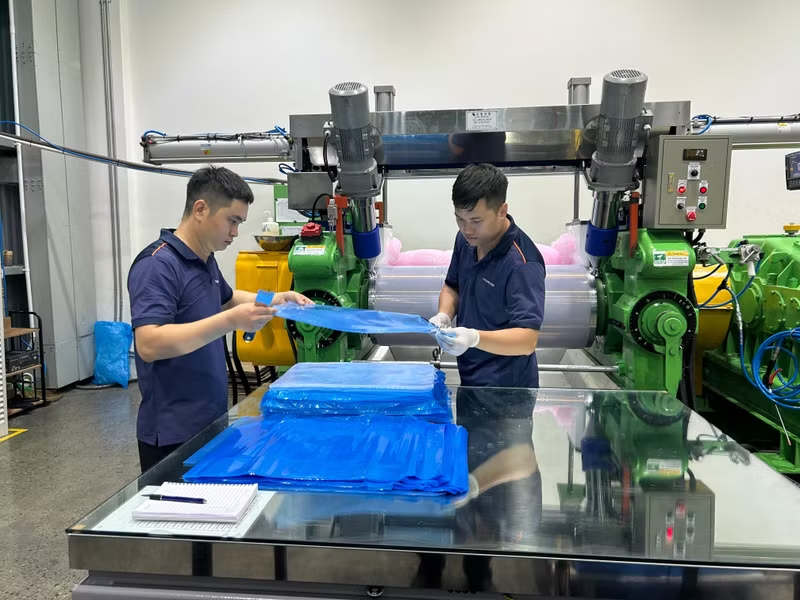
In the first nine months of 2026, Hung Yen's gross regional domestic product (GRDP) was estimated to have grown by 11.22%. Industry continued to be the main driver of economic growth, with the industrial production index (IIP) rising by 15.7%.
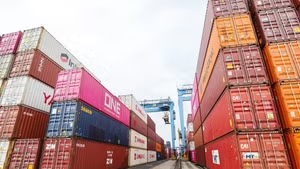
Trade, services, import-export activities and state budget revenue all recorded substantial figures. Total retail sales of goods and consumer service revenue exceeded 223 trillion VND, up 17.5% year on year. Import-export turnover reached 19.7 billion USD, an increase of 29.61%, while total state budget revenue stood at 52 trillion VND, equivalent to 62.8% of the annual estimate.
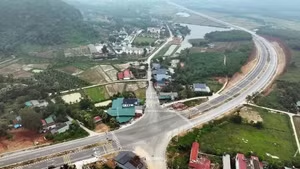
Hung Yen has been implementing measures to accelerate site clearance and remove bottlenecks in order to promote and attract investment in the construction and development of industrial parks and clusters. So far, more than 1,000 hectares have been cleared, creating a pool of cleared land for investors and speeding up the launch of several key industrial park, industrial cluster and transport projects. These efforts aim to expand the province's development space and attract investment capital.
During the nine-month period, the province attracted 238 new investment projects and recorded 154 instances of existing projects increasing their registered capital. Total newly registered and additional investment capital reached 68.18 trillion VND and more than 1.9 billion USD. This brought the total number of investment projects in Hung Yen to 4,237, including 3,255 domestic direct investment (DDI) projects and 982 foreign direct investment (FDI) projects, with total registered investment capital of approximately 845 trillion VND and more than 19 billion USD.
Hung Yen's investment environment has continued to improve. The province has approved a scheme to improve its Public Administration Reform Index (PAR INDEX), Satisfaction Index of Public Administrative Services (SIPAS) and Provincial Governance and Public Administration Performance Index (PAPI) for the 2026–2030 period. It has also introduced regulations for assessing performance capacity in implementing the province's administrative reform indicators.
The Provincial Competitiveness Index (PCI) remains in the upper tier of provincial rankings, with its transparency sub-index ranked first nationwide and its fair competition sub-index ranked second. The province ranked 14th out of 34 provinces and centrally governed cities in the PAR INDEX, while its SIPAS ranking placed it among the country's top four. These results reflect positive changes in the service attitude and commitment of authorities at all levels to working alongside the public.
A new development space
Hung Yen Province has announced its Provincial Plan for the 2021–2030 period, with a vision to 2050. The plan aims to transform the province into a dynamic economy that grows rapidly and sustainably on the basis of science and technology, innovation, digital transformation, and green development by 2030. It also seeks to ensure energy security, social harmony, preserve and enhance cultural identity, and protect the ecological environment.
The plan calls for the development of a synchronised, modern infrastructure system; the efficient management and use of resources and environmental protection; and stronger capacity to prevent and adapt to climate change. It also prioritises comprehensive development across cultural and social sectors; and improvements in people's overall quality of life. National defence and security will be firmly maintained, while foreign relations and international integration will be expanded and made more effective.
The province aims to achieve average GRDP growth rate of 10–11%/year during the 2026–2030 period. GRDP per capita is expected to exceed 209 million VND by 2030, total GRDP to reach approximately 686 trillion VND, and the urbanisation rate to surpass 55%.
The economic structure is projected to comprise agriculture, forestry and fisheries at 8% of GRDP; industry and construction at 60%; trade and services at 27.5%; and taxes on products less subsidies on products at 4.5%. Hung Yen aims to become a modern industrial province and a centrally governed city before 2030.
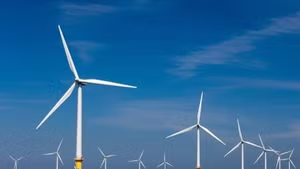
To achieve these objectives, Vice Chairman of the Hung Yen Provincial People's Committee Nguyen Le Huy said the province had identified five main development pillars: developing economic and social infrastructure in a coordinated manner, with priority given to transport infrastructure, industrial parks and clusters, and economic zones; developing clean, ecological, and high-tech agriculture, while organising large-scale commercial production; developing urban centres, trade, tourism, and services; developing clean energy, including wind power, liquefied natural gas (LNG)-fired power and green hydrogen; developing the marine economy through a modern, multi-industry and multi-sector economic zone model.
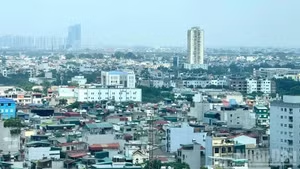
Hung Yen Province has also established a framework for organising socio-economic activities based on three economic zones, two development corridors, three longitudinal axes, and four transverse axes.
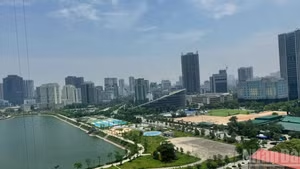
The three economic zones are as follows: the northern growth-driving zone occupies a strategic position at the south-eastern gateway to Ha Noi. It is envisioned as a centre for high-tech industry, urban development, services and logistics, as well as a trade gateway linking the capital region with the coastal delta. It is expected to generate spillover effects that stimulate development across the province.
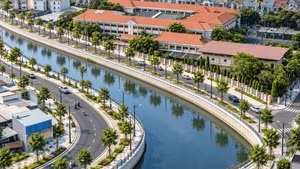
The central zone of the province lies at the geographical heart of the province's development space and occupies a strategic position connecting the northern growth-driving zone with the coastal zone. It will serve as the administrative, political, cultural, and educational centre, playing a role in coordinating, balancing, and spreading socio-economic development between the northern growth-driving zone and the southern coastal economic zone.
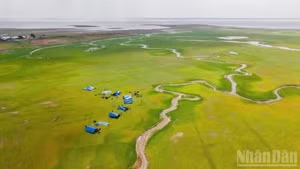
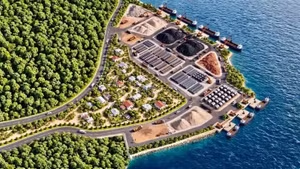
The coastal zone, located along the province's eastern and south-eastern coastline, is envisioned as an integrated marine economic region. Its key advantages include coastal terrain, abundant land, convenient transport links and the potential to develop seaports, economic zones, and renewable energy. It is expected to become a new strategic growth engine for the province, serving as a centre for integrated marine economic development encompassing the energy industry, manufacturing and processing, port logistics, coastal urban centres and services, and seaside ecological and resort tourism.
Hung Yen has outlined nine groups of solutions to implement the plan, focusing on investment capital; human resource development; environmental protection; science and technology development and digital transformation; policy mechanisms for development cooperation; the management, control, and development of urban and rural areas; the development of a modern, synchronised infrastructure system; the promotion of the marine economy development; and the development of the energy industry.