Tran Thi Bac from Tan Hung Commune, Hung Yen Province, shared her thoughts: “I am delighted that the traditional knowledge of cultivating and processing Hung Yen longan has been inscribed as a National Intangible Cultural Heritage. The wisdom passed down by our ancestors remains a crucial foundation for growers; every step—from pruning, canopy shaping, and fertilising to inducing flowering and timing the harvest—requires years of accumulated experience. A single mistake at any stage can immediately compromise the fruit's quality.”
The development of specialised longan-growing areas in Hung Yen has attracted an increasing number of visitors eager to experience the orchards firsthand. Pham Van Thanh, from Ha Noi, remarked: “Hearing stories about the ‘ancestral longan tree’ and the secrets behind traditional dried longan production, I clearly sense that each product embodies a unique cultural narrative. This culture lives on in every orchard, every processing kiln, and in the very hands of Hung Yen’s farmers—a legacy passed down through generations.”
While traditional knowledge forms the “soul” of this heritage, the application of science, technology, and modern production methods is breathing new life into the Hung Yen longan.
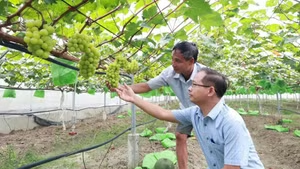
Tran Van My, Director of the Quyet Thang Specialty Fruit and Aquaculture Cooperative in Tan Hung Commune, stated: “To preserve the Hung Yen longan brand, we must first uphold the core values of the traditional craft. We therefore continue to apply the variety selection and cultivation techniques passed down by our forebears, while simultaneously implementing VietGAP standards and rigorous quality management to produce safe fruit that meets market demands”.
Tradition and technology complement each other, enhancing the value of this specialty longan and boosting its renown both domestically and internationally.
Currently, Hung Yen Province boasts nearly 6,000 hectares of longan orchards featuring many famous specialty longan varieties. Alongside preserving precious genetic resources, the province is expanding production areas that meet VietGAP and organic standards, establishing growing area codes, strengthening production-to-consumption linkages, and applying science and technology to increase product value.
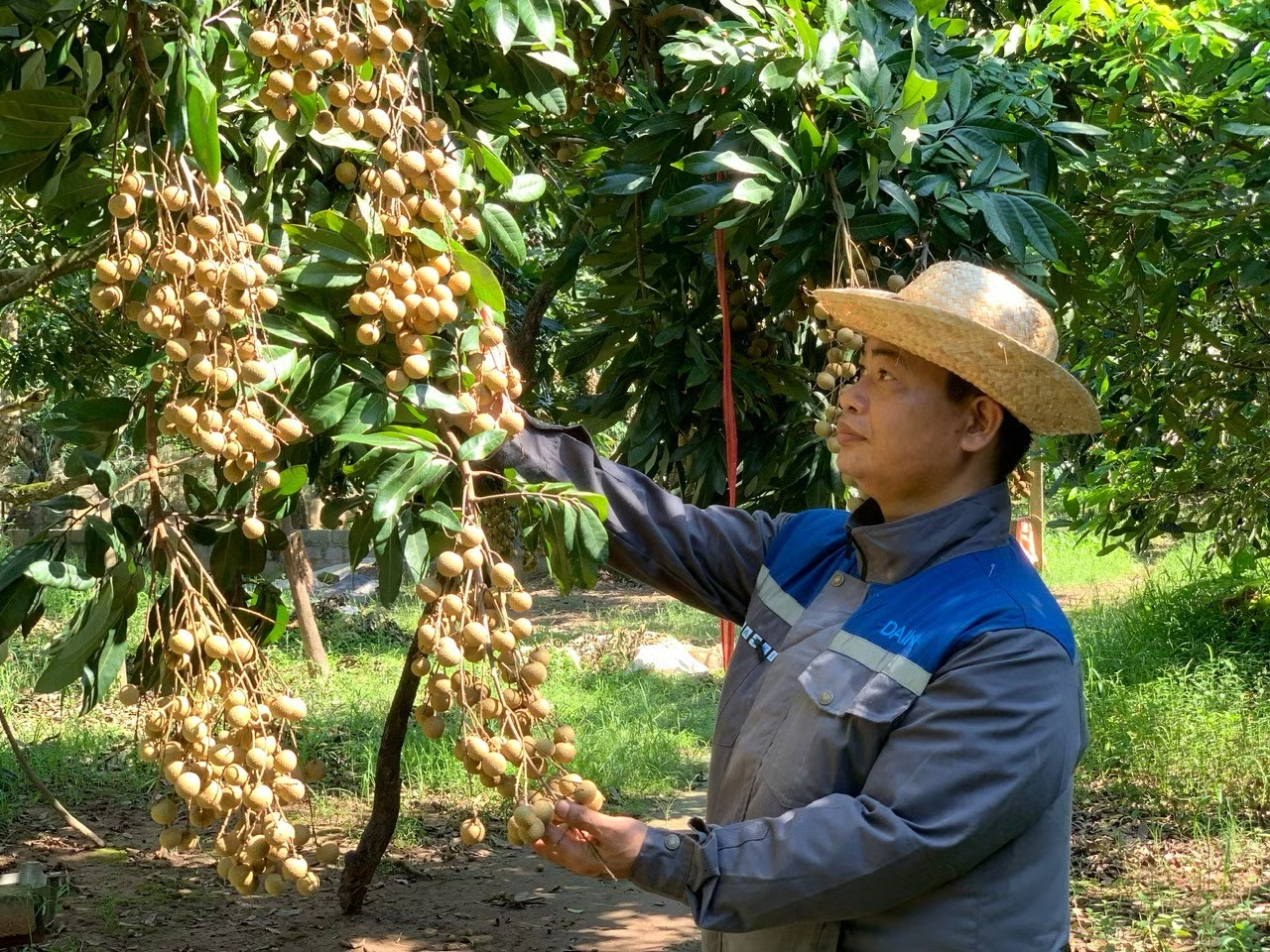
Alongside expanding raw material cultivation areas, deep processing is emerging as a crucial strategy to enhance the value of Hung Yen longan. Currently, Hung Yen province is home to approximately 400 households engaged in longan processing—specifically the production of dried longan pulp—concentrated in communes such as Tan Hung, Khoai Chau, An Thi, Tien Hoa, and Hiep Cuong.
Dried longan pulp is not merely a dried fruit product; it is the culmination of meticulousness, craftsmanship, and experience passed down through generations. According to veteran producers, creating a delicious batch requires the careful selection of standard-compliant fruit: thick, sweet, and aromatic flesh, free from pests or disease.
After harvesting, damaged fruit is discarded, the pulp is carefully removed, and the fruit is placed in drying ovens. Each drying cycle lasts an average of 24 hours, with temperatures precisely regulated to ensure the pulp achieves a distinctive cockroach-wing-brown hue, a firm yet chewy texture, and a rich, fragrant flavour.
On average, 9 to 10 kilograms of fresh longan yield 1 kilogram of finished dried pulp. The fruit is processed into a variety of products, including standard dried longan, premium pulp, and longan stuffed with lotus seeds. Many producers have achieved 3-star or 4-star OCOP (One Commune, One Product) certification, marking a significant shift in agricultural processing from small-scale operations to professional, branded enterprises capable of reaching international markets.
Dao Manh Huan, Deputy Director of the Hung Yen Department of Culture, Sports and Tourism, stated that the value of Hung Yen longan is determined not only by yield and productivity but also by the product's cultural narrative, origins, and unique identity. Therefore, heritage preservation is not merely about safeguarding memories of the past but also about investing in the future. Hung Yen province aims to leverage the value of the “Knowledge of growing and processing Hung Yen longan” by linking it to brand building and tourism development.
This involves creating experiential routes that connect specialty longan-growing regions, the ancestral longan tree, and villages dedicated to processing dried longan pulp. Such tourism products help promote the local image and allow visitors to directly engage with the cultural values preserved within every orchard and every stage of the processing craft.
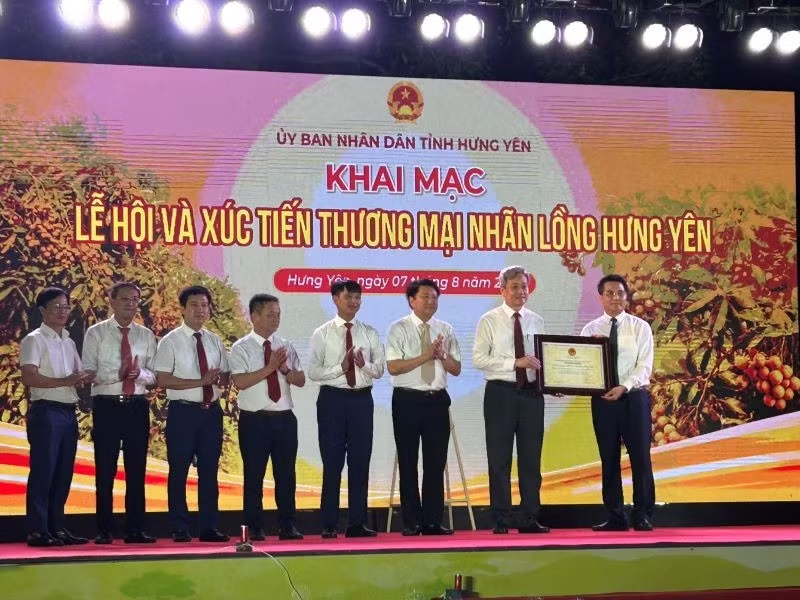
On January 6, 2026, the Ministry of Culture, Sports and Tourism issued Decision No. 19/QĐ-BVHTTDL, officially inscribing the “Knowledge of growing and processing Hung Yen longan onto the National List of Intangible Cultural Heritage under the categories of folk knowledge and traditional craftsmanship.
This serves as a crucial foundation for Hung Yen province to continue preserving and promoting this heritage, thereby spreading the province's unique cultural values more widely both domestically and internationally, while also preparing a dossier to propose UNESCO inscription on the Representative List of the Intangible Cultural Heritage of Humanity.