
Explaining the rise in imports, Hien said a notable factor was the increased import value of electronics, computers, components and equipment. Higher global raw material prices, particularly inputs for electronics and semiconductor production, have pushed up import values, with prices of some chips and solid-state drives (SSDs) rising by 300-500%.
Businesses have also increased inventories to ensure production amid growing demand for technology products, particularly as the rapid development of artificial intelligence (AI) has driven demand for materials and components. Some firms have doubled their inventory coverage from around six to 12 weeks, while in one case inventory value rose from 100 million USD to 700 million USD.
The import increase also reflects expanded production by electronics and semiconductor firms and businesses participating in Viet Nam-based export supply chains. Hien cited Samsung’s 1.5-billion-USD investment expansion in Thai Nguyen province, Intel’s relocation of part of its supply chain from Costa Rica to Viet Nam, and the expansion and upgrading of BYD’s plant in Phu Tho province.
She noted that the import growth was not driven solely by domestic demand but was also linked to production, investment and expanded export capacity. This factor should be viewed in the broader context of trade developments, particularly as manufacturing and exports enter the year-end peak season.
To improve the trade balance, the Ministry of Industry and Trade is implementing measures focusing on mechanisms and policies, market development, and support for businesses. Maintaining export growth in the final months of the year is considered key to narrowing the deficit.
Total trade turnover reached 888.02 billion USD in the first nine months, up 30.4% year-on-year, with exports rising 24.5% and imports 36.7%. The period recorded a trade deficit of 19.42 billion USD.
Hien said the nine-month figure provides grounds to expect the trade deficit for the full year could fall below 10 billion USD, provided export growth is sustained in the fourth quarter.
According to the Ministry of Finance’s National Statistics Office, the import-export turnover reached 117.69 billion USD in September, up 7.3% from the previous month and 42.4% year-on-year. The country recorded a trade surplus of 1.27 billion USD in September, ending nine consecutive months of deficit.
In the longer term, the Agency for Foreign Trade will focus on strengthening Vietnamese enterprises, increasing localisation rates and raising the domestic value added of products. Deeper participation in supply chains will help retain more value in the domestic economy, providing a more sustainable foundation for export growth and an improved trade balance, added Hien.




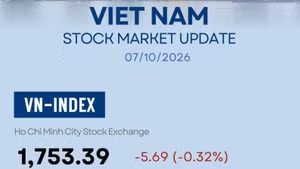

![[Infographic] VN-Index rises 0.34% on October 6](https://en-cdn.nhandan.vn/images/j0QNt7m_5iy1OXpnUKiwG61aYhTv_B140GWhfriF26IM-hJLr-YyB-igcHJ7cLRKshCXmgI3hJXGVRYJMfGPzA/chung610-8460.jpg.avif)