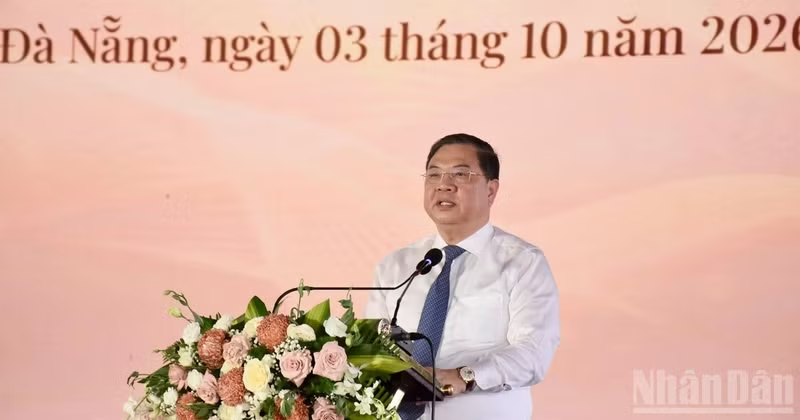
Politburo Member and Permanent Deputy Prime Minister Pham Gia Tuc attends the event and delivers keynote remarks.
Addressing the event, Permanent Deputy Prime Minister Pham Gia Tuc stressed that the Politburo, the National Assembly, and the Government had in recent years focused on leadership and direction, introducing numerous guidelines, special mechanisms, and policies to resolve difficulties and obstacles affecting long-delayed projects, particularly those involving land, investment, and assets.
According to the permanent deputy PM, data from 34 provinces and centrally governed cities, together with ministries and sectors, show that more than 5,000 projects nationwide are facing prolonged delays and unresolved difficulties. A review by the Steering Committee found that nearly 4,000 projects had been directed by ministries, sectors, and local authorities to undergo resolution, while more than 1,300 remained under consideration. The remaining 158 projects fall under the authority of central-level agencies.
The permanent deputy PM emphasised that unlocking 3.5 quadrillion VND in resources tied up in these more than 5,000 projects and putting them into productive and business activities would not only comprehensively address resource waste but also make a positive contribution to economic growth in localities and across the country.
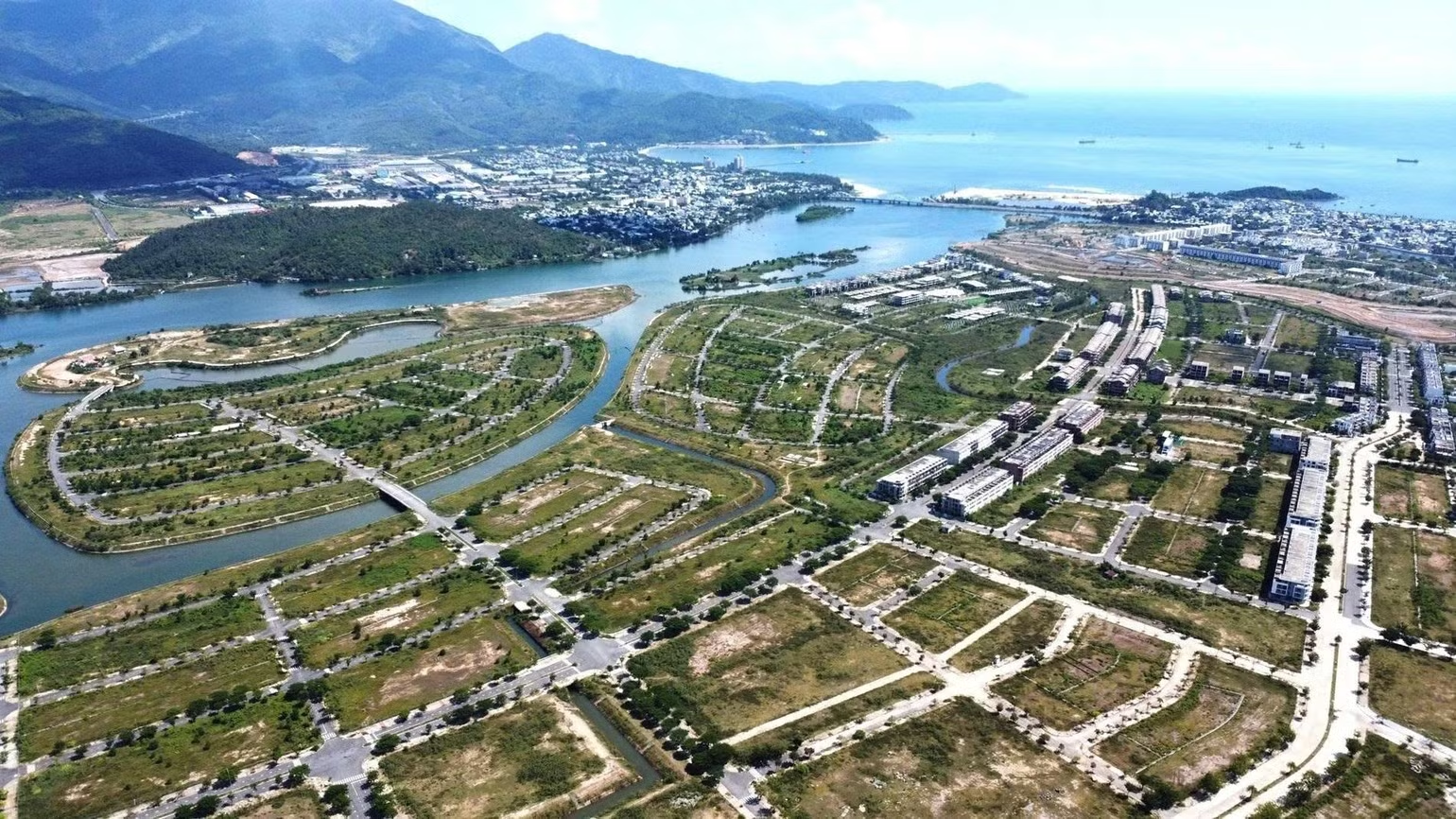
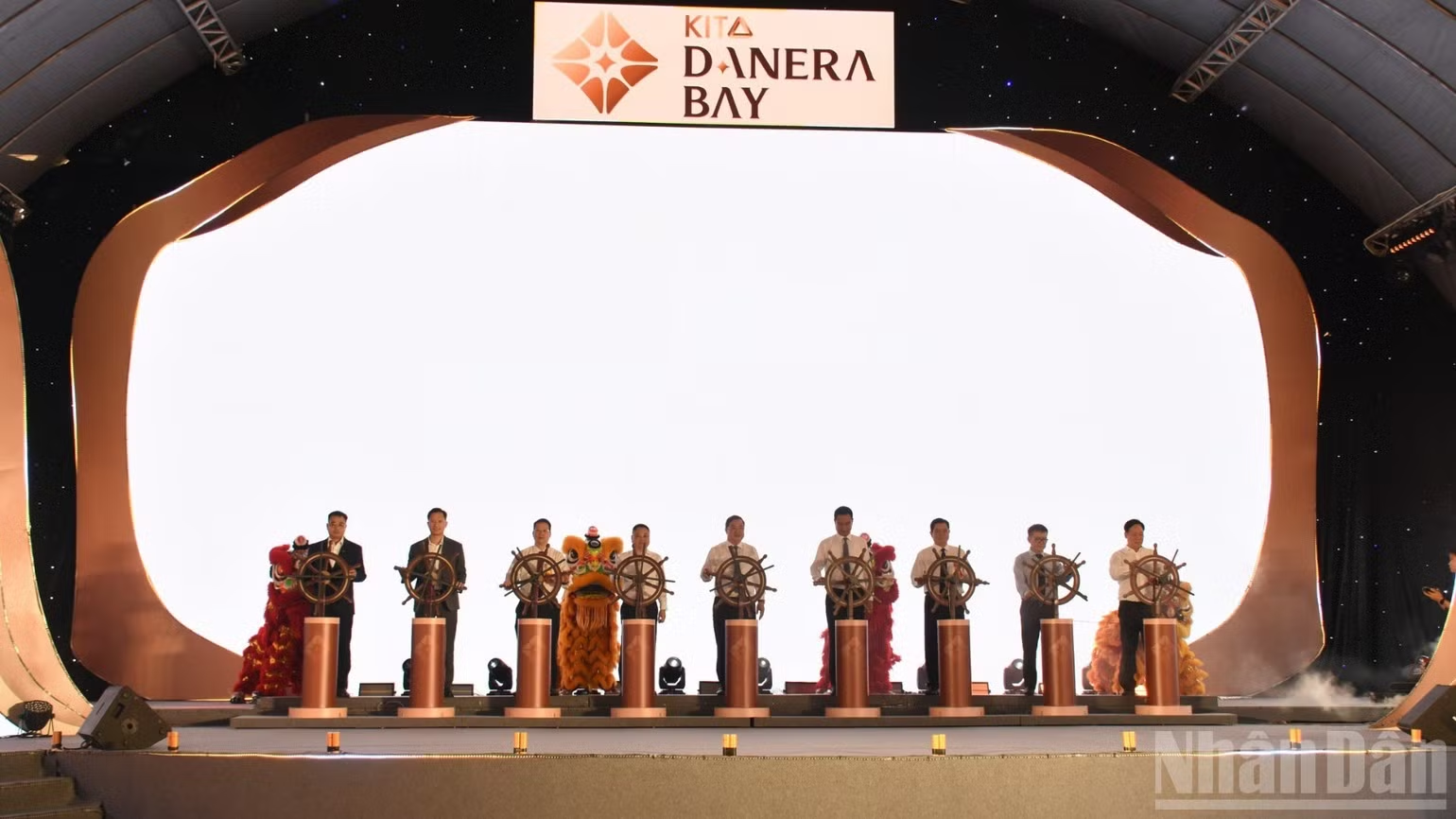
According to the permanent deputy PM, the restart of the Golden Hills City project marks a practical milestone in translating mechanisms and policies into action to resolve bottlenecks and unlock investment resources for development in Da Nang, as well as across provinces and cities nationwide.
“Our consistent approach is to resolutely address the waste of resources and resolve outstanding issues and obstacles in accordance with the law, while ensuring a balance of interests among the state, the people, and businesses,” Permanent Deputy PM Pham Gia Tuc stressed.
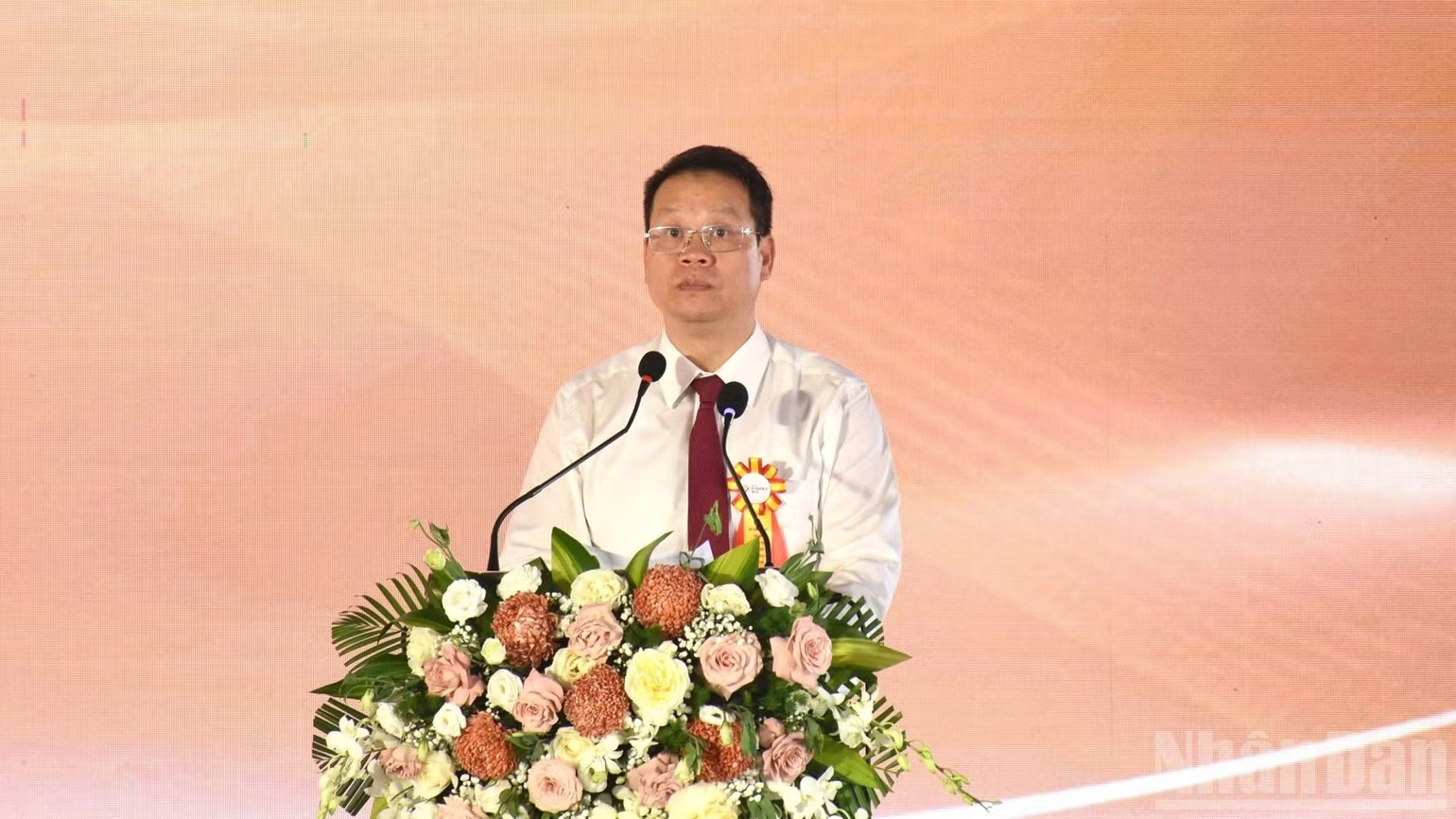
Permanent Deputy PM Pham Gia Tuc expressed confidence that, with the determination of Da Nang's leadership and the active involvement of the business community and investors, difficulties and obstacles affecting projects in the city would soon be resolved, allowing them to move forward with implementation.
According to Nguyen Manh Hung, Deputy Secretary of the Da Nang Party Committee and Chairman of the Da Nang People's Committee, the restart of the Golden Hills project is closely linked to the city's implementation of special mechanisms and policies adopted by the National Assembly to resolve difficulties and obstacles affecting long-delayed projects.
National Assembly Resolutions No. 29/2026/QH16 and No. 170/2024/QH15, together with the Government's guiding decrees, have provided a legal basis for the city to address land-related and investment obstacles, unlock resources, and enable projects to resume implementation in accordance with regulations.
To implement these mechanisms, the city has announced lists covering 356 projects and land-related cases in four phases. It has also issued implementation plans, assigned specific responsibilities and deadlines to relevant agencies, and continued to review and add eligible projects, hold discussions with investors, and direct the resolution of different groups of outstanding issues.
To date, the city has completed the adjustment of land-use terms in 206 cases involving land allocated for production and business purposes with long-term use rights — changing them to 50-year terms — completing this task ahead of schedule.
The restart of the Golden Hills project marks only the beginning of a new phase. The next crucial step is to translate progress in resolving institutional and procedural obstacles into tangible implementation on the ground.
The Golden Hills Eco-Urban Area project, invested in by Trung Nam Joint Stock Company and developed by KITA Group Joint Stock Company, has officially resumed following the resolution of prolonged obstacles. Covering more than 335 hectares, the project has a revised total investment of nearly 15.5 trillion VND.
It is among the projects benefiting from special mechanisms introduced under National Assembly and Government resolutions to resolve long-standing difficulties affecting projects in Ho Chi Minh City, Da Nang, and Khanh Hoa.