Located in Nanning, Guangxi Zhuang Autonomous Region, the Guangxi Arts University is one of the region’s arts education institutions with extensive exchange and cooperation activities with ASEAN countries, including Viet Nam.
In addition to nurturing artistic talent, the university places strong emphasis on researching, preserving and promoting traditional cultural values through exhibitions, performances, and international cooperation. A highlight is the Guangxi Museum of Ethnic Music, which showcases the richness and diversity of traditional music from China and Southeast Asian countries.
Vietnamese melodies in the heart of Guangxi
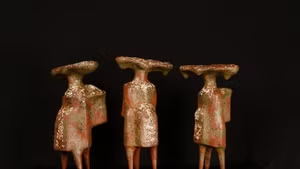
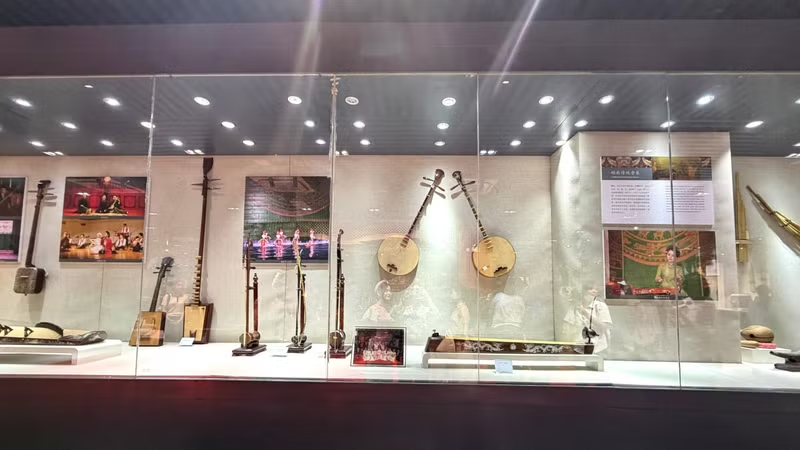
Established in June 2015, the Guangxi Museum of Ethnic Music currently houses more than 1,600 artefacts and collections, including traditional musical instruments, musical materials, and artefacts reflecting the rich musical life of ethnic groups in Guangxi.
The exhibition space is organised around a range of themes, from ancient musical instruments and traditional music of Guangxi to the musical cultures of Southeast Asian countries, enabling visitors to explore distinctive features and cultural similarities from across the region.
 and Central Highlands gongs are displayed at the museum. (Photo: Kim Linh)")
Notably, the Southeast Asian music exhibition area houses more than 50 Vietnamese musical instruments, including the "dan bau" (monochord), bronze drums, and Central Highlands gongs, along with many other traditional instruments. Each artefact not only introduces a particular form of art but also tells stories about the history, customs, and spiritual life of the Vietnamese people, helping to showcase Viet Nam’s distinctive cultural values to Chinese and international audiences. The presence of Vietnamese musical instruments at the museum also reflects the longstanding cultural links between communities on both sides of the border.
Art education — a bridge connecting young people of the two countries
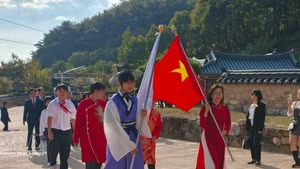
The Guangxi Arts University is not only a place for preserving and showcasing traditional musical values but also contributes to promoting Viet Nam-China cultural exchanges through educational, research, and artistic performance cooperation programmes.
The university currently has around 13,000 students, including approximately 90 international students from various countries, including Viet Nam.
Since it began admitting international students in 2008, the university has welcomed more than 100 Vietnamese students to study and conduct research. Their fields of study include music performance, music education, composition, choreography, and radio and television broadcasting, as well as several other disciplines.
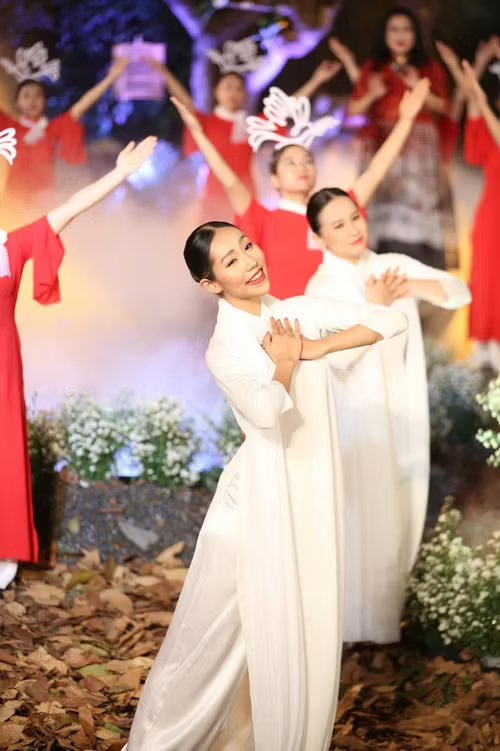
Many Vietnamese students have returned home after graduation to pursue careers in the arts, teaching, and cultural exchange programmes between the two countries. Some have continued their ties with the university, becoming bridges for educational and artistic exchanges between Viet Nam and China. One such example is Vu Minh Anh, a former Vietnamese student who was sent to the university by the Ho Chi Minh City Department of Culture and Sports to study dance and is now a teacher there. Her years of study and training at the university helped her develop determination and a spirit of learning, while giving her an opportunity to gain a deeper understanding of Chinese culture and to develop a stronger appreciation and pride in Viet Nam’s cultural values.
Minh Anh once proudly shared: “I always remember what Vietnamese leaders have emphasised that every young person can help promote the image and culture of Viet Nam, not only at home but also abroad. As a young artist, I want to do that through dancing art.”
Associate Professor Zhao Ke, Executive Deputy Director of the Centre of International Education and Exchange at the Guangxi Arts University, also considers young Vietnamese artists such as Vu Minh Anh, who live and work in the arts in China, valuable people-to-people cultural ambassadors.
Stories such as these show that cooperation in arts education not only helps nurture talent but also creates opportunities for young people from the two countries to interact, learn from one another, and become cultural ambassadors, thus contributing to greater understanding between the peoples of Viet Nam and China.
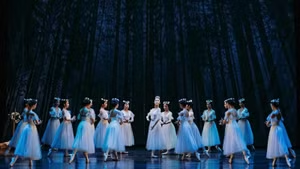
Alongside educational activities, artistic performances and exchange programmes provide opportunities for students from the two countries to showcase distinctive aspects of their respective national cultures.
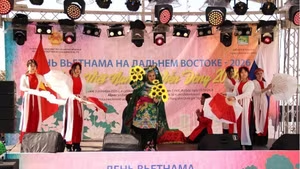
On the occasion of a visit to the Guangxi Museum of Ethnic Music by journalists from ASEAN countries as part of the ASEAN Media Workshop in September, Vietnamese students studying at the Guangxi Arts University performed the song-and-dance piece “Beo dat may troi” (Floating Water Ferns and Wandering Clouds) to the accompaniment of the "dan bau" (traditional Vietnamese monochord). Together with traditional music performances from other ASEAN countries, the programme demonstrated the strong artistic connections between China and ASEAN countries, particularly Viet Nam.
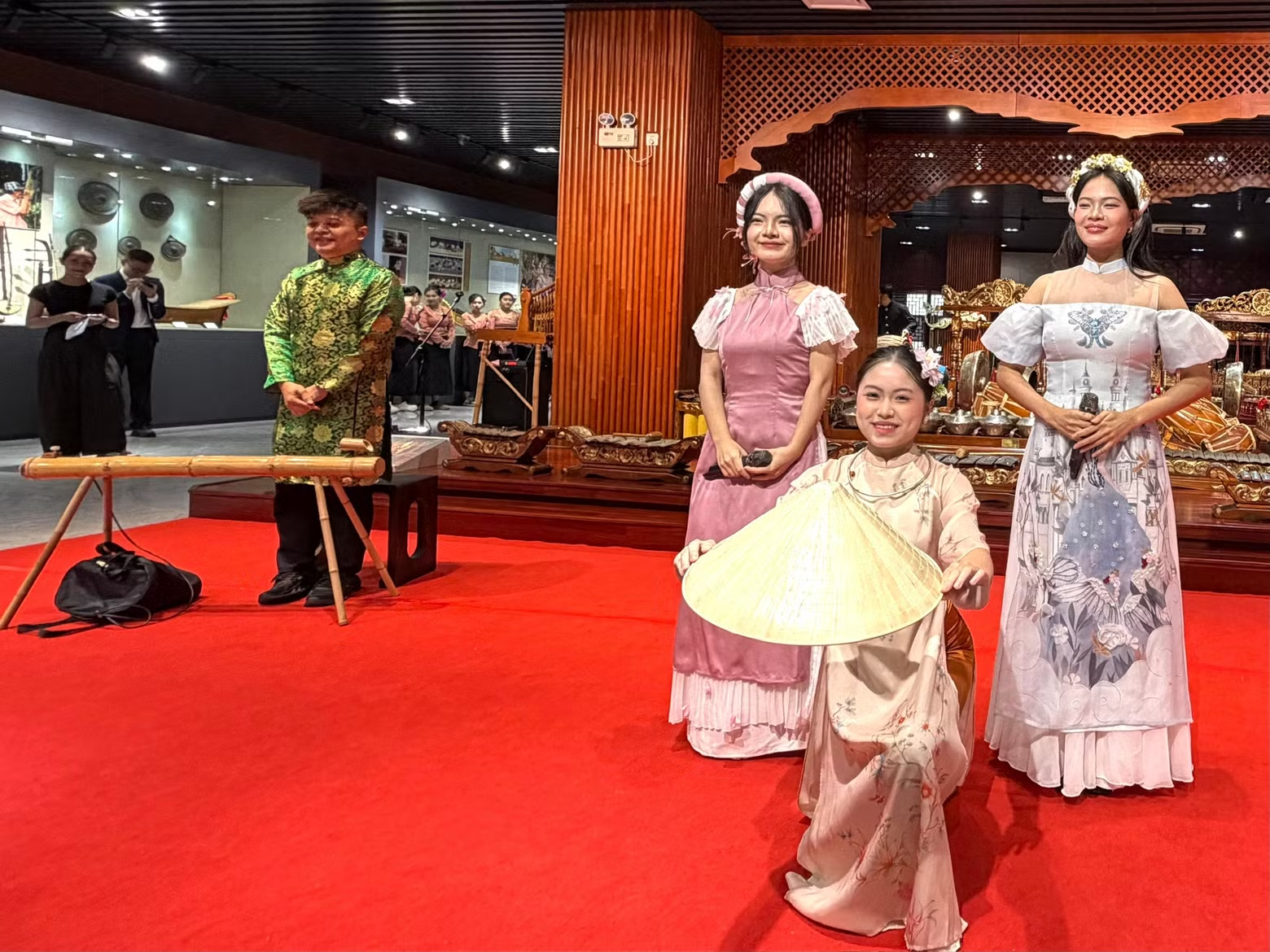
As the choreographer of the performance, Minh Anh expressed her aspiration as a young Vietnamese artist working in China to become a small bridge between the two cultures: learning from China and the world while bringing her Vietnamese identity to more places. She shared: “I want Viet Nam’s image to be portrayed in a way that is uniquely ours as a younger generation — confident and modern yet never losing touch with our roots.”
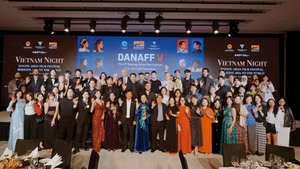
Beyond student exchanges, the Guangxi Arts University has also focused on expanding cooperation with Vietnamese arts education institutions, including the Viet Nam University of Fine Arts, the Viet Nam Musicians’ Association, and Ha Noi College of Arts.
These cooperation activities create further opportunities for lecturers, students, and artists from the two countries to exchange experience, explore new creative approaches, and work together to research, preserve, and promote traditional artistic values.
For Viet Nam, strengthening cooperation with Chinese arts education institutions also helps expand opportunities to showcase the country’s culture, bringing distinctive Vietnamese works and art forms closer to international audiences.
From traditional musical instruments preserved at the Guangxi Museum of Ethnic Music to Vietnamese melodies performed on the university’s stage, art is becoming a bridge connecting generations of artists and audiences in the two countries.
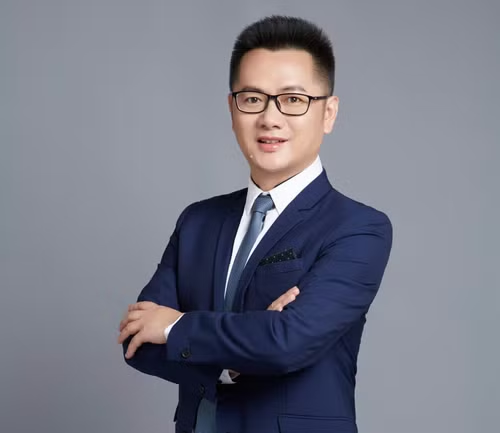
According to Associate Professor Zhao Ke, Executive Deputy Director of the Centre of International Education and Exchange at the Guangxi Arts University, when Vietnamese and Chinese audiences enjoy each other’s artistic works together, art can help to overcome language barriers and foster empathy and mutual understanding. Stories shared through the real-life experiences of young artists also create a greater sense of closeness and sincerity, thereby helping to build a lasting foundation of friendship between the peoples of the two countries.
Vietnamese and Chinese audiences enjoy each other’s artistic works together, art can help to overcome language barriers and foster empathy and mutual understanding.
Through activities in cultural preservation, education, and artistic exchange, the Guangxi Arts University is helping spread traditional cultural values while opening new opportunities for cooperation in culture and the arts, thereby enhancing mutual understanding and people-to-people ties and further nurturing Viet Nam-China friendship.